


Listen to the article
Pakistan Steps Into Rare Diplomatic Role Amid Iran-US Tensions
As tensions between the United States and Iran reach dangerous levels following military exchanges that began in late February, Pakistan has emerged as an unexpected diplomatic intermediary, offering to facilitate negotiations between Washington and Tehran.
Though not typically at the center of high-stakes international diplomacy, Islamabad has stepped forward with a peace initiative that Pakistani officials say follows weeks of quiet behind-the-scenes efforts. The government has expressed readiness to host talks between representatives of both nations at a time when direct communication channels remain severely constrained.
Pakistani Foreign Minister Ishaq Dar confirmed that his country has helped convey a U.S. peace proposal to Iran, with messages being passed between the two adversaries through Pakistani diplomatic channels. While details remain limited, Dar noted that Turkey and Egypt are also working behind the scenes to bring the parties to the negotiating table.
“Pakistan’s mediation efforts may be contributing to the relative restraint we’re seeing in the conflict,” said Abdullah Khan, managing director of the Pakistan Institute for Conflict and Security Studies. Khan pointed to U.S. President Donald Trump’s delay of threatened attacks on Iranian energy infrastructure and Iran’s measured responses as potential signs that space for diplomacy is being preserved.
Pakistan’s unique position as both a neighbor to Iran and a country with longstanding U.S. ties has created an opening for this diplomatic role. Previous U.S.-Iran negotiations have primarily been facilitated by Middle Eastern nations like Oman and Qatar, but as those countries face direct impacts from the widening conflict, Pakistan has stepped into the vacuum.
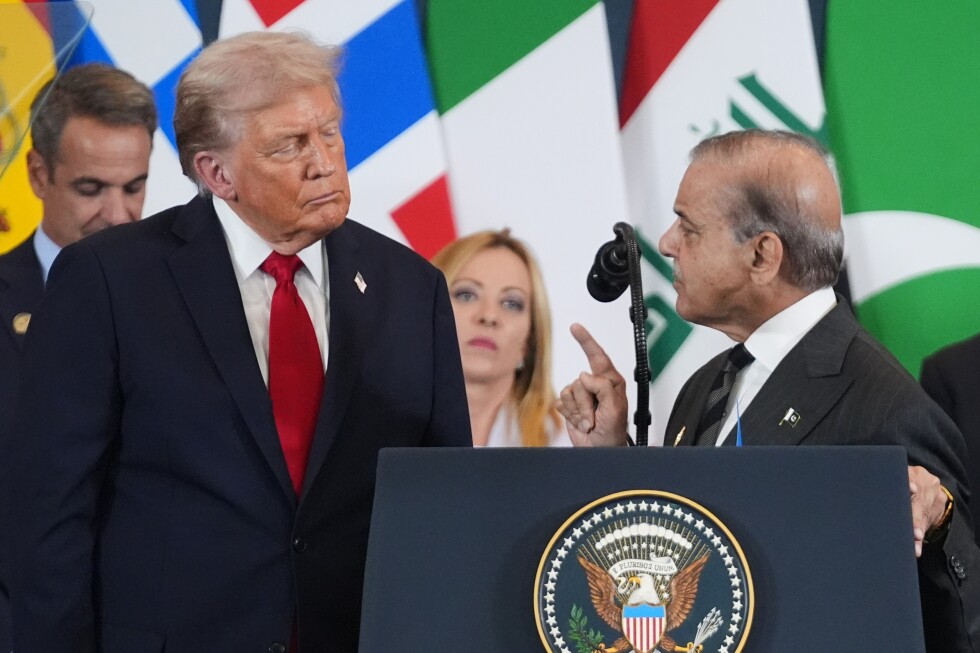
Relations between the United States and Pakistan have notably improved over the past year, with increased diplomatic engagement and expanding economic cooperation. Pakistan joined Trump’s Board of Peace aimed at resolving conflicts in Gaza, despite domestic opposition from Islamist groups. In a sign of warming ties, Trump recently spoke with Pakistani Army Chief Field Marshal Asim Munir, whom he has publicly called his “favorite Field Marshal.” Analysts note that Munir maintains productive relationships with both Iranian and U.S. military leadership.
For Pakistan, the stakes in achieving a de-escalation are extraordinarily high. “This conflict poses some of the biggest economic and energy security challenges in Pakistan’s history,” said Islamabad-based security analyst Syed Mohammad Ali. The country depends heavily on oil and gas imports from the Middle East, and roughly five million Pakistani workers in Arab countries send home remittances approximately equal to Pakistan’s total export earnings.
The conflict has already driven up global oil prices, forcing Pakistan to increase domestic fuel costs by approximately 20% and placing significant pressure on Prime Minister Shehbaz Sharif’s government. These economic strains come as Pakistan simultaneously manages tensions with neighboring Afghanistan, where Islamabad accuses the Taliban government of harboring militant groups responsible for cross-border attacks.
Domestic unrest related to the conflict has also erupted within Pakistan. Following U.S. strikes on Iran that killed Supreme Leader Ayatollah Ali Khamenei, violent protests broke out across the country. Clashes in multiple cities left at least 22 people dead and more than 120 injured. In Karachi, 12 people were killed during an attack on the U.S. Consulate when protestors breached the compound and attempted to set it on fire. Khamenei was a significant religious and political figure for Shiites worldwide, including Pakistan’s substantial Shiite population.
While Pakistan’s current diplomatic role is unusual, the country does have notable precedents as a mediator in international conflicts. Most famously, then-President General Yahya Khan facilitated the backchannel contacts that led to U.S. President Richard Nixon’s historic 1972 visit to China, ultimately paving the way for formal U.S.-China diplomatic relations in 1979.
Pakistan also played a significant role during the 1988 Geneva Accords that facilitated the Soviet withdrawal from Afghanistan. More recently, Pakistan helped establish communication channels between the Afghan Taliban and Washington, leading to the Doha talks that culminated in the 2020 agreement for U.S. and NATO troop withdrawal from Afghanistan.
Whether Pakistan’s current mediation efforts will succeed remains uncertain, as Iran has officially denied participating in indirect talks while acknowledging it has submitted its own proposals in response to U.S. overtures. Nevertheless, this unexpected diplomatic initiative highlights Pakistan’s strategic significance in a rapidly evolving regional crisis.
Fact Checker
Verify the accuracy of this article using The Disinformation Commission analysis and real-time sources.

21 Comments
Nice to see insider buying—usually a good signal in this space.
Good point. Watching costs and grades closely.
Good point. Watching costs and grades closely.
Interesting update on Pakistan has emerged as a mediator between US and Iran. Curious how the grades will trend next quarter.
Good point. Watching costs and grades closely.
If AISC keeps dropping, this becomes investable for me.
Good point. Watching costs and grades closely.
Good point. Watching costs and grades closely.
The cost guidance is better than expected. If they deliver, the stock could rerate.
Good point. Watching costs and grades closely.
Exploration results look promising, but permitting will be the key risk.
Good point. Watching costs and grades closely.
Good point. Watching costs and grades closely.
Uranium names keep pushing higher—supply still tight into 2026.
Good point. Watching costs and grades closely.
Nice to see insider buying—usually a good signal in this space.
Good point. Watching costs and grades closely.
Good point. Watching costs and grades closely.
Interesting update on Pakistan has emerged as a mediator between US and Iran. Curious how the grades will trend next quarter.
Uranium names keep pushing higher—supply still tight into 2026.
Silver leverage is strong here; beta cuts both ways though.