


Listen to the article
Pakistan and Afghanistan Declare Temporary Ceasefire After Deadly Hospital Strike
Pakistan and Afghanistan have agreed to temporarily halt military operations against each other following a devastating airstrike in Kabul that Afghan officials claim killed hundreds at a drug rehabilitation facility. The pause in hostilities comes as tensions between the neighboring countries have reached their highest point in years.
Both nations announced the suspension of fighting ahead of Eid al-Fitr, the Muslim holiday marking the end of Ramadan. The ceasefire was brokered through mediation efforts by Saudi Arabia, Turkey, and Qatar, which have been working to de-escalate the conflict since cross-border fighting intensified in February.
Pakistani Information Minister Attaullah Tarar said the pause would begin at midnight Wednesday and continue until midnight Monday. “Pakistan offers this gesture in good faith and in keeping with Islamic norms,” Tarar stated. However, he warned that operations would “immediately resume with renewed intensity” if Pakistan faces any cross-border attacks or terrorist incidents.
Afghanistan’s government spokesman Zabiullah Mujahid did not specify a timeframe for the Afghan side’s pause but affirmed that Afghanistan “will respond courageously to any aggression in the event of a threat.”
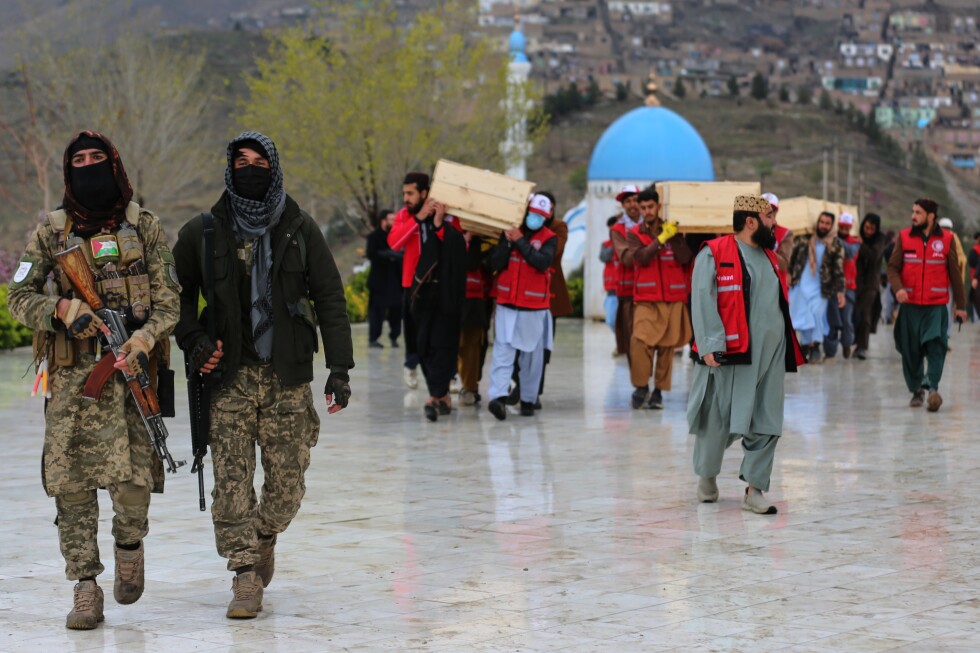
The announcements came shortly after Afghan authorities held a mass funeral in Kabul for victims of Monday’s strike. Afghan officials claim the death toll from the attack on the Omid Addiction Treatment Hospital has reached 408 people, with 265 wounded—figures that cannot be independently verified.
Pakistan has firmly denied targeting the hospital, insisting its strikes were aimed at military installations. The Pakistani government claims it targeted an ammunition depot in Kabul, with Tarar stating that casualties occurred “because there was ammunition, technical equipment, and arms there.”
The strike on the 2,000-bed Omid facility, which was expanded about a year ago as part of Taliban efforts to address Afghanistan’s significant drug addiction problem, caused an intense fire. Local television footage showed rescue crews searching through wreckage with flashlights as firefighters battled the blaze late into the night.
At Wednesday’s mass funeral, bulldozers prepared pits in a Kabul cemetery for more than 50 people whose remains could not be identified. Some wooden caskets contained the remains of multiple victims, according to Health Ministry spokesman Sharafat Zaman.
The latest round of conflict began in February when Afghanistan launched cross-border attacks in response to Pakistani airstrikes. These clashes disrupted an earlier ceasefire brokered by Qatar last October. The situation escalated to the point where Pakistan declared last month that it was in “open war” with Afghanistan.
The underlying tension stems from Pakistan’s accusations that Afghanistan provides safe haven for militants who carry out attacks inside Pakistan, particularly the Pakistani Taliban. This group, while separate from the Afghan Taliban that took power in 2021, maintains close alliance with them. Kabul has consistently denied these charges.
The site of Monday’s strike is near Kabul’s international airport, adjacent to a former NATO military base called Camp Phoenix, where U.S. forces once trained the Afghan National Army. It remains unclear what the site currently houses.
International observers are increasingly concerned about the conflict, particularly as the region still harbors other militant organizations, including al-Qaida and the Islamic State group, which may seek to exploit the instability.
Tarar delivered a stark ultimatum in an interview with The Associated Press prior to announcing the ceasefire: “Either you are with Pakistan or you are with the terrorists. So, they will have to make a choice, and they will have to make the choice very soon.”
As both nations enter the temporary ceasefire, the international community watches closely to see if this pause will lead to more sustainable peace or merely represent a brief interruption in an escalating conflict.
Fact Checker
Verify the accuracy of this article using The Disinformation Commission analysis and real-time sources.

12 Comments
This ceasefire announcement is a positive development, but the true challenge will be ensuring it holds and leads to substantive progress on the underlying issues. Continued commitment from all parties, with support from regional powers, will be key.
Agreed. Temporary ceasefires can sometimes be fragile, so maintaining open communication and good-faith efforts to address the root causes of the conflict will be crucial. Consistent monitoring and enforcement will also be important.
While a ceasefire is a welcome respite from the violence, the real test will be whether Pakistan and Afghanistan can use this opportunity to engage in meaningful dialogue and work towards a comprehensive peace agreement. Ongoing regional mediation will be crucial.
You make a fair point. Ceasefires are often just a temporary pause, and the true measure of success will be whether the parties can translate this truce into tangible progress on resolving the underlying issues. Sustained diplomacy and compromise from both sides will be required.
The decision to pause hostilities ahead of an important religious holiday is a pragmatic move, though the true test will be whether it leads to meaningful dialogue. Maintaining the ceasefire and building on it will be crucial.
Temporary ceasefires often serve as a reset button, allowing emotions to cool and creating space for negotiations. If the regional mediators can keep the parties engaged, this pause could potentially pave the way for a more durable peace agreement.
While a temporary ceasefire is a positive step, the underlying tensions and cross-border attacks that led to this conflict will need to be addressed for any long-term stability. I hope the regional powers can facilitate substantive negotiations.
Agreed. A lasting peace will require both sides to make concessions and commit to securing their shared border in a sustainable way. This ceasefire provides an opportunity, but real progress will depend on the political will of the parties involved.
A temporary ceasefire is a positive step, but the real challenge will be translating this into a lasting peace. Both Pakistan and Afghanistan will need to demonstrate a genuine commitment to addressing the core drivers of the conflict, with support from regional powers as mediators.
Absolutely. While a ceasefire can provide a much-needed respite, the true test will be whether the parties can use this window of opportunity to engage in substantive negotiations and make the compromises necessary for a durable peace agreement. Maintaining regional cooperation will also be crucial.
Temporary ceasefires can sometimes provide a much-needed cooling-off period, especially after high-intensity conflicts. Hopefully this pause leads to productive dialogue and a more lasting peace agreement between Pakistan and Afghanistan.
De-escalation and diplomacy are always preferable to continued bloodshed. With regional powers acting as mediators, there may be a path forward if both sides are willing to compromise.