


Listen to the article
Afghan-Pakistan Border Clash Leaves Five Dead, Violating Fragile Ceasefire
An overnight exchange of fire between Afghan and Pakistani forces along their disputed border has left five Afghan civilians dead and eight others wounded across both sides, according to officials from both countries on Saturday. The clash represents a significant violation of the tenuous Qatar-mediated ceasefire that has largely held since October.
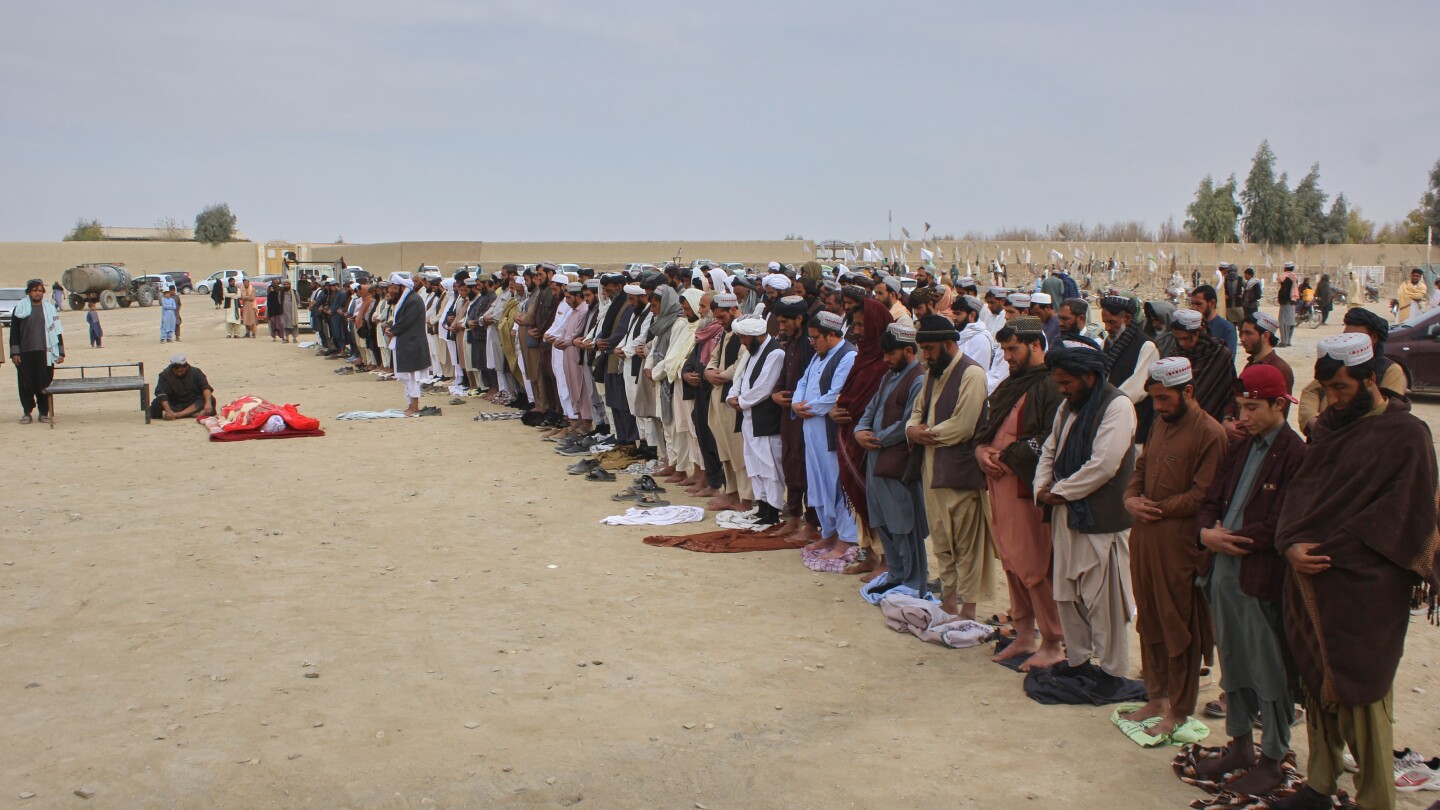
Among those killed in the border area near Afghanistan’s Spin Boldak city in southern Kandahar province were three children and one woman, said Ali Mohammad Haqmal, head of information for Spin Boldak District. On the Pakistani side, officials reported three civilians wounded in the city of Chaman during the violence that continued until dawn Saturday.
Both nations have accused each other of initiating the firefight. Afghan officials claim Pakistani forces began the confrontation with a hand grenade thrown into the Spin Boldak border area, while Pakistani authorities insist Afghan Taliban forces initiated “unprovoked firing” along the Chaman border.
“The Afghan side didn’t respond for 10-15 minutes after Pakistani forces began shooting,” Haqmal stated, adding that once Afghan forces returned fire, they ceased within an hour while “the shooting by the Pakistani side continued until Saturday morning.”
Contradicting this account, Mohammad Sadiq, a local Pakistani police official, claimed the shooting originated from the Afghan side, with Pakistani troops merely responding near the Chaman border crossing, a vital transit route between the nations.
The border confrontation comes at a particularly sensitive time, just a day after Pakistan announced it would permit the United Nations to send humanitarian relief supplies into Afghanistan through the Chaman and Torkham border crossings. These crucial crossings have remained largely closed for nearly two months amid deteriorating relations.
Tensions between the neighboring countries have been escalating since October when deadly border clashes killed dozens of soldiers, civilians, and suspected militants while wounding hundreds on both sides. That violence erupted following explosions in Kabul on October 9, which the Taliban government blamed on Pakistan and vowed to avenge.
The Pakistan-Afghanistan border region, known as the Durand Line, has been a persistent source of friction between the two countries. Pakistan has never officially recognized the 2,600-kilometer (1,600-mile) border established by British colonial authorities in 1893, and disputes over the boundary have repeatedly led to deadly incidents.
Since the Taliban seized power in Afghanistan in 2021, relations have grown increasingly strained. Pakistan has suffered numerous militant attacks within its territory, many attributed to Tehrik-e-Taliban Pakistan (TTP), commonly known as the Pakistani Taliban. Though separate from the Afghan Taliban, the TTP maintains close alliances with them, and many Pakistani Taliban fighters have reportedly found sanctuary in Afghanistan since the Taliban takeover.
Pakistan’s military reported that separately from the border incident, its security forces killed nine Pakistani Taliban militants during two intelligence-based operations on Friday in the northwestern districts of Tank and Lakki Marwat in Khyber Pakhtunkhwa province, which borders Afghanistan.
The latest violence threatens to derail modest diplomatic progress made since the Qatar-facilitated ceasefire began in October. While the agreement has largely prevented major confrontations until now, peace talks have failed to produce a lasting agreement that addresses the fundamental security concerns of both nations.
Humanitarian organizations have expressed growing concern about the border closures’ impact on Afghan civilians, especially as the country faces severe economic challenges, food insecurity, and limited international aid following the Taliban’s return to power.
Fact Checker
Verify the accuracy of this article using The Disinformation Commission analysis and real-time sources.

14 Comments
This clash along the Afghan-Pakistan border is a troubling development that risks unraveling the hard-won ceasefire. Both sides must exercise maximum restraint, engage in transparent dialogue, and find a diplomatic solution to prevent further civilian casualties and regional instability.
Absolutely, diplomacy and de-escalation should be the top priority here. The human toll is devastating, and both governments need to work together to restore stability in the border region.
It’s concerning to see the exchange of fire violating the ceasefire. Both sides have blamed the other for initiating the confrontation. Impartial investigation and dialogue are needed to determine the facts and prevent further escalation.
Yes, an impartial investigation could help shed light on what actually happened. Transparent communication between the two governments is crucial at this stage.
This is a troubling development, with civilians caught in the crossfire of the long-standing tensions between Afghanistan and Pakistan. The ceasefire was hard-won, and its collapse risks further destabilizing the region.
Absolutely, the ceasefire was an important step. Its unraveling is deeply concerning and could lead to a cycle of retaliation, harming innocent people.
The loss of civilian life is tragic. Both sides must exercise restraint and uphold the ceasefire agreement to prevent further escalation and suffering along this volatile border region. Diplomacy and de-escalation should be the priority.
Agreed, the priority now should be restoring the ceasefire and finding a diplomatic solution to address the underlying tensions. Civilian lives must be protected.
This is a tragic incident along the volatile Afghan-Pakistan border. It’s concerning to see the ceasefire violated, which had provided some stability in the region. Hopefully both sides can de-escalate the situation and prevent further civilian casualties.
You’re right, the ceasefire was an important step. This clash is a setback and shows how fragile the peace can be in that border area.
It’s deeply concerning to see the ceasefire violated with such deadly consequences. Both Afghanistan and Pakistan must work to investigate the incident, hold those responsible accountable, and recommit to the peace process. Continued dialogue and restraint are crucial.
You’re right, this is a serious setback that requires a strong response from both governments to prevent further violence and uphold the fragile ceasefire.
The loss of civilian lives, including women and children, is heartbreaking. Both countries must work to uphold the ceasefire and find a diplomatic solution to prevent such deadly clashes from recurring.
Agreed, the human toll is tragic. Diplomacy and restraint are critical to stabilizing this dangerous border region.