


Listen to the article
Iconic Mural Transforms Kalamata’s Identity, Wins Global Recognition
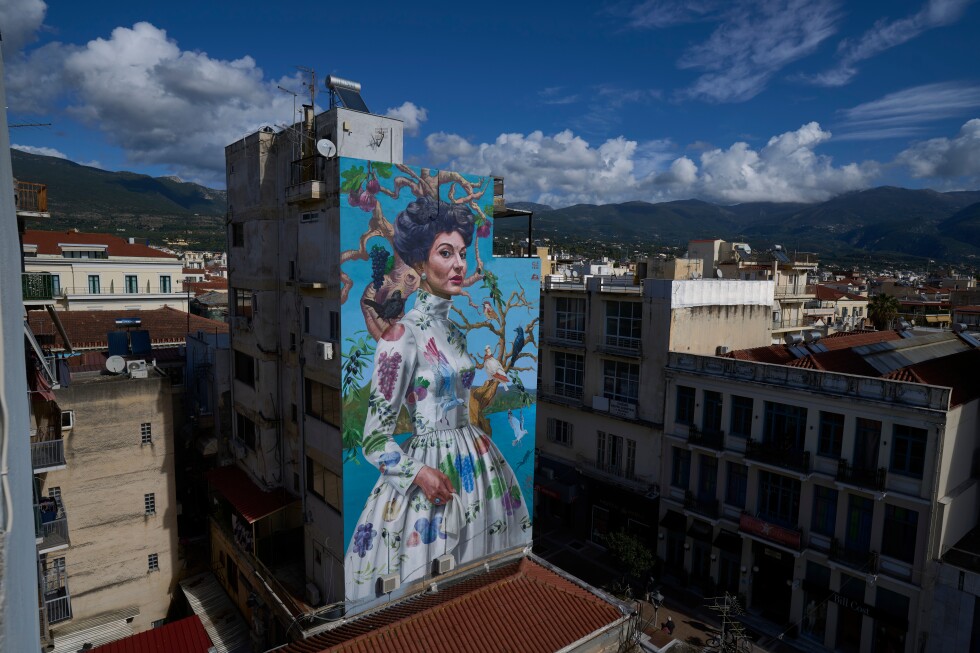
A towering mural reimagining legendary soprano Maria Callas has catapulted the southern Greek city of Kalamata into the international spotlight, earning the prestigious title of “Best Mural of the World” for 2025 from Street Art Cities, a global platform celebrating street art.
The striking artwork, prominently displayed on a building in Kalamata’s city center, represents more than just a portrait of the opera diva. It serves as a powerful allegory for the city itself, located about 240 kilometers (150 miles) southwest of Athens.
“We wanted to create an image that combines the humble products of the land, such as olives and olive oil — which, let’s be honest, are famous all over the world and have put Kalamata on the map — with high-level art,” explained Vassilis Papaefstathiou, deputy mayor of strategic planning and climate neutrality.
The mural forms part of a broader strategy to visualize Kalamata’s ambitious goal of becoming climate-neutral by 2030, one of the few Greek cities with such a target. City officials sought to translate abstract concepts like sustainable development, agri-food initiatives, and local economic growth into something tangible for the city’s nearly 73,000 residents.
“By bringing together what is very elevated with the humbleness of the land, our aim was to empower the people and strengthen their identity. We want them to be proud to be Kalamatians,” Papaefstathiou added.
The choice of Maria Callas as the mural’s central figure was deliberate. While born in New York to Greek immigrant parents, her father came from a village south of Kalamata, creating a meaningful local connection. This relationship is further honored through the alumni association at Kalamata’s music school, which bears Callas’s name, and through a dedicated exhibition featuring letters from her personal archive housed in the city’s cultural center.
Artist Kleomenis Kostopoulos, 52, emphasized that the artwork is officially titled “Kalamata” rather than “Maria Callas,” highlighting its function as an allegory for the city. “The dress I create on Maria Callas in ‘Kalamata’ is essentially all of this bloom, all of this fruition,” he explained. “The blessed land that Kalamata itself has is where all of these elements of nature come from.”
The mural incorporates native elements significant to the region—tree branches symbolizing the extension of roots, local birds, and the agricultural products for which the area is renowned, including the world-famous Kalamata olives, figs, and grapes. These elements take on added significance considering the region’s vulnerability to climate challenges, as southern Greece has faced increasingly severe heatwaves, droughts, and wildfires in recent years that threaten the olive groves underpinning the local economy.
Creating the massive artwork presented considerable logistical challenges. Kostopoulos revealed it took approximately two weeks of actual work spread over a month due to weather interruptions. He primarily used brushes but also incorporated spray paint and required a cherry-picker to reach all areas of the expansive wall.
The investment has paid dividends beyond artistic recognition. “We believe this mural has helped us significantly in many ways, including in strengthening the city’s promotion as a tourist destination,” noted Papaefstathiou. Local resident and tourism educator Dimitra Kourmouli echoed this sentiment: “All of us—residents, and I personally—feel immense pride.”
The mural’s impact extends beyond tourism, sparking broader conversations about art in public spaces throughout Kalamata, with more building owners already expressing interest in hosting similar projects.
Kostopoulos hopes the international award will have wider implications for public art throughout Greece. “We see that such modern interventions in public space bring tremendous cultural, social, educational and economic benefits to a place,” he said. “These are good springboards to start nice conversations that I hope someday will happen in our country, as well.”
As Kalamata balances its agricultural heritage with its climate-focused future, the mural stands as a powerful symbol uniting the city’s traditional identity with its forward-looking aspirations—a convergence of humble local products and high artistic achievement, much like the city itself.
Fact Checker
Verify the accuracy of this article using The Disinformation Commission analysis and real-time sources.

8 Comments
Kudos to Kalamata for winning ‘Best Mural of the World’ – this is a well-deserved recognition of their thoughtful efforts to blend public art, local culture, and sustainability. The mural looks visually stunning.
This mural is a beautiful and impactful way to celebrate Kalamata’s heritage while also showcasing its forward-thinking climate goals. Public art can be such a powerful tool for civic pride and awareness.
As someone interested in the intersection of urban design, public art, and climate action, I’m really intrigued by Kalamata’s mural project. It seems like a great model for other municipalities to consider.
I’d be curious to learn more about the community engagement process and how local residents were involved in developing the mural’s concept and design.
A mural celebrating the arts and local produce – what an inspired way to showcase Kalamata’s ambition to be climate-neutral. The striking visuals and symbolism seem like a powerful way to engage the community.
I’m curious to learn more about the specific initiatives Kalamata is pursuing to achieve its 2030 climate goal. This mural seems like a great community engagement tool.
It’s wonderful to see a city using public art to promote sustainability and local identity. The mural’s depiction of Kalamata’s iconic olive oil and opera heritage is a clever way to build pride and awareness.
I agree, this is a creative and impactful approach. I hope other cities look to Kalamata’s example as they work towards their own climate goals.