


Listen to the article
Marine Heat Waves Supercharging Hurricane Damage, Study Finds
Marine heat waves are significantly amplifying the destructive power of hurricanes and tropical cyclones worldwide, according to new research published in the journal Science Advances. The study reveals that storms passing over unusually hot ocean waters are more likely to intensify rapidly before landfall, resulting in substantially more costly damage.
Researchers examined 1,600 tropical cyclones that made landfall since 1981 and discovered a concerning pattern: storms that traveled over marine heat waves—defined as large areas of water in the top 10% of historical heat—caused 60% more billion-dollar disasters upon reaching land compared to storms that didn’t encounter such conditions.
“These marine heat waves affect more than half of landfalling tropical cyclones,” explained study co-author Gregory Foltz, an oceanographer at the National Oceanic and Atmospheric Administration. “They’re happening closer to land and more frequently, so I think people need to pay attention and know that these are more likely to result in extreme damages when they make landfall.”
The findings have critical implications for hurricane forecasting, emergency management, and coastal planning. Meteorologists tracking storm trajectories now need to closely monitor whether a hurricane’s path crosses these oceanic hot spots, as this substantially increases the risk of rapid intensification—a particularly dangerous phenomenon that can catch coastal communities off guard.
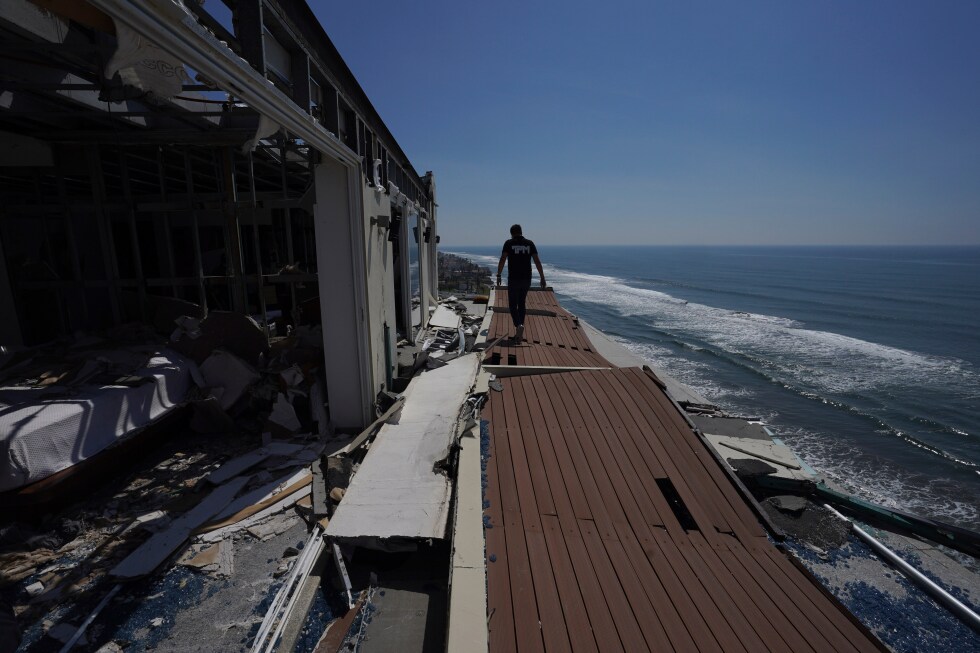
Recent hurricanes demonstrate the pattern identified in the study. In 2023, Hurricanes Helene and Milton both underwent rapid intensification after encountering unusually warm Gulf waters before striking Florida’s west coast in quick succession. Hurricane Otis provided another stark example in October 2023, explosively intensifying from a tropical storm to a Category 5 hurricane in just 24 hours before devastating Acapulco, Mexico, with 165 mph winds. The storm caused approximately $16 billion in damage and claimed 52 lives.
“The story of Helene and Milton is that if you’ve got a warmer ocean, you’ve got the fuel to supercharge tropical cyclones even in a cascade. So within a few weeks you could get two rapidly intensified hurricanes making landfall in the west coast of Florida,” said study co-author Hamed Moftakhari, a coastal engineering professor at the University of Alabama who specializes in compound hazards. “This is shocking but should also be alarming for people.”
Importantly, the researchers controlled for coastal development in their analysis. Lead author Soheil Radfar, a hurricane hazard modeling scientist at Princeton University, emphasized that the increased damage wasn’t simply due to more buildings in harm’s way. The team compared storms hitting similarly urbanized areas, finding that those crossing marine heat waves consistently caused more destruction.
The connection between warm water and hurricane intensity has long been established in scientific literature. Warm ocean water serves as fuel for hurricanes, providing energy through evaporation that powers these massive storm systems. What’s new about this research is quantifying how marine heat waves specifically influence damage outcomes and documenting their increasing frequency.
“All these pieces of the puzzle are going to be really challenging for the coastal environment in the next four decades when you have more rapid intensification, more marine heat waves,” Radfar warned. This “is going to be really costly and frightening for the coastline environment, and it’s going to cause more billion-dollar disasters in the future.”
The implications for disaster planning are significant. Moftakhari noted that evacuation protocols may need revision to account for the heightened risk when storms approach after crossing marine heat waves. Earlier warning triggers might be necessary to ensure safe evacuations when rapid intensification is possible. Additionally, infrastructure like sea walls, drainage systems, and flood protection measures may need redesigning to withstand the intensified threats.
Outside scientists have validated the study’s conclusions. Brian Tang, an atmospheric sciences professor at the University at Albany who wasn’t involved in the research, said the findings align with known hurricane physics and climate change impacts.
“It’s reasonable that marine heat waves are turbocharging hurricanes, provided other environmental conditions are favorable for hurricanes to intensify,” Tang said. “In effect, the dice is being loaded.”
As climate change continues to warm ocean waters globally, marine heat waves are expected to become more frequent and intense, suggesting hurricane threats will likely worsen in the coming decades unless significant climate action is taken.
Fact Checker
Verify the accuracy of this article using The Disinformation Commission analysis and real-time sources.

7 Comments
This underscores the need for more research and data on the links between climate change, ocean temperatures, and hurricane intensity. The findings could inform better mitigation strategies.
Fascinating how climate change is exacerbating hurricane damage through ocean heat waves. We’ll need to adapt our infrastructure and emergency response plans to mitigate these growing risks.
Agreed. Improved forecasting and preparedness will be crucial as these ‘hot spots’ in the ocean become more common.
From a commodities perspective, I wonder if these more destructive hurricanes could impact mining, energy, and transportation infrastructure in hurricane-prone regions. Supply chain disruptions are a real concern.
Curious to see if this study will prompt policymakers to accelerate climate action and disaster planning efforts. Reducing emissions and strengthening coastal defenses seem like logical next steps.
As an investor in mining and energy, I’m concerned about the implications for operations and supply chains. Extreme weather events could disrupt critical infrastructure and logistics. Diversifying supply sources may be prudent.
Good point. Companies will need to factor in climate risks and build more resilient operations to safeguard their businesses.