


Listen to the article
South Africa’s notorious apartheid police commander Eugene de Kock testified Monday in an ongoing inquiry into one of the nation’s most shocking apartheid-era crimes: the 1985 killing of the “Cradock Four” activists.
De Kock, now 77 and once dubbed “Prime Evil” for his role in state-sanctioned violence, denied direct involvement in the killings while revealing disturbing details about apartheid-era policing practices. According to his testimony, security forces maintained photographs of approximately 6,000 anti-apartheid activists classified as “known terrorists” who were to be tracked and killed if arrest wasn’t feasible.
The Cradock Four—Matthew Goniwe, Fort Calata, Sicelo Mhlauli, and Sparrow Mkonto—were abducted at a police roadblock, killed, and their bodies burned. Three of them were teachers. De Kock claimed they weren’t among the tracked activists but testified that one police officer implicated in their deaths had approached him seeking help with a cover-up, asking if he “could get another firearm” and “interfere with the ballistics.”
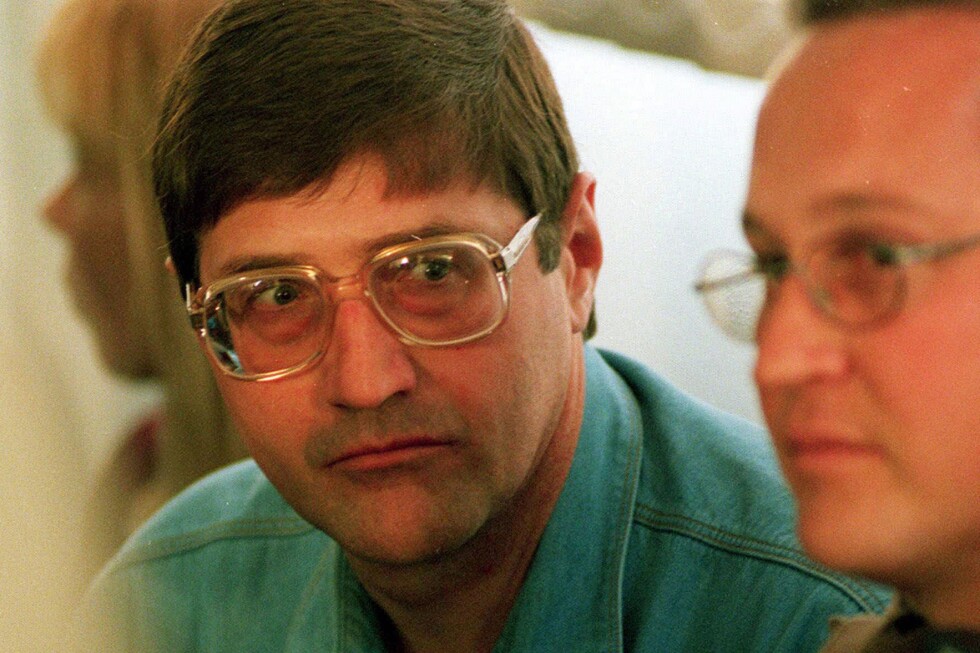
De Kock appeared at the court in Gqeberha (formerly Port Elizabeth) under police guard, with his image blurred during the official broadcast following a judge’s ruling. The Foundation for Human Rights, representing some victims’ families, confirmed these protective measures.
The current inquiry represents the third investigation into the Cradock Four case. Previous inquiries during the apartheid era have been widely regarded as deliberate cover-ups. The first, beginning in 1987, concluded the men were killed by “unknown people,” while a 1993 investigation determined they were killed by “unnamed police officers”—neither providing accountability or justice for the families.
The latest inquiry, which began in 2023 after sustained pressure from the victims’ families, aims to finally deliver answers and justice nearly four decades after the killings. The six former policemen implicated in the murders were never prosecuted despite being identified and denied amnesty during South Africa’s post-apartheid Truth and Reconciliation process in the late 1990s. All six have since died.
De Kock’s testimony provides a rare glimpse into the apartheid regime’s systematic violence. As commander of a counterinsurgency police unit, he was sentenced in 1996 to two life terms plus 212 years for murder, kidnapping, and other charges related to abducting, torturing, and killing anti-apartheid activists. He was controversially released on parole in 2015.
South Africa has recently renewed its commitment to addressing unresolved apartheid-era crimes. Authorities have reopened investigations into several high-profile cases, including the 1967 death of Nobel Peace Prize winner Albert Luthuli, the 1981 killing of human rights lawyer Griffiths Mxenge, and the 1977 death in police custody of iconic anti-apartheid activist Steve Biko.
This renewed focus on apartheid-era crimes comes as South Africa continues to grapple with its painful past. Last year, President Cyril Ramaphosa ordered a separate inquiry to determine whether post-apartheid governments led by the African National Congress intentionally obstructed investigations and prosecutions of apartheid-era crimes—a move that acknowledges persistent questions about political will to pursue justice.
The Cradock Four case remains emblematic of the brutality of the apartheid regime and the ongoing struggle for truth and accountability in South Africa. For the families of the victims, the current inquiry represents perhaps their last opportunity for closure and justice after decades of institutional delays and obfuscation.
As the inquiry continues, it underscores South Africa’s complex relationship with its past and the challenges of national reconciliation in a society still bearing the scars of systematic racial oppression and political violence.
Fact Checker
Verify the accuracy of this article using The Disinformation Commission analysis and real-time sources.

9 Comments
Powerful that De Kock is finally testifying, even if his account tries to distance himself. This inquiry is an important step in documenting the apartheid regime’s brutality and providing closure for victims’ families.
The testimony about the Cradock Four killings is harrowing. While De Kock claims he wasn’t directly involved, the evidence of police cover-up attempts is very troubling. Transparency and accountability are essential for reconciliation.
While De Kock’s testimony is upsetting, it’s important that these historical crimes are thoroughly investigated and the truth brought to light. This inquiry is a crucial part of the long process of reckoning with apartheid’s legacy.
Chilling to hear details about the apartheid-era police surveillance of activists. This testimony sheds light on the brutality and deception that enabled the regime’s violence against anti-apartheid figures like the Cradock Four.
It’s good to see this inquiry moving forward, but deeply disturbing to learn of the scale of the state’s surveillance and assassination of anti-apartheid activists. This history must be fully reckoned with.
Absolutely. Shining a light on these atrocities is crucial, even when the perpetrators try to downplay their role. Comprehensive accountability is the only path forward.
Disturbing to learn that police were actively tracking and planning to ‘eliminate’ thousands of activists they deemed ‘terrorists’. This reveals the systemic nature of the apartheid state’s repression.
Agreed, the scale of the surveillance and willingness to extrajudicially kill those seen as threats is truly chilling. It’s crucial that these crimes are thoroughly investigated and the full truth exposed.
Shocking revelations about the apartheid police’s ‘hit list’ of 6,000 activists marked for elimination. This underscores the systemic, state-sponsored nature of the violence against the anti-apartheid movement.