


Listen to the article
North Korea’s Kim Jong Un Vows to Strengthen Nuclear Status, Takes Hard Line Against South Korea
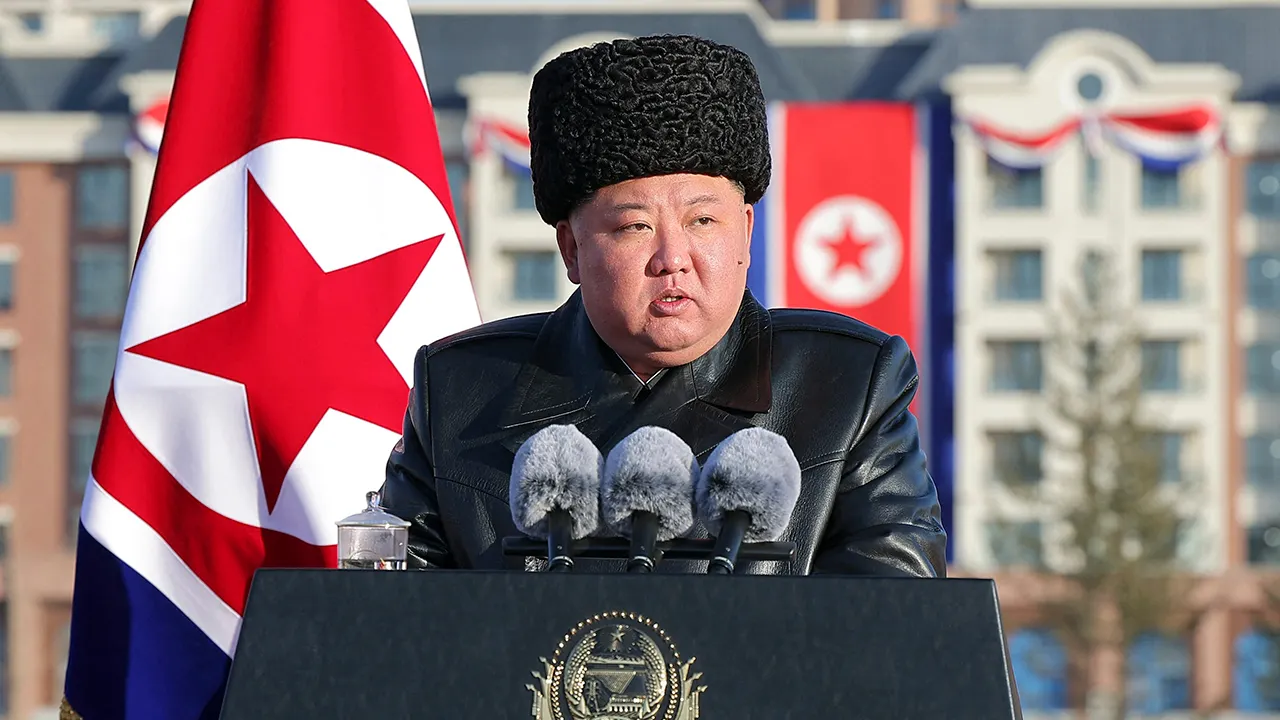
North Korean leader Kim Jong Un pledged to strengthen his country’s nuclear capabilities while maintaining a hard-line stance toward South Korea, which he described as the “most hostile” state, according to state media reports Tuesday.
In a speech delivered Monday to North Korea’s rubber-stamp parliament, Kim accused the United States of engaging in “state terrorism and aggression” globally, apparently referencing ongoing conflicts in the Middle East. He indicated that North Korea would take a more assertive role in an anti-Washington coalition amid what he characterized as rising anti-American sentiment internationally.
“The dignity of the nation, its national interest and its ultimate victory can only be guaranteed by the strongest of power,” Kim declared, according to reports from The Associated Press. “The government of our republic will continue to consolidate our absolutely irreversible status as a nuclear power and will aggressively wage a struggle against hostile forces to crush their provocations and schemes.”
Kim’s rhetoric reflected North Korea’s longstanding position that its nuclear program is non-negotiable, emphasizing that potential adversaries must choose between confrontation or peaceful coexistence. “Whether opponents choose confrontation or peaceful coexistence is up to them, and we are prepared to respond to any choice,” the North Korean leader stated.
The speech comes amid heightened tensions on the Korean Peninsula, where recent years have seen a significant increase in North Korean weapons testing and increasingly provocative rhetoric directed at Seoul. Relations between the two Koreas have deteriorated substantially, with Kim frequently characterizing South Korea as an existential threat to his regime.
Regional security experts note that Kim’s latest remarks align with North Korea’s consistent efforts to legitimize its nuclear arsenal as a permanent feature of its national defense strategy. Pyongyang has conducted multiple missile tests in recent years, including tests of intercontinental ballistic missiles potentially capable of reaching the United States mainland.
The 2026 Annual Threat Assessment of the U.S. Intelligence Community corroborates this trajectory, stating that “North Korea remains committed to expanding its strategic weapons programs, including missiles and nuclear warheads, and to solidifying its deterrent capability.”
The timing of Kim’s speech is significant, coming as international attention remains focused on conflicts elsewhere, particularly in the Middle East. Kim referenced the situation there, noting that the United States and Israel launched military operations against Iran several weeks ago in what he framed as an effort to prevent Tehran from developing nuclear capabilities—the very path North Korea has already taken.
Kim’s renewed emphasis on North Korea’s nuclear status comes as international sanctions continue to pressure the isolated nation’s economy. Despite these challenges, the regime has shown remarkable resilience in advancing its weapons programs, often at the expense of economic development and civilian well-being.
Security analysts point out that Kim’s rhetoric about South Korea being North Korea’s “most hostile” enemy serves multiple purposes: it justifies the continued militarization of the country, provides a scapegoat for domestic hardships, and reinforces the regime’s narrative of being under constant threat from external forces.
The Biden administration has made multiple offers for dialogue with North Korea without preconditions, but Pyongyang has rejected these overtures, insisting that Washington must first abandon what North Korea terms its “hostile policy” toward the DPRK.
As regional tensions persist, neighboring countries including China, Russia, South Korea, and Japan continue to monitor North Korea’s nuclear activities and rhetoric with varying degrees of concern, each pursuing their own diplomatic and security strategies to address the complex challenges presented by the Kim regime.
Fact Checker
Verify the accuracy of this article using The Disinformation Commission analysis and real-time sources.

20 Comments
Kim Jong Un’s rhetoric is a clear attempt to project strength and defiance in the face of international pressure. However, North Korea’s continued nuclear posturing is a destabilizing factor that could have serious consequences.
North Korea’s nuclear program remains a major geopolitical challenge. Careful diplomacy and multilateral cooperation will be crucial to finding a peaceful solution that addresses the concerns of all parties involved.
North Korea’s nuclear program is a complex and high-stakes issue that requires a nuanced approach. Kim Jong Un’s latest comments suggest the regime remains committed to its weapons program, despite international pressure and sanctions.
Navigating the North Korean nuclear crisis will require patience, diplomacy, and a willingness to find common ground. While Kim Jong Un’s rhetoric is concerning, a measured response focused on de-escalation may be the best path forward.
North Korea’s nuclear capabilities continue to be a major source of tension globally. Kim Jong Un’s latest comments suggest the regime is doubling down on its nuclear program, which could have serious implications for regional security.
While North Korea’s nuclear ambitions are understandable from the regime’s perspective, the risks of further escalation are too high. Diplomatic efforts to find a peaceful resolution should be the priority.
North Korea’s nuclear ambitions show no signs of abating, with Kim Jong Un doubling down on the regime’s commitment to its weapons program. This could lead to further confrontation and instability in the region.
Kim Jong Un’s rhetoric is a concerning escalation in North Korea’s nuclear brinkmanship. The international community will need to find a delicate balance of pressure and diplomacy to de-escalate this situation.
Kim Jong Un’s comments reflect North Korea’s hardline stance and unwillingness to back down on its nuclear program. This posturing is concerning and could lead to further instability in the region.
Strengthening nuclear capabilities is a risky move by North Korea. It will be crucial for the international community to maintain diplomatic pressure and find a peaceful resolution to this ongoing crisis.
Kim Jong Un’s vow to strengthen North Korea’s nuclear capabilities is a troubling development that could further destabilize the region. The regime’s unwavering commitment to its weapons program despite international condemnation is a major challenge.
North Korea’s nuclear ambitions remain a complex and high-stakes issue. Navigating this situation will require a delicate balance of diplomatic pressure, economic incentives, and a willingness to find mutually acceptable solutions.
Kim Jong Un’s emphasis on strengthening North Korea’s nuclear status is a concerning development. The regime’s continued defiance of international norms and pressure is worrying for regional stability.
North Korea’s nuclear program remains a major wild card in global geopolitics. Careful diplomacy and multilateral efforts will be crucial to managing this complex and potentially dangerous situation.
Unsurprising rhetoric from Kim Jong Un. North Korea seems intent on maintaining its nuclear status despite international pressure. This will likely further isolate the regime and raise regional tensions.
North Korea’s nuclear program continues to be a major geopolitical flashpoint. It will be interesting to see how other nations respond to these latest provocations.
Kim Jong Un’s latest comments on strengthening North Korea’s nuclear capabilities are a concerning escalation. The regime’s unwillingness to engage in meaningful dialogue and compromise is a major obstacle to de-escalating tensions.
North Korea’s nuclear ambitions continue to be a source of instability in the region. Diplomatic efforts to find a peaceful resolution should remain a priority, even in the face of such provocative rhetoric from the regime.
North Korea’s nuclear ambitions continue to be a major source of tension globally. Kim Jong Un’s latest rhetoric is an attempt to project strength, but it could backfire and lead to further isolation.
While North Korea’s nuclear program is concerning, escalating rhetoric and threats are unlikely to lead to any positive outcomes. Diplomacy and de-escalation should be the priority.