


Listen to the article
North Korean leader Kim Jong Un issued stark threats against South Korea during a recently concluded ruling party congress, claiming his nuclear-armed nation could “completely destroy” its southern neighbor if threatened. The aggressive rhetoric came alongside calls for developing advanced weapons systems while simultaneously signaling potential openness to dialogue with the United States.
The seven-day Workers’ Party congress in Pyongyang, which ended Wednesday, served as North Korea’s most significant political gathering and a carefully orchestrated display of Kim’s leadership before thousands of delegates.
“As long as the Republic of Korea cannot escape its geopolitical condition of sharing a border with us, the only way it can live safely is to abandon all ties with us and refrain from provoking us,” Kim stated, according to the official Korean Central News Agency.
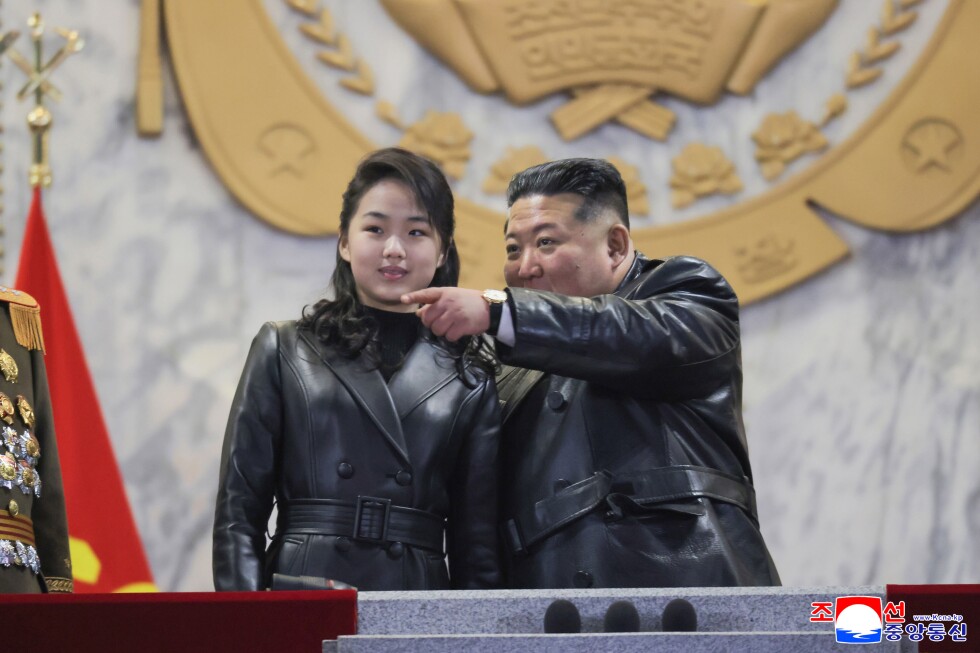
The congress culminated in a nighttime military parade where Kim appeared alongside his increasingly prominent daughter, believed to be named Kim Ju Ae and around 13 years old. Wearing matching leather coats, the pair watched fighter jets flying over the illuminated Kim Il Sung Square, named after Kim’s state-founding grandfather.
Notably, the parade omitted displays of North Korea’s largest weapons, including intercontinental ballistic missiles (ICBMs) capable of reaching the U.S. mainland. This restraint has fueled speculation that Kim may be avoiding actions that could antagonize Washington as he keeps diplomatic channels potentially open.
While maintaining an uncompromising stance toward Seoul, Kim expressed conditional openness to engagement with Washington. “There is no reason we cannot get along” with the Americans, he said, if they abandoned their “hostile policy” toward North Korea—a term Pyongyang typically uses to describe international sanctions and pressure over its nuclear program.
“Whether it’s peaceful coexistence or permanent confrontation, we are ready for either, and the choice is not ours to make,” Kim stated, effectively placing the onus for improved relations on the United States.
Kim’s hardening position toward South Korea builds on his January declaration that the South is now a “permanent enemy” rather than a potential partner for reunification. South Korea’s Unification Ministry expressed regret over North Korea’s continued hostility, saying Seoul will “patiently” pursue peace stabilization efforts.
Experts suggest Kim’s aggressive rhetoric toward Seoul doesn’t necessarily signal imminent military conflict but rather reflects his strategy to assert a more forceful regional role backed by his nuclear arsenal and strengthened ties with Moscow and Beijing.
The North Korean leader has recently prioritized relations with Russia, reportedly sending thousands of troops and military equipment to support Moscow’s war in Ukraine, likely in exchange for aid and military technology. However, analysts note he is pragmatically keeping options open with Washington, particularly as Russia’s needs could change when the Ukraine conflict eventually winds down.
Kim’s military ambitions remain expansive. He called for developing new weapons systems including submarine-launched ICBMs, suggesting plans to fit such weapons on a nuclear-powered submarine currently under construction. His military shopping list also included AI-equipped attack drones, enhanced electronic warfare capabilities, additional reconnaissance satellites, and unspecified anti-satellite weapons.
The North Korean leader also emphasized plans to increase deployment of nuclear-capable artillery systems targeting South Korea annually while reinforcing border defenses. These goals build upon previous weapons development milestones achieved since the 2021 party congress, including solid-fuel ICBMs, tactical nuclear systems, hypersonic weapons, and the country’s first military satellite launched in 2023.
North Korea has consistently rejected calls from Washington and Seoul to resume denuclearization talks, which collapsed in 2019 following Kim’s failed summit with then-U.S. President Donald Trump. Instead, Pyongyang has indicated that future discussions must accept its status as a nuclear power.
As the congress concluded, Kim asserted that his nuclear and missile program developments in recent years had “permanently cemented” North Korea’s status as a nuclear weapons state—signaling that giving up these capabilities is not on the table in any future negotiations.
Fact Checker
Verify the accuracy of this article using The Disinformation Commission analysis and real-time sources.

10 Comments
The mining and energy implications of this situation are worth considering. Potential instability in the region could impact commodity supply chains and prices, especially for critical minerals like uranium and lithium that North Korea has reserves of.
Interesting to see the aggressive rhetoric alongside the openness to US talks. North Korea is clearly trying to project strength while leaving room for potential diplomatic breakthroughs. The geopolitical and commodity market implications are worth monitoring closely.
The military parade and Kim’s daughter’s appearance add an interesting layer to this story. North Korea is clearly trying to assert its nuclear capabilities and future leadership, even as it hints at openness to US dialogue.
You raise a good point. The family dynastic aspect and nuclear posturing seem to be happening in parallel. Navigating this will be a major challenge for all involved.
It’s concerning to see the aggression and threats against South Korea, but the openness to US dialogue is a glimmer of hope. This is a delicate geopolitical situation that requires careful navigation by all parties involved.
The military parade and Kim’s daughter’s appearance suggest this was more than just political posturing. North Korea seems intent on demonstrating its nuclear capabilities and willingness to use them if threatened, while also hinting at potential diplomatic openings.
You’re right, the daughter’s prominence was noteworthy. North Korea is clearly trying to showcase its future leadership and nuclear might simultaneously.
Threats against South Korea are alarming, but the potential for US dialogue is intriguing. This delicate balance North Korea is trying to strike bears close watching, especially for the mining and energy sectors that could be impacted.
Tough rhetoric from Kim, but leaving the door open for dialogue with the US is interesting. Seems like North Korea is trying to maintain a delicate balance – projecting strength while leaving room for potential negotiations.
Tough talk from Kim, but the door left open for US talks is intriguing. North Korea seems to be trying to project strength while leaving room for potential diplomatic breakthroughs. This is a complex situation to watch unfold.