


Listen to the article
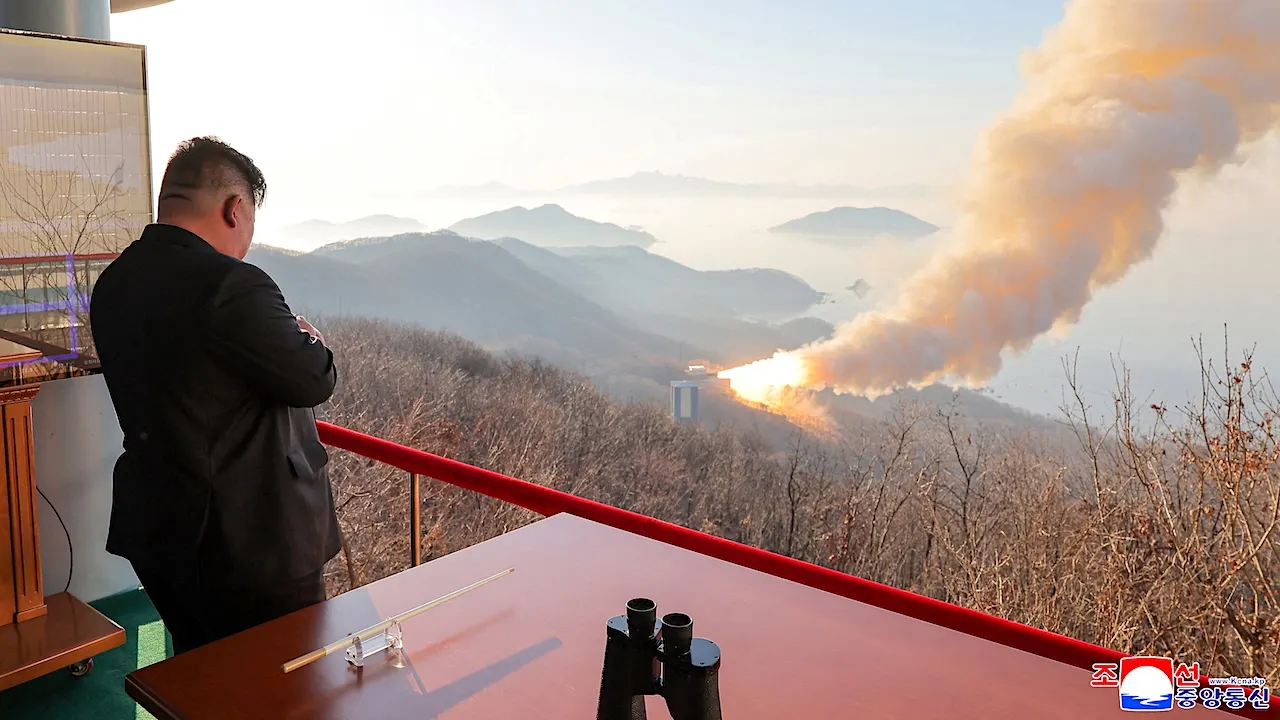
North Korean leader Kim Jong Un has overseen the testing of a new high-thrust solid-fuel rocket engine, marking another advancement in the country’s weapons program aimed at enhancing its capacity to strike the U.S. mainland, state media reported Sunday.
The test featured an engine constructed with carbon-fiber materials, which North Korean state media KCNA described as a critical component of the regime’s five-year defense modernization plan to upgrade its “strategic strike” capabilities. The engine reportedly generated 2,500 kilonewtons of thrust, surpassing the power of a similar engine tested last year.
“This test has great significance in putting the country’s strategic military muscle on the highest level,” Kim was quoted as saying by KCNA.
Military analysts note that solid-fuel systems represent a significant technological advancement for North Korea’s missile program. Unlike older liquid-fuel missiles, solid-fuel rockets can be launched with minimal preparation time, making them more difficult to detect and potentially more survivable in combat scenarios.
Lee Choon Geun, an honorary research fellow at South Korea’s Science and Technology Policy Institute, expressed skepticism about some of North Korea’s claims, suggesting Pyongyang might be “bluffing” since it withheld key technical details such as the engine’s total combustion time.
Despite the apparent progress, experts point out that North Korea still faces substantial technical hurdles before fielding a fully reliable intercontinental ballistic missile (ICBM). One of the most significant challenges remains ensuring that a nuclear warhead can survive atmospheric reentry—a critical capability for any missile targeting the continental United States.
The engine test is part of a broader pattern of intensified military activities directed by Kim in recent weeks. KCNA also reported that the North Korean leader inspected special operations training and witnessed tests of a new main battle tank, which Kim claimed features a protection system capable of defeating “nearly all existing anti-tank weapons.” These claims could not be independently verified.
North Korea’s accelerated weapons development follows the collapse of diplomatic talks between Kim and former U.S. President Donald Trump in 2019. Since those negotiations broke down, Pyongyang has ramped up its nuclear and missile programs despite international sanctions, while maintaining that it remains open to dialogue if Washington abandons its demands for denuclearization as a precondition.
In February, at a rare ruling party congress, Kim unveiled a new five-year plan that reaffirmed North Korea’s commitment to developing nuclear weapons while calling for comprehensive upgrades to the country’s military capabilities. The plan appears to encompass both strategic weapons and conventional forces.
Regional analysts and governments have observed that North Korea’s recent tank exercises and combined-arms drills suggest an effort to modernize its military doctrine based on lessons from recent global conflicts. These developments indicate Pyongyang is working toward greater integration between its ground forces and missile capabilities.
South Korean and U.S. officials have stated they are closely monitoring these weapons developments, which continue to raise tensions in the region. The latest advancements come amid an ongoing stalemate in diplomatic efforts to address North Korea’s nuclear program.
North Korea’s pursuit of solid-fuel technology represents a significant concern for regional security planners, as such systems could potentially reduce warning times for missile launches and complicate defensive preparations by neighboring countries and their allies.
Fact Checker
Verify the accuracy of this article using The Disinformation Commission analysis and real-time sources.

16 Comments
This development is a stark reminder of the ongoing threat posed by North Korea’s nuclear and missile programs. Solid-fuel technology represents a concerning leap forward in their capabilities.
You’re right, this test is a sobering wake-up call. The international community must remain vigilant and continue to explore diplomatic and deterrence-based solutions.
I’m curious to see how the international community responds to this latest development. Strengthening deterrence and missile defense systems will likely be a priority, but a diplomatic solution remains elusive.
You raise a good point. Effective deterrence and diplomacy will be crucial to managing this growing threat from North Korea.
The reported power and capabilities of this new solid-fuel engine are quite impressive, if concerning. It’s clear North Korea is making steady advancements in its missile program, posing a growing threat to the region.
You’re right, this test represents a significant technological leap for North Korea’s weapons development. Effective deterrence and diplomacy will be crucial to mitigating the risks.
The shift to solid-fuel technology is a concerning technical advancement for North Korea’s missile program. It underscores the need for continued vigilance and a comprehensive strategy to address the country’s nuclear and missile capabilities.
Agreed. This test highlights the complex geopolitical challenge posed by North Korea’s weapons development. A multifaceted approach will be required to effectively mitigate the threat.
This is a concerning development, as North Korea continues to advance its missile capabilities. Solid-fuel engines provide key advantages in terms of launch readiness and survivability. The threat to the US mainland is indeed elevated, underscoring the need for continued monitoring and diplomacy.
Agreed, the technological progress is troubling. Solid-fuel missiles are more difficult to detect and destroy pre-launch, raising the stakes for regional security.
This latest test by North Korea is a concerning development that highlights the ongoing challenges in addressing the country’s nuclear and missile programs. The shift to solid-fuel technology raises the stakes for regional security.
Agreed. Navigating this complex situation will require a comprehensive, multilateral approach to maintain stability and prevent further escalation.
North Korea’s progress in solid-fuel missile technology is certainly alarming. The potential implications for regional security and the US mainland are significant and warrant a robust response.
Absolutely. This development underscores the need for continued pressure and engagement to address North Korea’s nuclear ambitions and prevent further escalation.
Kim Jong Un’s focus on enhancing the country’s “strategic strike” capabilities is certainly alarming. Solid-fuel missile technology represents a significant advancement that could alter the balance of power in the region.
This test highlights the ongoing challenge of constraining North Korea’s nuclear and missile ambitions. Diplomacy and sanctions have had limited impact so far.