


Listen to the article
North Korea Reveals Progress on Nuclear-Powered Submarine
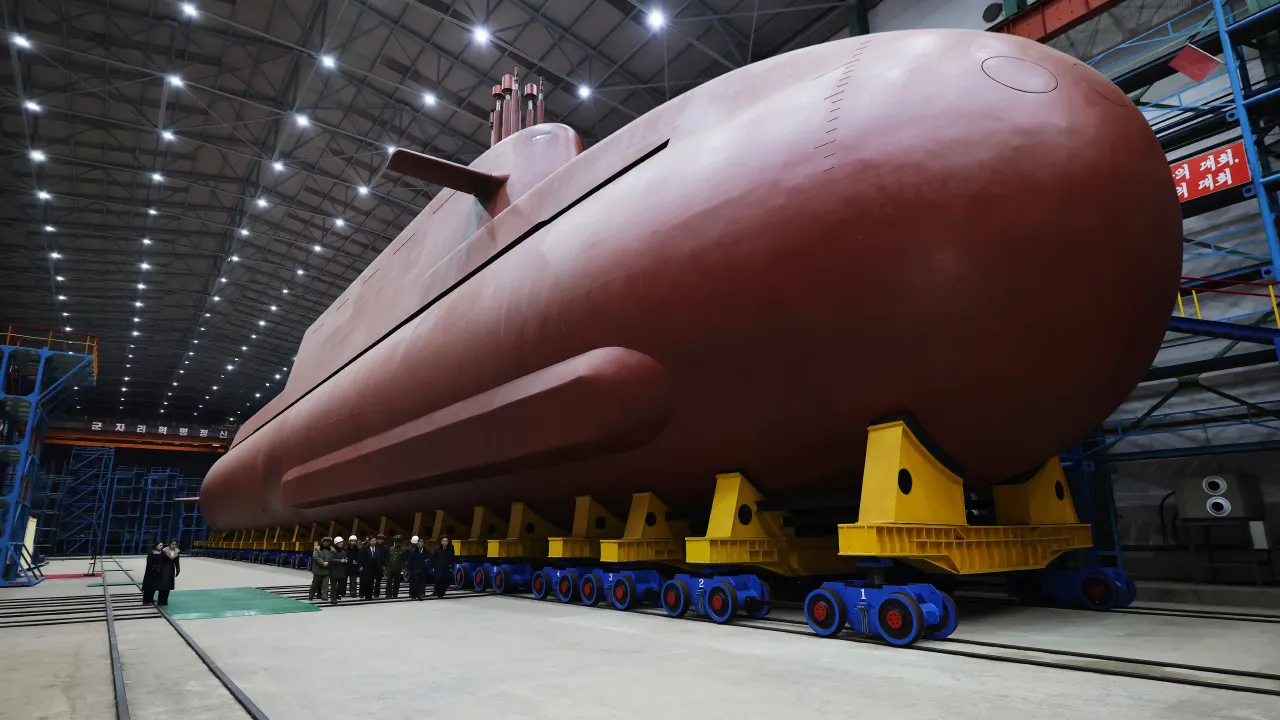
North Korea has showcased what appears to be significant progress in its development of a nuclear-powered submarine, with state media releasing new photographs of leader Kim Jong Un and his daughter inspecting the vessel’s largely completed hull.
According to the Korean Central News Agency (KCNA), North Korea’s official state media, Kim visited a shipyard to examine the construction of what is described as an 8,700-ton-class nuclear-propelled submarine. The regime has indicated plans to arm the submarine with nuclear weapons, marking a substantial advancement in Pyongyang’s naval capabilities.
The Christmas Day release of these images represents the first official update on the nuclear-powered submarine since March, when earlier photographs primarily showed only the lower sections of the vessel. While KCNA did not specify when the latest photos were taken, they reveal a significantly more complete submarine than previously displayed.
Moon Keun-sik, a submarine expert at Seoul’s Hanyang University and former South Korean navy submarine officer, noted that the photos showing a largely completed hull suggest that many core components are already installed.
“Showing the entire vessel now seems to indicate that most of the equipment has already been installed and it is just about ready to be launched into the water,” Moon told The Associated Press. He estimated the North Korean submarine could be ready for sea trials within months.
The development marks a crucial step in Kim Jong Un’s stated goal of modernizing and nuclear-arming his country’s navy. The strategic significance of a nuclear-powered submarine cannot be overstated, as it would potentially allow North Korea to deploy nuclear weapons from underwater platforms, greatly complicating regional security calculations and missile defense strategies.
While inspecting the vessel, Kim condemned South Korea’s parallel efforts to develop its own nuclear-powered submarine, describing Seoul’s pursuit as an “offensive act” that violates North Korea’s security and maritime sovereignty. This response comes despite President Donald Trump’s explicit support for South Korea’s submarine technology ambitions.
In October, during his Asia investment tour, Trump announced that the United States would share technology enabling South Korea to build a nuclear-powered submarine, stating the vessel would be constructed in Philadelphia. “South Korea will be building its nuclear-powered submarine in the Philadelphia shipyards, right here in the good ol’ U.S.A. Shipbuilding in our country will soon be making a BIG COMEBACK,” the president wrote on Truth Social.
This agreement was further solidified in November when the White House released a fact sheet directly referencing Washington and Seoul’s efforts to “further our maritime and nuclear partnership.”
The competing submarine developments highlight the growing naval arms race in Northeast Asia, with both North and South Korea pursuing advanced underwater capabilities. For Pyongyang, a nuclear-powered submarine represents not only a military asset but also a symbol of technological achievement and national prestige in the face of international sanctions.
Military analysts have questioned North Korea’s technical capacity to successfully deploy and maintain such an advanced vessel, given the complex engineering challenges involved in nuclear propulsion systems. However, the latest images suggest Pyongyang may be further along in the development process than previously assessed by outside observers.
The timing of this submarine reveal comes amid ongoing tensions on the Korean Peninsula, including North Korea’s continued ballistic missile tests and increased military cooperation between Pyongyang and Moscow. The submarine development represents another significant step in North Korea’s expanding nuclear and military capabilities, despite international sanctions aimed at curtailing such advancements.
Regional security experts are closely monitoring the situation, as a deployable nuclear-powered submarine would dramatically alter the strategic balance in Northeast Asia and potentially trigger further military buildups among neighboring countries.
Fact Checker
Verify the accuracy of this article using The Disinformation Commission analysis and real-time sources.

10 Comments
While North Korea’s nuclear and missile programs have long been a source of tension, the development of a nuclear-powered submarine marks a new milestone in their military capabilities. This technology could significantly enhance their strategic deterrence.
It will be crucial for diplomatic efforts to continue, aimed at finding a peaceful resolution and preventing further escalation of tensions in the region.
This is a significant development for North Korea’s naval capabilities. Nuclear-powered submarines represent a major technological advancement that could bolster Pyongyang’s military power and influence in the region.
The release of these images appears to be a strategic move by North Korea to showcase its progress and send a message to the international community.
North Korea’s pursuit of nuclear-powered submarine technology is a bold and concerning move. While it demonstrates their technical capabilities, it also raises significant concerns about the potential for increased regional instability and the risks of nuclear proliferation.
Continued diplomatic engagement and international pressure will be crucial in addressing this development and finding a peaceful solution to the complex issues on the Korean Peninsula.
I’m curious to see how the international community will respond to this news. The prospect of North Korea potentially arming a nuclear-powered submarine with nuclear weapons is certainly a concerning development.
It will be important to closely monitor the ongoing progress of this program and any potential implications for regional stability and security.
The images of the largely completed submarine hull suggest that North Korea has made substantial technical progress in this area. This development is likely to be closely watched and analyzed by defense experts and policymakers around the world.
It remains to be seen how this advancement will impact regional geopolitics and the ongoing efforts to denuclearize the Korean Peninsula.