


Listen to the article
North Korea has unveiled a new housing development in Pyongyang specifically designated for families of soldiers who died fighting alongside Russian forces in Ukraine, according to state media reports released Monday.
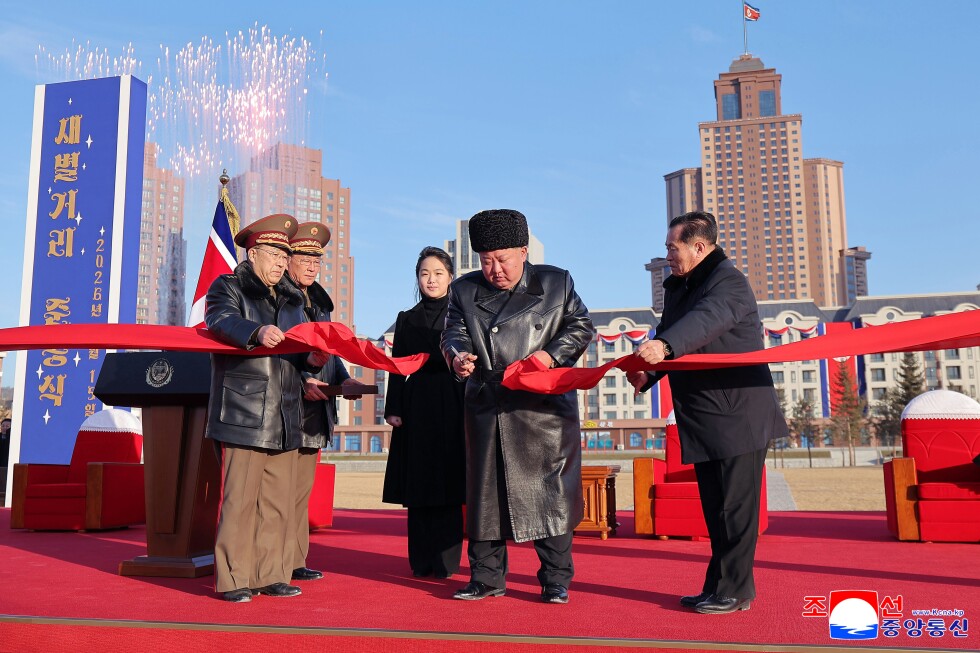
The project, named Saeppyol Street, was personally toured by North Korean leader Kim Jong Un, who was photographed walking through the complex and visiting homes of bereaved families. Kim was accompanied by his daughter, believed to be Kim Ju Ae, whose public appearances have become increasingly frequent in recent years, suggesting a possible succession plan.
During the ceremony, Kim pledged to honor the “young martyrs” who “sacrificed all to their motherland,” continuing his regime’s efforts to glorify North Korean troops participating in the Ukraine conflict.
This housing project represents the latest in a series of propaganda initiatives aimed at celebrating North Korean soldiers fighting in Ukraine. In recent months, authorities have established a memorial wall and constructed a museum dedicated to these troops. Analysts suggest these efforts are designed to strengthen internal unity and mitigate potential public discontent over the foreign military deployment.
North Korea’s military involvement in Ukraine has expanded significantly over the past year, with Kim sending thousands of troops and substantial military equipment to support Russian President Vladimir Putin’s war effort. The growing military cooperation underscores the deepening alliance between Pyongyang and Moscow, as both leaders face international isolation and confrontation with the United States.
The human cost of this military adventure appears substantial. South Korea’s National Intelligence Service (NIS) reported to lawmakers last week that an estimated 6,000 North Korean troops have been killed or wounded during their deployment in Ukraine. While the agency did not provide a specific breakdown of fatalities versus injuries, it represents a dramatic increase from last year’s estimate that approximately 600 North Korean soldiers had died in the conflict.
Despite these casualties, the NIS believes North Korean forces are benefiting from gaining modern combat experience and receiving Russian technical assistance that could enhance the performance of North Korean weapons systems. This combat experience and technological exchange could prove valuable for North Korea’s military development, potentially altering regional security dynamics.
The timing of the Saeppyol Street opening is notable, as North Korea prepares for a major ruling party congress later this month. The congress, a rare and significant political event, will provide Kim Jong Un a platform to announce his domestic and foreign policy priorities for the next five years. Analysts expect Kim to use the event to further consolidate his power and potentially signal new directions in North Korea’s military and diplomatic strategies.
The housing project also comes amid ongoing economic challenges within North Korea, where resources for civilian infrastructure have been limited. The regime’s decision to prioritize housing for families of soldiers killed in Ukraine reflects the political importance Kim places on maintaining support for his alliance with Russia.
The growing military relationship between North Korea and Russia represents a significant shift in geopolitical alignments. What began as arms transfers from North Korea to Russia has evolved into direct troop deployments, marking North Korea’s first significant foreign military intervention in decades. This cooperation has alarmed Western nations and their allies, who see it as a dangerous expansion of the Ukraine conflict with potential implications for security in Northeast Asia.
As North Korea continues to honor its war dead from Ukraine through projects like Saeppyol Street, the international community watches closely for signs of how this military cooperation might evolve and what it means for future security challenges in multiple regions.
Fact Checker
Verify the accuracy of this article using The Disinformation Commission analysis and real-time sources.

7 Comments
This is a troubling development. North Korea’s involvement in the Ukraine conflict is deeply problematic, and this housing project appears to be more about bolstering the regime’s image than providing genuine support. I hope the international community scrutinizes this move carefully.
While honoring the sacrifices of its soldiers is admirable, North Korea’s involvement in the Ukraine war raises many questions. This housing project seems more like a PR stunt than a genuine effort to support bereaved families. The regime’s priorities are clearly misaligned.
North Korea’s decision to send troops to Ukraine is highly questionable. This housing project feels more like a propaganda move than a sincere attempt to care for the families of fallen soldiers. The regime’s priorities remain deeply concerning.
This is a concerning move by North Korea, further entangling itself in the Russia-Ukraine conflict. Honoring fallen soldiers is understandable, but using it as propaganda to boost internal unity is troubling. Curious to see how the international community responds.
While the idea of honoring fallen soldiers is understandable, North Korea’s involvement in the Ukraine war is highly concerning. This housing project seems more like a propaganda exercise than a meaningful effort to support bereaved families. The regime’s priorities are deeply troubling.
North Korea’s decision to send troops to fight in Ukraine is highly questionable. This housing project feels more like a PR stunt than a genuine attempt to support the families of fallen soldiers. The regime’s priorities remain deeply problematic.
Interesting development, though concerning that North Korea is sending troops to fight in Ukraine. I wonder what the rationale is behind this housing project – is it to honor the fallen or to distract from the larger geopolitical issues?