


Listen to the article
North Korea Launches Multiple Ballistic Missiles, Rejects South Korean Diplomatic Outreach
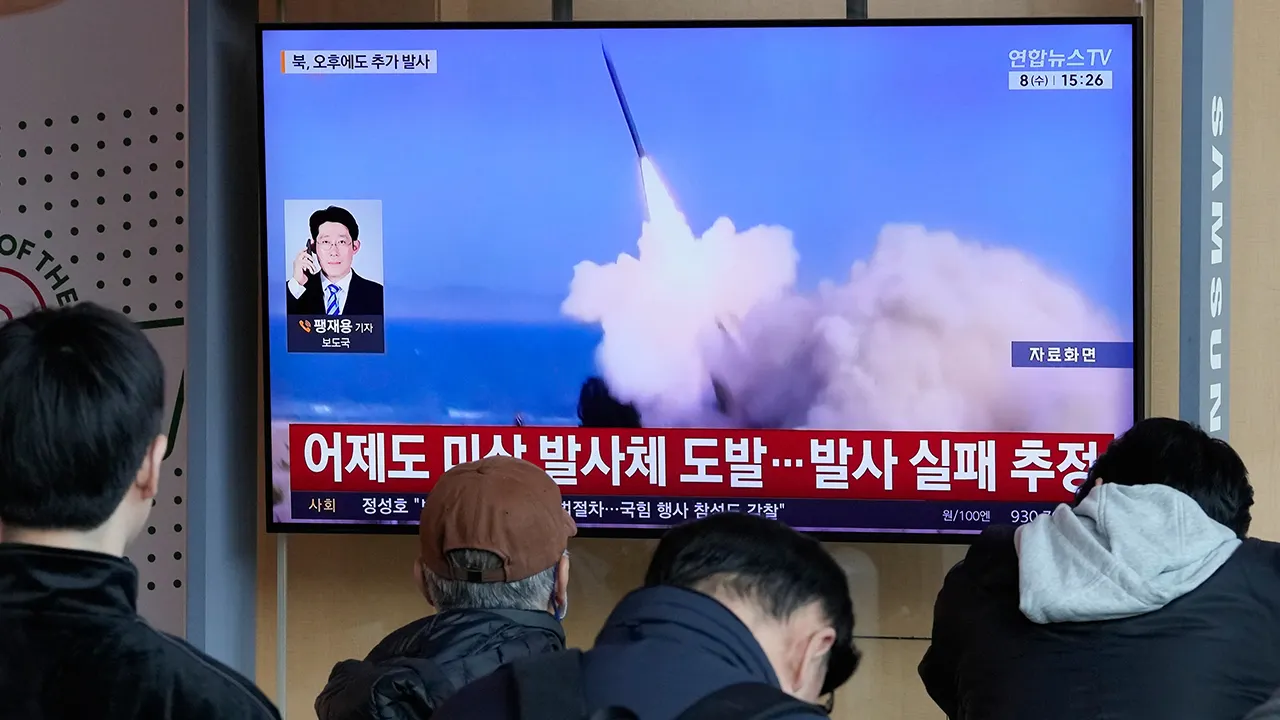
North Korea fired multiple short-range ballistic missiles toward the sea Wednesday, marking its second launch event in as many days as tensions on the Korean Peninsula continue to escalate. The launches came hours after a senior North Korean official issued harsh rhetoric rejecting Seoul’s hopes for improved relations.
South Korea’s Joint Chiefs of Staff reported that several missiles were launched from North Korea’s eastern coastal Wonsan area Wednesday morning, each traveling approximately 240 kilometers (150 miles) toward the North’s eastern waters. An additional ballistic missile fired later Wednesday traveled more than 700 kilometers (435 miles) off North Korea’s east coast.
The South Korean military stated it maintains readiness to counter any provocations under its alliance with the United States. This follows reports of another projectile launch from North Korea’s capital region on Tuesday, which South Korean media indicated likely failed during its initial launch stage after displaying abnormal flight patterns.
The back-to-back missile tests coincide with increasingly hostile rhetoric from Pyongyang. On Tuesday night, North Korea’s Foreign Ministry First Vice Minister Jang Kum Chol declared that South Korea would “always remain North Korea’s most hostile enemy state” and derided South Korean officials as “world-startling fools” engaged in wishful thinking.
Jang’s comments were in response to Seoul’s interpretation of a statement by Kim Yo Jong, the influential sister of North Korean leader Kim Jong Un. After South Korean President Lee Jae Myung expressed regret over alleged civilian drone flights into North Korea, Kim Yo Jong had issued a statement that South Korean officials characterized as potential progress in relations.
However, Jang clarified that Kim Yo Jong’s statement was intended as a warning, not an opening for dialogue. He referenced her description of South Korea as “dogs affected by mange that blindly bark to the tune of neighboring dogs” for co-sponsoring a UN resolution on North Korea’s alleged human rights violations.
These developments reflect North Korea’s continued refusal to engage in talks with South Korea or the United States since Kim Jong Un’s failed diplomacy with then-US President Donald Trump collapsed in 2019. Instead, Pyongyang has focused on expanding its nuclear arsenal and strengthening ties with countries at odds with Washington.
North Korean state media announced that Chinese Foreign Minister Wang Yi will visit North Korea on Thursday for a two-day trip, highlighting the regime’s efforts to bolster international relationships outside the US sphere. Last September, Kim Jong Un traveled to Beijing for a military parade and held his first summit with Chinese President Xi Jinping in six years.
North Korea’s missile launches come just days after Kim Jong Un personally observed a test of an upgraded solid-fuel engine for weapons, which he called a significant development for the country’s strategic military capabilities. South Korea’s intelligence agency told lawmakers Monday that the engine test likely relates to North Korea’s efforts to build a more powerful solid-fuel intercontinental ballistic missile capable of carrying multiple nuclear warheads.
Missiles with built-in solid propellants offer tactical advantages, as they are easier to transport and conceal before launch compared to liquid-fuel weapons, which generally require fueling immediately before use and cannot remain launch-ready for extended periods.
Experts believe North Korea is pursuing multi-warhead missile technology to overcome US missile defense systems, though many analysts doubt Pyongyang has yet mastered the sophisticated technology required for such advanced weapons systems.
The repeated missile tests and harsh rhetoric underscore the widening gap between North Korea’s military ambitions and South Korea’s diplomatic overtures, further complicating prospects for stability in the region as North Korea continues to strengthen its strategic relationships with Russia and China.
Fact Checker
Verify the accuracy of this article using The Disinformation Commission analysis and real-time sources.

11 Comments
North Korea’s continued missile tests, despite South Korea’s outreach, demonstrate the challenges in achieving a lasting peace on the Korean peninsula. Sustained diplomatic efforts, with buy-in from all stakeholders, will be essential to find a diplomatic solution.
Well said. Maintaining open communication channels and finding ways to address North Korea’s legitimate security concerns will be crucial, even as the international community upholds its non-proliferation principles.
These missile tests are a concerning provocation from North Korea. While the range may be limited, the continued development of ballistic missile technology is a threat to regional stability. Diplomatic efforts to find a peaceful resolution are crucial.
Absolutely. North Korea’s refusal to engage constructively is alarming. The international community must find a way to re-engage with Pyongyang and address its security concerns through dialogue, while also upholding non-proliferation norms.
The back-to-back missile launches by North Korea are a clear attempt to ratchet up tensions and pressure the South Korean government. Diplomacy and dialogue remain the best path forward, but the North’s intransigence is deeply concerning.
It’s disappointing to see North Korea dismiss South Korea’s outreach efforts. Maintaining open communication channels is crucial to avoid further escalation and potential conflict on the Korean peninsula.
Concerning to see North Korea continuing to provoke tensions in the region with these missile launches. Dialogue and diplomacy seem more important than ever to de-escalate the situation.
Agreed. The South Korean government’s outreach is a positive step, but it’s unclear if the North will engage constructively. Careful diplomacy and conflict resolution will be crucial.
The latest missile launches by North Korea are a concerning escalation. While the range may be limited, the continued development of ballistic missile technology is a threat to regional stability. Effective diplomacy and conflict resolution are needed to de-escalate tensions.
North Korea’s missile tests are a worrying development. While the range may be limited, the continued launch of ballistic missiles is a clear violation of UN resolutions. Diplomatic efforts to rein in the North’s nuclear program appear stalled.
You’re right, the lack of progress is deeply concerning. The international community needs to find a way to meaningfully engage North Korea and address its security concerns, while also upholding global norms against nuclear proliferation.