


Listen to the article
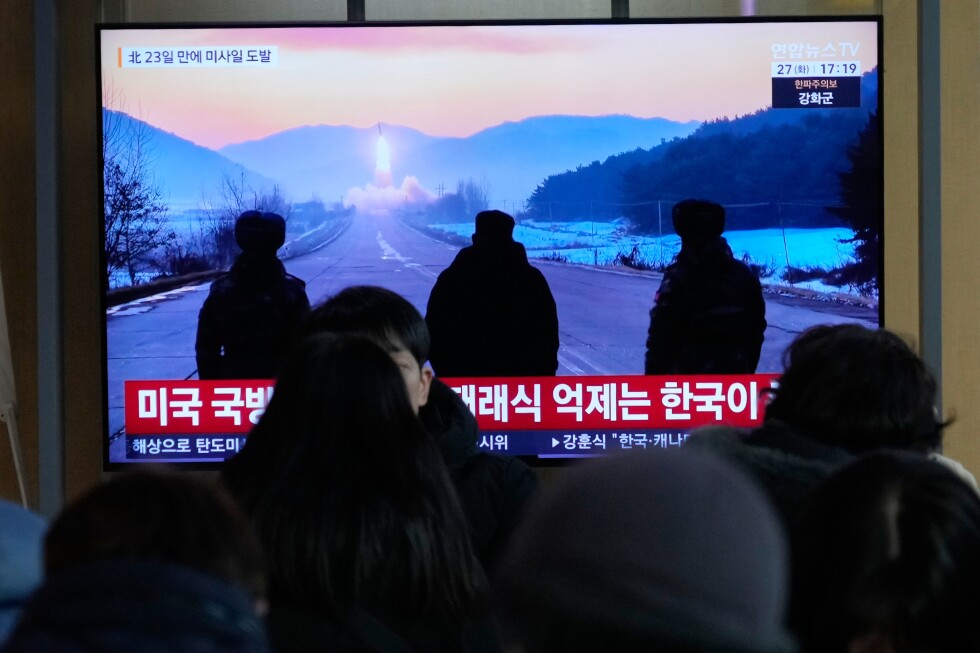
North Korea fired several short-range ballistic missiles toward its eastern waters on Tuesday, intensifying regional tensions ahead of a major political gathering, according to South Korean and Japanese officials.
South Korea’s military detected multiple missile launches from an area north of Pyongyang, with each projectile traveling approximately 350 kilometers (217 miles) before landing in waters off the Korean Peninsula’s east coast. Japan’s Defense Ministry confirmed the detection of two ballistic missiles and condemned the launches as threatening to regional and international peace.
The South Korean military issued a statement affirming its readiness to respond to any further provocations from the North.
Tuesday’s launches mark North Korea’s first weapons test since early January, when it claimed to have successfully tested hypersonic missiles. In December, the isolated nation conducted a series of weapons demonstrations, including what it described as long-range strategic cruise missiles and new anti-air missiles. Pyongyang also released photographs suggesting significant progress in the construction of its first nuclear-powered submarine.
Experts view these escalating military activities as part of leader Kim Jong Un’s broader strategy to expand North Korea’s nuclear and missile capabilities after diplomatic talks with the United States and South Korea stalled in 2019. Kim’s weapons development program appears aimed at building leverage for potential future negotiations with Washington.
The timing of the latest missile tests is particularly significant, coming just weeks before North Korea’s ruling Workers’ Party congress, expected to begin in February. This major political event, the first of its kind in five years, serves as a key propaganda platform where the regime establishes new political and economic priorities.
“These demonstrations likely serve dual purposes – showcasing technological achievements to domestic audiences while signaling military capabilities to international observers before the party congress,” said a regional security analyst who requested anonymity due to the sensitive nature of the topic.
The heightened military activity coincides with growing tensions between the two Koreas. North Korea recently accused South Korea of flying surveillance drones across their border on two occasions – in September and again in January. Seoul has denied these allegations and launched an investigation into whether civilians might have been responsible for any unauthorized drone flights.
Security analysts suggest these accusations may be deliberately timed to intensify anti-South Korean sentiment ahead of the Workers’ Party congress. During the upcoming meeting, Kim’s previous declaration establishing a hostile “two-state” system on the Korean Peninsula could potentially be formalized in the party constitution, further cementing the division between the two nations.
The missile launches continue a pattern of provocations that has characterized North Korean foreign policy in recent years. Since 2019, when negotiations with the Trump administration collapsed at a summit in Vietnam, Pyongyang has conducted numerous weapons tests while rejecting offers to resume diplomatic talks.
Regional observers note that North Korea’s weapons program has made significant technological advances despite international sanctions designed to impede its development. The regime’s pursuit of submarine-launched capabilities and hypersonic weapons systems indicates a growing sophistication in its military arsenal.
Japanese and South Korean defense officials continue to monitor the situation closely, with both nations maintaining heightened alert status following the latest launches. The United States, which maintains approximately 28,500 troops in South Korea, has consistently condemned North Korea’s weapons testing as violations of United Nations Security Council resolutions.
As tensions rise on the Korean Peninsula, diplomatic efforts to engage with Pyongyang remain stalled, with little indication that meaningful dialogue will resume in the near future.
Fact Checker
Verify the accuracy of this article using The Disinformation Commission analysis and real-time sources.

14 Comments
While the details are still emerging, it’s clear that North Korea remains determined to advance its missile capabilities despite international sanctions. This underscores the complex geopolitical dynamics at play in Northeast Asia.
This is a concerning development, as North Korea’s missile tests continue to raise tensions in the region. We’ll have to see how the international community responds to this latest provocation.
While North Korea’s actions are unacceptable, we must be careful not to respond in ways that could further destabilize the region. Maintaining open channels of communication and exploring creative diplomatic solutions will be crucial.
Agreed, a measured and diplomatic response is important to avoid the risk of conflict escalation. Constructive engagement, even in the face of provocations, may be the best path forward.
North Korea’s persistent pursuit of missile technology is a major source of instability in the region. I hope the international community can find a way to address this challenge without resorting to further escalation or military action.
These missile launches are a clear attempt by North Korea to assert its military capabilities and influence the regional balance of power. Careful analysis and a coordinated response from the international community will be essential.
Absolutely, a nuanced and multilateral approach is needed to address the complex geopolitical dynamics at play. Maintaining open lines of communication and exploring diplomatic options should be the priority.
North Korea’s missile program is a major security threat, and these latest launches only heighten the risk of miscalculation or conflict. Regional cooperation will be key to addressing this challenge.
While these missile tests are concerning, it’s important to avoid knee-jerk reactions and instead focus on finding a constructive, long-term solution to the North Korean nuclear issue. Patience and diplomacy will be key.
North Korea’s missile launches are a concerning provocation, but it’s important to avoid escalating tensions further. A measured, diplomatic approach may be the best way to manage this situation.
These missile tests are a clear violation of UN resolutions and raise the risk of miscalculation. I hope the international community can find a way to de-escalate the situation and resume meaningful negotiations with North Korea.
I’m curious to hear more about the technical specifics of these latest missile tests and what they might signal about the state of North Korea’s program. Monitoring the situation closely will be important.
Agreed, the technical details could provide valuable insights into North Korea’s capabilities and intentions. Ongoing diplomatic efforts to address this issue will be critical.
The continued development of North Korea’s missile program is a serious concern for regional and global security. I hope the international community can find a way to address this challenge through a combination of deterrence and diplomacy.