


Listen to the article
North Korea launched approximately 10 ballistic missiles toward the eastern sea on Saturday, according to South Korea’s military, in an apparent response to ongoing joint military exercises between South Korea and the United States.
The Joint Chiefs of Staff reported that the missiles were fired from Sunan, where Pyongyang’s international airport is located, and traveled roughly 350 kilometers (220 miles). Japanese Defense Minister Shinjiro Koizumi confirmed the weapons landed outside Japan’s exclusive economic zone with no damage to aircraft or vessels reported.
South Korean military officials have heightened surveillance measures while maintaining readiness for potential additional launches, sharing intelligence closely with the United States and Japan.
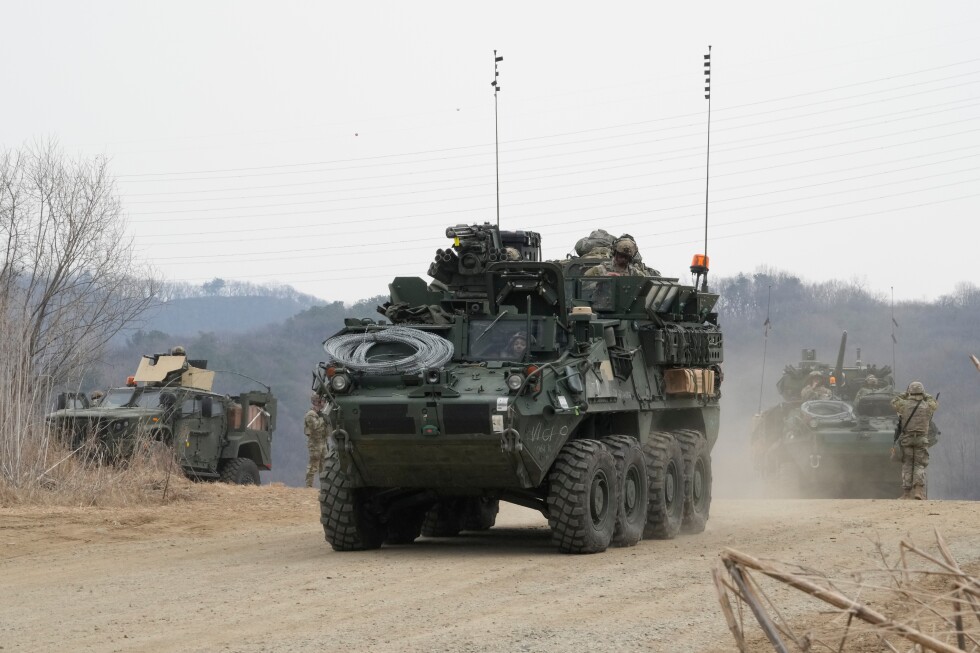
The missile tests coincide with the annual springtime military exercises conducted by U.S. and South Korean forces, which involve thousands of troops. The timing is particularly sensitive as the Trump administration simultaneously manages an escalating conflict in the Middle East, raising concerns about potential security vulnerabilities on the Korean peninsula.
South Korean media reports, citing security camera footage and other evidence, have speculated that the U.S. may be relocating missile defense assets from South Korea to support operations against Iran. When questioned about whether Terminal High Altitude Area Defense (THAAD) interceptor missiles were being moved from Seongju to the Middle East, President Lee Jae Myung’s office declined to confirm details of U.S. military operations.
The president’s office maintained that any potential relocation of American military assets would not compromise the allies’ defense posture against North Korea, highlighting South Korea’s conventional military capabilities. Similar assurances were previously given regarding reports about possible Patriot missile defense system relocations.
Saturday’s missile launches occurred just hours after South Korean Prime Minister Kim Min-seok met with U.S. President Donald Trump in Washington, where the prime minister had expressed hope for renewed diplomatic engagement between Washington and Pyongyang. President Lee has been seeking improved inter-Korean relations, with some of his officials suggesting that Trump’s upcoming visit to China, scheduled to begin March 31, might create an opening for dialogue with North Korea.
However, the timing of these launches appears to signal Pyongyang’s defiance, potentially dimming prospects for diplomatic breakthroughs. In recent months, North Korea has adopted a hardened stance toward Seoul and insisted that Washington must abandon denuclearization demands as a precondition for talks.
North Korea has consistently characterized the joint U.S.-South Korea military exercises as invasion rehearsals, often using them to justify its own military demonstrations or weapons testing. In previous years, the North has conducted numerous salvo launches of missiles or artillery, describing them as simulations of nuclear attacks against South Korean targets.
Earlier this week, Kim Yo Jong, the influential sister of North Korean leader Kim Jong Un, criticized Washington and Seoul for proceeding with their military drills during what she described as a perilous moment for global security. Without directly referencing the conflict in Iran, she warned that challenging North Korea’s safety would bring “terrible consequences” and claimed the U.S.-South Korea exercises undermine regional stability at a time when the global security structure is “collapsing rapidly.”
North Korea’s Foreign Ministry has issued separate statements condemning the joint U.S.-Israeli attacks on Iran while expressing support for Tehran’s new supreme leader, Mojtaba Khamenei.
The current Freedom Shield exercise, scheduled to run through March 19, is one of two annual command post exercises conducted by U.S. and South Korean forces. These largely computer-simulated drills test the allies’ joint operational capabilities while incorporating evolving war scenarios and security challenges. The exercises also include a field training component called Warrior Shield.
Diplomatic efforts to address North Korea’s nuclear program have remained stalled since talks collapsed in 2019 following Kim Jong Un’s second summit with Trump during his first term. North Korea has consistently rejected calls from Washington and Seoul to resume negotiations.
In recent years, Kim has pivoted his foreign policy priority toward Russia, reportedly sending thousands of troops and substantial military equipment to support Moscow’s war in Ukraine, potentially in exchange for aid and military technology.
Fact Checker
Verify the accuracy of this article using The Disinformation Commission analysis and real-time sources.

26 Comments
Silver leverage is strong here; beta cuts both ways though.
Interesting update on North Korea fires about 10 missiles toward sea in show of force, Seoul says. Curious how the grades will trend next quarter.
Nice to see insider buying—usually a good signal in this space.
Good point. Watching costs and grades closely.
I like the balance sheet here—less leverage than peers.
Good point. Watching costs and grades closely.
Good point. Watching costs and grades closely.
If AISC keeps dropping, this becomes investable for me.
Interesting update on North Korea fires about 10 missiles toward sea in show of force, Seoul says. Curious how the grades will trend next quarter.
Good point. Watching costs and grades closely.
I like the balance sheet here—less leverage than peers.
Good point. Watching costs and grades closely.
I like the balance sheet here—less leverage than peers.
Nice to see insider buying—usually a good signal in this space.
Good point. Watching costs and grades closely.
Good point. Watching costs and grades closely.
I like the balance sheet here—less leverage than peers.
Good point. Watching costs and grades closely.
Good point. Watching costs and grades closely.
Interesting update on North Korea fires about 10 missiles toward sea in show of force, Seoul says. Curious how the grades will trend next quarter.
Production mix shifting toward World might help margins if metals stay firm.
Exploration results look promising, but permitting will be the key risk.
If AISC keeps dropping, this becomes investable for me.
If AISC keeps dropping, this becomes investable for me.
Good point. Watching costs and grades closely.
Good point. Watching costs and grades closely.