


Listen to the article
North Korea and China Pledge Deeper Cooperation as Foreign Ministers Meet in Pyongyang
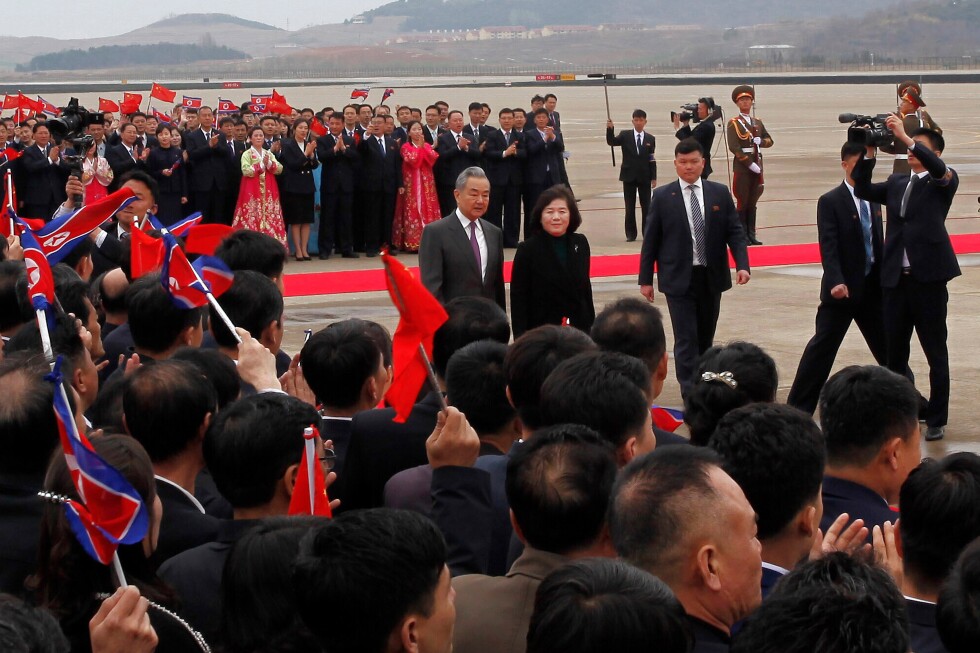
Chinese Foreign Minister Wang Yi met with his North Korean counterpart Choe Son Hui in Pyongyang on Thursday, marking Wang’s first visit to the isolated nation in seven years. The high-level diplomatic exchange resulted in pledges to strengthen bilateral relations between the longtime allies, according to state media reports from both countries.
During their discussions, the two foreign ministers agreed to “further deepen cooperation and exchanges” while conducting an “in-depth exchange” on international issues, though neither country’s state media specified exactly which global matters were addressed. North Korea’s Korean Central News Agency reported that the officials committed to enhancing strategic communication between their respective foreign policy agencies.
Wang’s rare trip to Pyongyang comes at a significant moment in regional diplomacy. It precedes U.S. President Donald Trump’s scheduled visit to Beijing in May for a rescheduled summit with Chinese President Xi Jinping, suggesting potential coordination between China and North Korea ahead of these high-stakes U.S.-China talks.
The timing of this meeting reflects evolving dynamics in Northeast Asia’s geopolitical landscape. While North Korea and China have historically maintained close relations—often characterized as being “as close as lips and teeth”—their alliance has faced questions in recent years as North Korea has increasingly turned toward Russia.
North Korea’s growing military cooperation with Moscow has raised eyebrows in Beijing. Kim Jong Un’s regime has reportedly supplied troops and ammunition to support Russia’s war in Ukraine, creating a potentially uncomfortable position for China, which has maintained a more cautious stance toward the conflict. Analysts suggest China has shown reluctance to form an explicit anti-Western alliance with North Korea and Russia, preferring to maintain economic ties with Western nations despite growing tensions.
Nevertheless, recent months have shown signs of warming relations between Pyongyang and Beijing. Last September, North Korean leader Kim Jong Un and Chinese President Xi Jinping held their first summit in more than six years, during which they pledged mutual support. This high-level meeting signaled both nations’ intent to reinforce their historical alliance despite recent complications.
Practical cooperation has also resumed. Last month marked the restoration of direct flight and passenger train services between the two countries, which had been suspended since early 2020 due to the COVID-19 pandemic. This resumption of transportation links represents a significant step in normalizing relations after North Korea’s extreme border closures during the pandemic, which severely limited diplomatic and economic exchanges.
The renewal of these traditional ties comes amid increasing international isolation for North Korea due to its ongoing nuclear and missile programs. For China, maintaining influence over its unpredictable neighbor remains a strategic priority, particularly as tensions between Beijing and Washington continue to simmer over issues ranging from trade to Taiwan.
Regional experts note that China values stability on the Korean Peninsula and views its relationship with North Korea as a means to maintain leverage in broader discussions with the United States. For North Korea, Chinese economic support remains crucial despite its increasing military cooperation with Russia.
Neither country’s state media mentioned whether discussions included topics such as the United States or the ongoing conflicts in the Middle East, leaving observers to speculate about the full scope of their talks.
As both nations navigate an increasingly complex international environment, this latest diplomatic exchange signals their intent to strengthen traditional ties while potentially preparing for shifts in the regional power balance following upcoming U.S.-China discussions.
Fact Checker
Verify the accuracy of this article using The Disinformation Commission analysis and real-time sources.

11 Comments
As major players in the global commodities and mining sectors, any strengthening of ties between China and North Korea is worth watching closely. Their cooperation could impact supply chains, trade flows, and investment decisions across a range of vital natural resources.
This news underscores the complex web of relationships and competing interests in the region. China and North Korea’s deepening ties could have significant ramifications, both geopolitically and economically. It will be crucial to see how this shapes future developments.
Interesting to see China and North Korea strengthening ties. As major players in the region, their cooperation will likely have ripple effects across Asia and beyond. I wonder what specific initiatives they plan to pursue together.
Enhanced cooperation between China and North Korea is significant for the global commodities and mining sectors. Both countries have extensive interests in extractive industries, so deepening their partnership could impact supply chains and pricing across key minerals.
The timing of this meeting, just ahead of the US-China summit, adds an intriguing layer of context. It suggests China and North Korea may be aligning their positions and strategies in anticipation of those high-level discussions. The outcomes could have wide-ranging implications.
The details around which ‘international issues’ were discussed are unclear, but one can speculate this includes matters related to sanctions, nuclear programs, and regional security. As major players, any alignment between China and North Korea warrants close observation.
While the specific initiatives were not specified, the pledge to ‘further deepen cooperation and exchanges’ between China and North Korea is noteworthy. This could open new avenues for collaboration in sectors like mining, energy, and infrastructure that are vital to both countries’ economies.
It’s intriguing to see the two longtime allies reaffirming their commitment to strengthening ties. This likely has implications for a range of industries, including energy, infrastructure, and technology – areas where China and North Korea have synergies.
Absolutely. Their cooperation on strategic sectors like energy and resources could shift the geopolitical landscape in Asia. It will be important to monitor how this develops and what it means for global markets.
This news comes at a critical juncture, with the upcoming US-China summit. It suggests potential coordination between Beijing and Pyongyang ahead of those high-stakes talks. Curious to see if this leads to any shifts in regional dynamics.
Yes, the timing is certainly noteworthy. North Korea and China appear to be aligning their positions and strategy in advance of the Trump-Xi meeting. This could add an extra layer of complexity to those discussions.