


Listen to the article
Calm returns to Iran after deadly crackdown on protests, as hardline cleric calls for executions of detainees and threatens Trump.
DUBAI, United Arab Emirates — Iran has returned to an uneasy calm following widespread protests that were met with a bloody government crackdown. A senior hardline cleric on Friday called for the death penalty for detained demonstrators and directly threatened U.S. President Donald Trump, revealing the deep anger among authorities in the Islamic Republic.
Despite the cleric’s harsh rhetoric, President Trump struck a conciliatory tone, thanking Iranian leaders for reportedly not executing hundreds of detained protesters. This gesture suggests Trump may be backing away from potential military action against Iran, after previously identifying mass executions and killings of peaceful protesters as red lines that could trigger U.S. intervention.
The severe repression by Iranian security forces has apparently succeeded in suppressing demonstrations that began December 28. What started as protests over Iran’s struggling economy quickly evolved into direct challenges to the country’s theocratic leadership.
Tehran has returned to apparent normalcy, with shopping and street life resuming despite a week-long internet blackout remaining in place. Authorities have not reported protests elsewhere in the country.
“Iran canceled the hanging of over 800 people,” Trump told reporters in Washington. “I greatly respect the fact that they canceled.” The president did not specify his source for this information about planned executions.
The death toll from the government’s crackdown continues to rise alarmingly. The U.S.-based Human Rights Activists News Agency estimates 3,090 people have been killed, making this the deadliest period of unrest in Iran since the 1979 revolution. The agency relies on a network of activists inside Iran and has established a record of accuracy in documenting casualties. Iranian authorities have not released official figures.
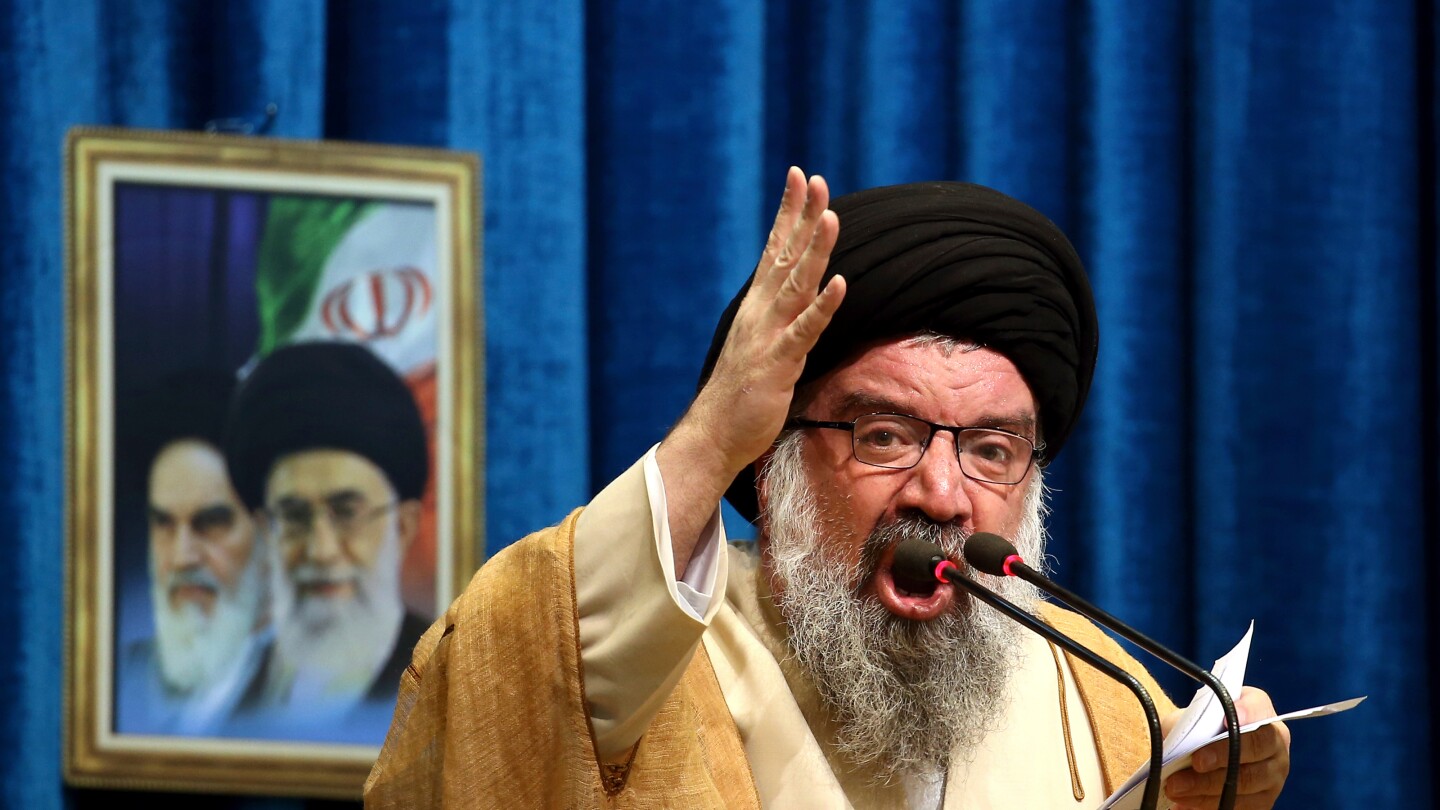
In stark contrast to Trump’s restrained comments, Ayatollah Ahmad Khatami delivered a fiery sermon carried on Iranian state radio that prompted chants from worshippers, including: “Armed hypocrites should be put to death!”
Khatami, a member of Iran’s influential Assembly of Experts and Guardian Council, characterized protesters as “butlers” of Israeli Prime Minister Benjamin Netanyahu and “Trump’s soldiers.” He warned that both leaders should expect “hard revenge from the system” and declared: “Americans and Zionists should not expect peace.”
The cleric’s inflammatory rhetoric comes as international allies of both Iran and the United States have sought to defuse tensions. Russian President Vladimir Putin spoke Friday with both Iranian President Masoud Pezeshkian and Israel’s Netanyahu, according to Kremlin spokesman Dmitry Peskov.
Russia had previously maintained relative silence on the protests. Moscow has watched several key allies face significant setbacks while its attention remains focused on Ukraine, including Syria’s former President Bashar Assad’s fall in 2024, U.S. and Israeli strikes on Iran last year, and the recent U.S. seizure of Venezuelan leader Nicolas Maduro.
Days after Trump pledged that “help is on its way” for protesters, both the demonstrations and the prospect of immediate U.S. military action appear to have receded. One diplomat told The Associated Press that senior officials from Egypt, Oman, Saudi Arabia, and Qatar had expressed concerns to Trump that U.S. military intervention would disrupt the global economy and destabilize an already volatile region.
Iran’s exiled Crown Prince Reza Pahlavi, whose father was overthrown in the 1979 Islamic Revolution, urged the U.S. to fulfill its pledge to intervene. Speaking to reporters in Washington, Pahlavi said, “I believe the president is a man of his word,” adding that “regardless of whether action is taken or not, we as Iranians have no choice but to carry on the fight.”
“I will return to Iran,” he vowed, later calling for protesters to return to the streets from Saturday to Monday. Despite support from committed monarchists in the diaspora, Pahlavi has struggled to gain broader appeal within Iran, though he continues to position himself as a potential transitional leader should the regime fall.
Khatami provided the first comprehensive statistics on damage from the protests, claiming 350 mosques, 126 prayer halls, and 20 other religious sites were damaged. He added that 80 homes belonging to Friday prayer leaders—significant figures in Iran’s theocracy—were also targeted, highlighting protesters’ anger toward government symbols.
The cleric reported that 400 hospitals, 106 ambulances, 71 fire department vehicles, and 50 other emergency vehicles sustained damage as well.
While protests within Iran appear to have been suppressed, thousands of Iranian exiles and supporters have demonstrated in cities across Europe, expressing outrage against the Islamic Republic’s government.
With internet access still restricted, some Iranians have crossed borders to communicate with the outside world. At a crossing point in Turkey’s eastern Van province, Iranians like Mehdi (who provided only his first name due to security concerns) said they were traveling specifically to circumvent the communications blackout.
Turkish citizens fleeing Iran also described the intensity of the crackdown. Mehmet Önder, a 47-year-old textile businessman who was in Tehran when protests erupted, recounted hearing heavy gunfire from his shelter. “The guns they were firing were not simple weapons. They were machine-guns,” he said.
The conflict shows signs of regional spillover, with a Kurdish separatist group in Iraq claiming to have launched attacks on Iran’s Revolutionary Guard in retaliation for the crackdown. The Kurdistan Freedom Party (PAK) said its military wing inside Iran has “played a role in the protests through both financial support and armed operations to defend protesters when needed.”
Fact Checker
Verify the accuracy of this article using The Disinformation Commission analysis and real-time sources.

14 Comments
The hardline cleric’s calls for executions are deeply concerning. Cracking down on peaceful protesters with violence will only breed more unrest and discontent in Iran.
Threatening Trump and the US is an ominous escalation. Iran should focus on addressing the root economic and social issues fueling the protests.
The cleric’s rhetoric is extremely alarming and shows the regime’s desperation. Executing protesters would only deepen the crisis and further isolate Iran internationally.
Trump’s conciliatory tone is a welcome change, but the US must remain vigilant and prepared to act if the crackdown resumes. Iran’s stability is critical for the region.
The cleric’s threats against Trump and calls for executions are deeply troubling. Iran must choose between further repression or genuine dialogue and reform to resolve this crisis.
Trump’s conciliatory tone is a prudent approach, but the US must remain vigilant and ready to respond if the crackdown resumes. Stability in Iran is crucial for the region.
The crackdown has clearly succeeded in suppressing the protests for now, but at what cost to Iran’s stability and global standing? Relying on violence rarely leads to lasting solutions.
Trump’s conciliatory tone is a welcome shift, but the US must remain vigilant and ready to respond if Iran resumes its violent repression of peaceful dissent.
Iran’s hardliners seem determined to double down on repression rather than address the protesters’ legitimate grievances. This is a dangerous path that could further destabilize the country.
While a return to normalcy is positive, it’s unclear if this represents a true resolution of the underlying issues. Iran would be wise to pursue meaningful reforms instead of relying on force.
It’s good to see some de-escalation from Trump, but the situation remains volatile. Iran must choose between further repression or meaningful reforms to address the protesters’ legitimate grievances.
The cleric’s rhetoric is worrying, but Iran may be trying to project strength while quietly working to restore calm. Hopefully this doesn’t spiral into a wider confrontation.
It’s concerning to see the hardliners resort to such extreme measures to quell the protests. This suggests the regime is deeply insecure and unwilling to address the real issues driving the unrest.
While the return to normalcy is positive, it’s unclear if this is a sustainable solution. Iran should pursue meaningful reforms to address the protesters’ grievances and avoid further instability.