


Listen to the article
U.S. Airstrikes Target Islamic State Camp in Northwestern Nigeria
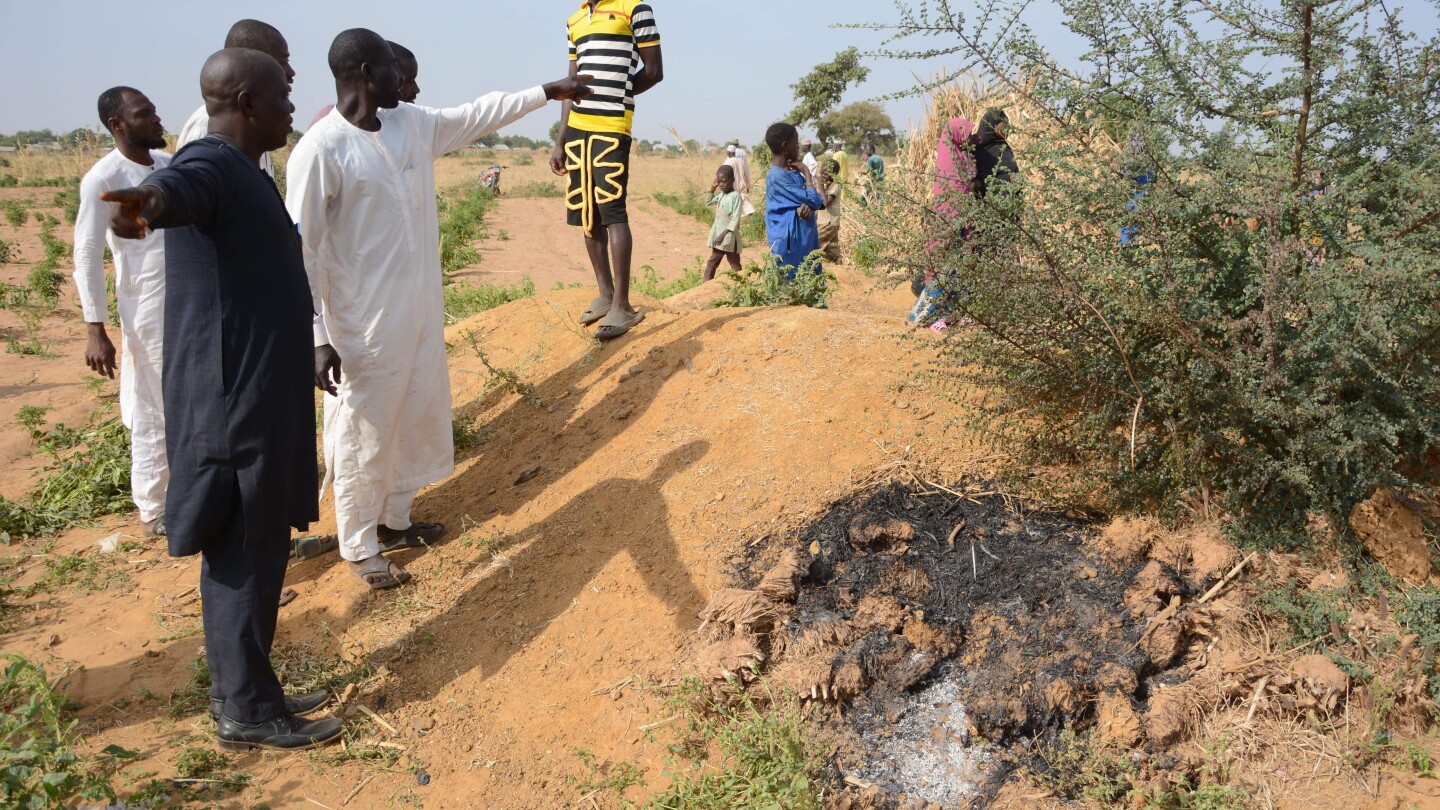
Residents of Jabo village in Nigeria’s Sokoto state were startled Thursday night when the sky suddenly glowed bright red, accompanied by a thunderous noise that many initially mistook for a plane crash. The light burned so intensely for hours that 40-year-old farmer Sanusi Madabo said, “It was almost like daytime.”
What locals would later learn was that they had witnessed a U.S. military operation against an alleged Islamic State camp in their region—an attack that U.S. President Donald Trump described as a “powerful and deadly strike” against Islamic State forces in Nigeria.
“As it approached our area, the heat became intense,” recalled Abubakar Sani, who lives near the explosion site. “Our rooms began to shake, and then fire broke out. The Nigerian government should take appropriate measures to protect us as citizens. We have never experienced anything like this before.”
The Nigerian government has since confirmed its cooperation with the United States in planning and executing the strikes, with Nigeria’s Ministry of Foreign Affairs characterizing the operation as the result of intelligence sharing and strategic coordination between the two nations.
Nigerian Foreign Minister Yusuf Tuggar described the airstrikes as a “new phase of an old conflict” and indicated more strikes could follow. “For us, it is something that has been ongoing,” Tuggar added, referring to attacks that have targeted both Christians and Muslims in Nigeria for years.
The strikes come amid a complex diplomatic relationship between Nigeria and the United States. The Trump administration has previously claimed Nigeria is experiencing what it terms a “Christian genocide,” an assertion the Nigerian government has firmly rejected.
Security analysts suggest the strikes may have targeted the Lakurawa group, a relatively new militant organization that emerged in northwestern Nigeria around 2018. The Nigerian government officially acknowledged the group’s presence last year. Security researchers have documented that the group primarily consists of foreign fighters from Africa’s Sahel region.
However, experts note that connections between the Lakurawa group and the Islamic State remain unsubstantiated. The Islamic State West African Province (ISWAP), the recognized ISIS affiliate in Nigeria, operates primarily in the northeastern part of the country, where it competes for influence with Boko Haram.
“What might have happened is that, working with the American government, Nigeria identified Lakurawa as a threat and identified camps that belong to the group,” explained Bulama Bukarti, a security analyst specializing in sub-Saharan Africa at the Tony Blair Institute.
Bukarti emphasized that the fear among local residents is amplified by the lack of information surrounding the strikes. “What can help in dousing the tension is for the American and Nigerian governments to declare who was targeted, what was attacked, and what has happened so far,” he said. Such information is “still missing, and the more opaque the governments are, the more panic there would be on the ground, and that is what will escalate tension.”
Despite the presence of security personnel who have cordoned off the area, no official casualty figures have been released, nor has there been a detailed post-strike assessment from either government.
Village residents report no civilian casualties but express concern about scattered debris. Some locals have been collecting metal fragments, potentially exposing themselves to hazardous materials. Aliyu Garba, a village leader in Jabo, expressed worry that residents rushing to collect pieces of debris, hoping to find valuable metal to trade, could get hurt.
Remarkably, villagers noted that Jabo itself had never previously experienced attacks by armed militants, though such violence is common in neighboring areas.
The strikes have disrupted daily life for many in the community, including 17-year-old Balira Sa’idu, who was preparing for her wedding. “I am supposed to be thinking about my wedding, but right now I am panicking,” she said. “The strike has changed everything. My family is afraid, and I don’t even know if it is safe to continue with the wedding plan in Jabo.”
The operation marks a significant escalation in U.S. military involvement in Nigeria’s ongoing struggle against various militant groups and underscores the growing international concern about the spread of Islamic State influence across West Africa. As residents of Jabo and surrounding areas await further information, questions remain about the long-term strategy behind these strikes and their potential impact on regional security dynamics.
Fact Checker
Verify the accuracy of this article using The Disinformation Commission analysis and real-time sources.

6 Comments
The intense heat, shaking, and fire sounds traumatic for the villagers. I hope the US and Nigeria can review their operational procedures to find ways to minimize such impacts on civilians, even during targeted strikes.
This sounds like a frightening and disruptive event for the local villagers. I hope the Nigerian government can work with the US to ensure proper safeguards and transparency around any future military operations in the region.
It’s good that the Nigerian government has confirmed cooperation with the US, but they need to ensure proper protocols and communication are in place to avoid startling local populations. Transparency and accountability are crucial.
Rattling the homes and lighting up the sky must have been terrifying for the residents. While fighting terrorism is important, the human cost of these strikes cannot be overlooked. Improved coordination and safeguards are clearly needed.
While I understand the need to combat terrorist threats, the impact on innocent civilians is deeply concerning. More should be done to minimize harm and protect local communities during such strikes.
Absolutely, the safety and wellbeing of civilians must be the top priority. The government should thoroughly investigate this incident and work to prevent similar disruptions in the future.