


Listen to the article
Nicaragua has shut down a major migration route for Cubans seeking entry to the United States by suspending its visa-free entry policy, a move that comes amid heightened U.S. diplomatic pressure on Cuba.
The Central American nation confirmed to the Associated Press on Sunday that it has eliminated the exemption that previously allowed Cuban citizens to enter Nicaragua without a visa. For years, this route had served as a crucial pathway for Cuban migrants, who would fly to Nicaragua before connecting with smugglers who helped guide them north through Central America and Mexico toward the U.S. border.
The policy change dramatically alters the migration landscape for Cubans fleeing their homeland. With Nicaragua’s door now closed, migrants are left with significantly more dangerous alternatives. Guyana, a small South American nation, remains one of the few accessible destinations, but reaching the U.S. from there requires traversing the notorious Darien Gap, a treacherous jungle corridor between Colombia and Panama known for its deadly conditions.
Some desperate migrants may now resort to perilous sea journeys from Cuba to Florida’s coast, a route that has historically claimed numerous lives.
Nicaragua’s decision follows President Donald Trump’s January executive order declaring a national emergency regarding Cuba. The order accused the communist regime of aligning with hostile foreign powers and terrorist groups, while threatening sanctions against countries supplying oil to the island nation.
“Cuba aligns itself with and provides support for numerous hostile countries, transnational terrorist groups, and malign actors adverse to the United States,” the executive order stated, specifically naming Russia, China, Iran, Hamas and Hezbollah among Cuba’s alleged partners.
The Trump administration has claimed that Cuba hosts Russia’s largest overseas signals intelligence facility, which allegedly attempts to collect sensitive U.S. national security information. These accusations represent a significant escalation in U.S. pressure on the Caribbean nation.
The timing of Nicaragua’s policy change suggests possible coordination with the U.S. administration’s broader strategy toward leftist governments in Latin America. Last November, Trump expressed concerns about political developments in Honduras, writing on Truth Social: “Democracy is on trial in the coming Elections in the beautiful country of Honduras on November 30th. Will Maduro and his Narcoterrorists take over another country like they have taken over Cuba, Nicaragua, and Venezuela?”
Nicaragua, under President Daniel Ortega, has maintained close ties with Cuba for decades, with both nations often aligned in opposition to U.S. policies in the region. The visa restriction represents a rare divergence from this pattern of solidarity.
For Cuban citizens, the policy change has immediate and profound consequences. Photos from Havana show Cubans lining up outside the Nicaraguan Embassy following the announcement, as those with existing travel plans sought information or attempted to secure visas under the new requirements.
The shift comes amid a complex geopolitical landscape in Latin America following the U.S. military operation that captured Venezuelan leader Nicolás Maduro in early January. That dramatic development, combined with Nicaragua’s new visa requirements, signals significant changes in regional migration dynamics and political alignments.
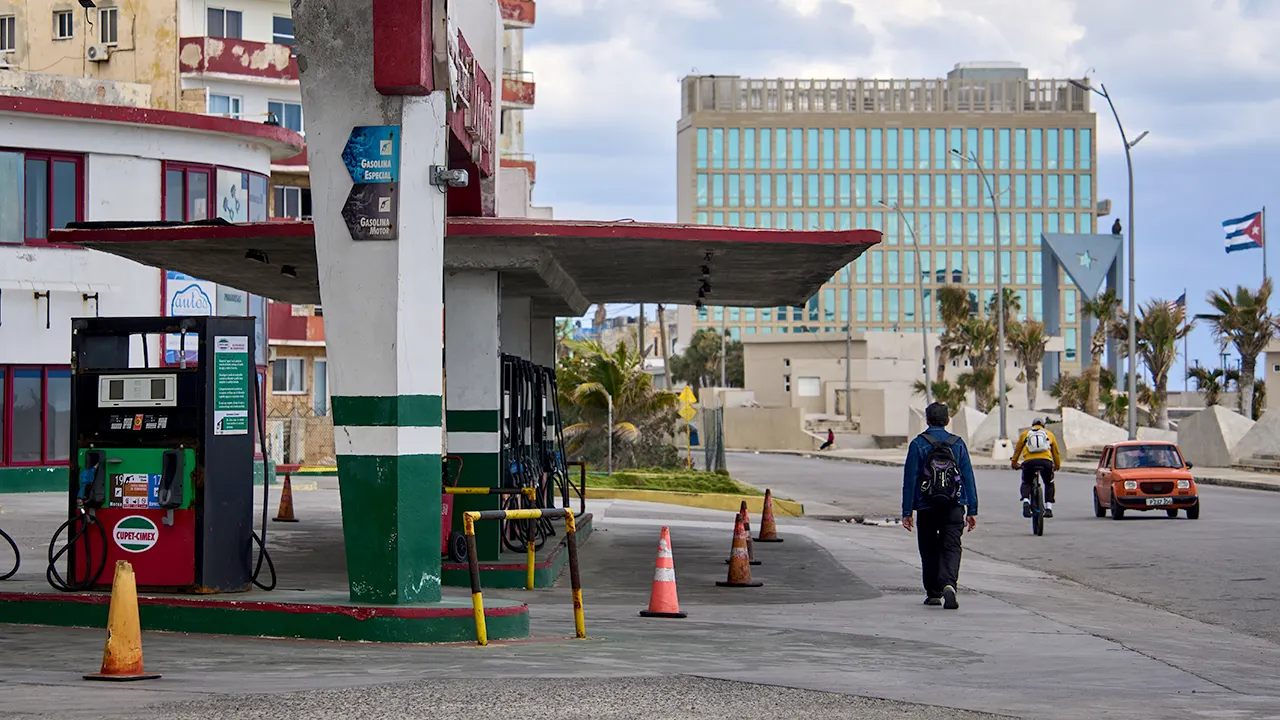
Economic conditions in Cuba have deteriorated significantly in recent years, with shortages of basic goods including fuel. A photo from Havana shows a gas station that has run out of fuel near the U.S. embassy, illustrating the daily hardships driving many to seek opportunities elsewhere.
The closure of this migration corridor may potentially reduce Cuban migration to the United States in the short term, but history suggests determined migrants will likely find alternative routes, potentially increasing the use of more dangerous pathways.
Fact Checker
Verify the accuracy of this article using The Disinformation Commission analysis and real-time sources.

5 Comments
This is a concerning development for Cubans seeking a better life in the US. With the route through Nicaragua now blocked, they face even more dangerous options like the Darien Gap or risky sea crossings. It’s a harsh reality for those fleeing difficult conditions at home.
The closure of this migration pathway puts Cubans in a very precarious situation. Forcing them to take more perilous routes is inhumane and will likely lead to more loss of life. I hope diplomatic efforts can find a safer, more humane solution.
I’m curious to know more about the reasons behind Nicaragua’s decision to suspend the visa-free entry policy for Cubans. Was this a unilateral move, or were there political pressures involved? It seems like a concerning development that will have serious humanitarian consequences.
This policy change by Nicaragua is extremely concerning. Cubans fleeing their homeland now face even more dangerous options to reach the US, putting their lives at risk. I hope international organizations can work to find safer, legal pathways for these migrants.
It’s concerning to see Nicaragua taking this step, which will undoubtedly make the journey for Cuban migrants even more perilous. I hope the international community can work to find a more compassionate solution that respects the human rights of these individuals.