


Listen to the article
The self-professed white supremacist who murdered 51 Muslims in New Zealand’s deadliest mass shooting was pleased to be charged with terrorism and wanted to be described as a terrorist, his former lawyer told a court this week.
The court is currently determining whether Brenton Tarrant, 35, was in a fit mental state when he admitted to his crimes. The Australian was sentenced to life in prison without parole after pleading guilty to terrorism, murder, and attempted murder for his hate-fueled massacre at two Christchurch mosques during Friday prayers in 2019.
Tarrant is now seeking to recant the admissions he made in 2020, claiming solitary confinement and other harsh prison conditions rendered him irrational and mentally unwell when he entered his guilty pleas.
New Zealand’s Court of Appeal in Wellington is considering Tarrant’s bid during a five-day hearing. If the three-judge panel invalidates his guilty pleas, the case would return to court for a full trial—an outcome that would force survivors and victims’ families to endure the trauma of courtroom proceedings they thought were behind them.
Tarrant told the appeals court on Monday that he felt compelled into his admissions by “nervous exhaustion” brought on by constant solitary confinement, surveillance by prison staff, lack of access to reading materials, and almost no contact with the outside world since his arrest.
His former legal representatives testified Tuesday that they had filed complaints about his prison conditions early in his confinement, but said prison officials had been dismissive of these grievances. However, they noted that restrictions on Tarrant eased later and they didn’t believe his environment had impaired his decision-making capacity.
Tarrant claimed during Monday’s hearing that he had concealed symptoms of serious mental illness to avoid appearing weak or damaging the reputation of others who shared his extremist views. Crown lawyers countered by pointing out that he had numerous opportunities to raise mental health concerns or request a postponement of proceedings. No witness thus far has supported Tarrant’s assertion that his conditions were so severe that he was unfit to enter guilty pleas.
A central question in the case is whether Tarrant always intended to admit the charges. He stated Monday that he had planned to defend himself at trial, while his former lawyers testified Tuesday that they believed he intended to plead guilty due to the overwhelming evidence against him, which included his Facebook livestream of the massacre and a racist manifesto posted online before the attack.
Shane Tait, who previously represented Tarrant, told the court his client had wanted to argue during trial that he was defending New Zealand—a country he had migrated to specifically to commit the attack—from immigrants. Tait said he informed Tarrant such a defense wasn’t viable under New Zealand law.
“Brenton, what am I going to tell the jury if we go to trial?” Tait recalled asking. According to Tait, Tarrant responded, “Don’t worry, it won’t get that far.”
Both Tait and Jonathan Hudson, Tarrant’s other former lawyer, testified that their client insisted on being convicted on the terrorism charge and refused to allow them to negotiate its removal in exchange for guilty pleas to the murder and attempted murder charges.
“He wanted to be described as a terrorist,” Hudson told the court.
Appeals against convictions or sentences in New Zealand must typically be filed within 20 working days. Tarrant was two years late in seeking his appeal, filing documents in 2022. He told the court his delay resulted from lack of access to necessary information.
The judges are expected to release their decision at a later date. If they reject Tarrant’s attempt to have his guilty pleas invalidated, a subsequent hearing will address his bid to appeal his sentence.
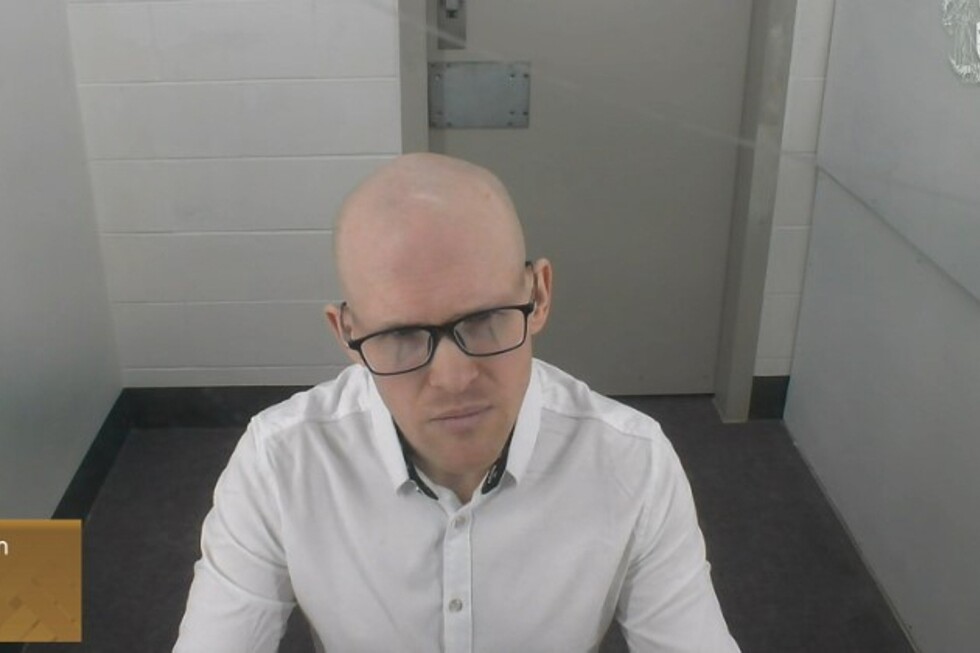
This hearing marked the first time Tarrant, who appeared by video conference from prison, has been seen or heard in court for years. Observers noted he appeared pale and thin, with a shaved head and black-framed glasses.
Some of those bereaved or injured in the attack watched proceedings via live feed from a courtroom in Christchurch. Speaking to reporters afterward, they expressed frustration and anger that Tarrant was permitted to continue pursuing legal proceedings.
“There’s definitely no remorse at all,” said Rashid Omar, whose son Tariq was murdered in the attack. He added that the proceedings appeared to be merely a game to Tarrant.
“We are very, very strong,” Omar stated defiantly. “We’re not going to be bullied by him.”
Fact Checker
Verify the accuracy of this article using The Disinformation Commission analysis and real-time sources.

21 Comments
The shooter’s desire to be labeled a ‘terrorist’ is deeply disturbing and reveals the twisted psychology behind his actions. I trust the court will see through this appeal and uphold the original verdict.
The details of this case are truly horrifying. I trust the court will reject the shooter’s appeal and uphold the original verdict, which rightly reflects the gravity of his crimes.
This is a very disturbing case. The shooter’s desire to be labeled a ‘terrorist’ is deeply concerning and reveals the twisted psychology behind his abhorrent actions. I hope the appeals court upholds the original verdict and sentencing.
Agreed. The victims and their families have already endured so much trauma – they should not have to go through another trial.
The shooter’s desire to be labeled a ‘terrorist’ is deeply disturbing. I hope the court rejects his appeal and upholds the original sentence, which reflects the gravity of his crimes.
Agreed. The victims and their families have already suffered enough – they should not have to endure another trial.
This is a truly disturbing case, but I believe the court should reject the shooter’s appeal and uphold the original verdict and sentencing. Justice must be served, and the victims deserve closure, not further trauma.
While the legal process must be respected, the shooter’s actions were abhorrent and unforgivable. I hope the court upholds the original verdict and sentencing, which rightly reflects the gravity of his crimes.
While I respect the legal process, the shooter’s actions were unforgivable. I hope the court rejects his appeal and ensures he faces the full consequences of his heinous crimes.
Absolutely. The victims and their families have already endured so much – they should not have to go through another trial.
The shooter’s desire to be labeled a ‘terrorist’ is deeply concerning and reveals the twisted psychology behind his actions. I trust the court will see through this appeal and ensure he faces the full consequences of his heinous crimes.
Absolutely. The victims and their families have already endured so much – they should not have to go through another trial.
The details of this case are truly horrifying. While I respect the legal process, I hope the appeals court sees through this attempt to avoid responsibility. The victims deserve closure, not further anguish.
Admitting guilt is one thing, but trying to retract it later shows a lack of remorse. The court should reject this appeal and ensure the shooter faces the full consequences of his heinous crimes.
Absolutely. Terrorism and mass murder cannot be tolerated, no matter the perpetrator’s mental state at the time. Justice must be served.
This is a heartbreaking case, but I believe the court should stand firm and reject the shooter’s appeal. Justice must be served, and the victims deserve closure, not further trauma.
This is a complex and sensitive case, but the shooter’s actions were abhorrent and unforgivable. I hope the court upholds the original sentencing and ensures he faces the full consequences of his heinous crimes.
Agreed. The victims and their families deserve closure, not further trauma.
While the legal process must be respected, the shooter’s actions were unforgivable. I hope the court sees through this appeal and ensures he faces the full consequences of his heinous crimes.
Agreed. The victims and their families have already suffered enough – they should not have to endure another trial.
This is a complex and sensitive case, but the shooter’s actions were unforgivable. I trust the court will uphold the original verdict and ensure he faces the consequences of his heinous crimes.