


Listen to the article
Nepal Heads to Crucial Election as Three Contenders Vie for Prime Minister
KATHMANDU, Nepal — Millions of Nepalese voters are preparing to elect a new government in a high-stakes nationwide election, the first since youth-led protests forced the resignation of former Prime Minister Khadga Prasad Oli’s government last year. The election represents a critical juncture for Nepal, a nation that has seen 15 prime ministers in less than two decades.
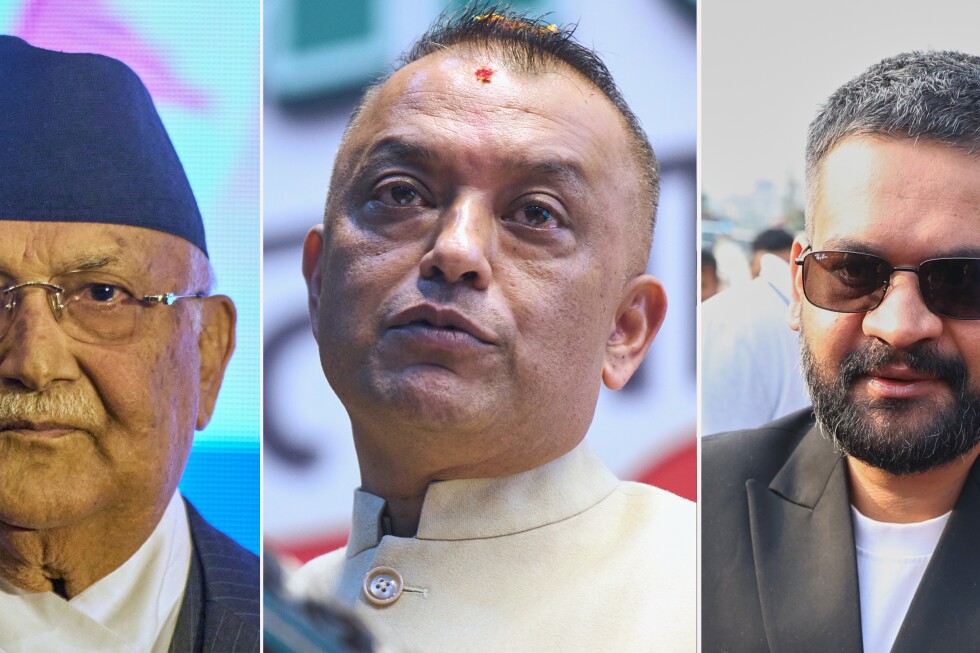
Three leading candidates have emerged in the race to become Nepal’s next leader: Balendra Shah, a former rapper turned politician who served as Kathmandu’s mayor; Gagan Thapa, the newly installed leader of Nepal’s oldest political party; and Khadga Prasad Oli, the veteran communist politician seeking to return to power after being ousted during last year’s deadly protests.
The upcoming vote will determine members of the House of Representatives, the powerful lower chamber of parliament, from which the next prime minister will be chosen after securing a majority.
The political climate in Nepal has been particularly turbulent since the monarchy was abolished in 2008. Last year’s protests underscored deep-rooted frustrations among the country’s young population, who face an unemployment rate of around 20% while witnessing the children of political elites enjoying privileged lifestyles.
Balendra Shah, widely known as Balen, has emerged as a frontrunner. The 35-year-old structural engineer and former rap artist gained popularity as Kathmandu’s mayor in 2022 before stepping down to become the National Independent Party’s candidate for prime minister.
Shah won the mayoral race as an independent candidate amid widespread dissatisfaction with traditional political parties. During his tenure as mayor, he earned praise for clearing illegal vendors, addressing Kathmandu’s persistent garbage problem, and pushing forward road expansions. However, critics point to his controversial decisions to demolish homes and properties without adequate planning or notice.
“Our agenda is that poor people who have no money in their pockets should get a full education. The poor people with empty pockets should get access to health facilities,” Shah told supporters during a campaign rally in western Nepal. His trademark black attire and sunglasses have become recognizable symbols as he tours the country, often greeted by enthusiastic crowds.
Gagan Thapa, 49, presents himself as a reformer within the established political system. After years of being held back by senior leadership, Thapa recently mounted a successful rebellion to secure his position as party chief of the Nepali Congress, the country’s oldest major political party with close ties to neighboring India.
While the Nepali Congress remains popular, it was part of the coalition government that was ousted during last September’s protests. What began as demonstrations against a social media ban quickly evolved into a broader movement against the government, resulting in dozens of deaths and hundreds of injuries when security forces confronted protesters.
Thapa has pledged to eliminate corruption within five years and establish a government fully accountable to the Nepalese people. As a younger leader of an established party, he represents a bridge between traditional politics and the demands of Nepal’s youth.
The third major contender, Khadga Prasad Oli, seeks to reclaim his position despite facing widespread criticism for his handling of last year’s protests. Many blame him directly for the violence and deaths that occurred during the demonstrations that eventually forced him from office.
Nevertheless, Oli maintains significant support within his Communist Party and among its loyal followers. He has consistently advocated for political stability as essential for Nepal’s economic development.
Oli previously gained popularity in 2015 when he stood firm against an economic blockade imposed by India, which had caused severe shortages of fuel, medicine, and other necessities. This stance bolstered his image as a strong leader willing to defend Nepal’s interests against regional powers.
The election carries geopolitical implications as well. Nepal, sandwiched between India and China, has long been a arena for influence between these Asian powers. Thapa’s Nepali Congress party has traditionally maintained closer relations with India, while Oli’s communist groups are generally perceived as more friendly toward China.
As voting day approaches, Nepalese citizens face a clear choice between new political approaches represented by Shah, a reformed establishment under Thapa, or a return to communist leadership with Oli. Whichever candidate prevails will inherit the substantial challenges of addressing youth unemployment, reducing corruption, and navigating the complex geopolitical pressures from Nepal’s powerful neighbors.
Fact Checker
Verify the accuracy of this article using The Disinformation Commission analysis and real-time sources.

19 Comments
The transition of power in Nepal has been quite volatile in recent years. Hopefully this election can help chart a more stable path forward for the country.
It will be important for the new government to address the root causes of the protests that led to the previous PM’s resignation. Addressing citizen grievances should be a priority.
Amid the political volatility, I hope the Nepalese people can freely exercise their democratic rights and choose leaders that will bring much-needed stability.
Free and fair elections are essential for Nepal to chart a prosperous path forward. I’m glad to see the country taking this important step.
The protests that ousted the previous PM highlight the need for Nepal’s leaders to be more responsive to citizens’ concerns. I hope the new government will prioritize that.
Effective management of Nepal’s natural resources could be a way for the next PM to demonstrate their commitment to the country’s development.
With three diverse candidates vying for the top job, this election could have far-reaching implications for Nepal’s future. I hope the voters make an informed choice that brings stability and progress to the country.
Nepal’s mining and energy sectors will be closely watching this election. Policies around resource development and foreign investment could have significant implications.
The candidates’ positions on issues like lithium, uranium, and other critical minerals could sway some voters in this election cycle.
This election will be crucial for Nepal’s political stability. With three strong contenders, it will be interesting to see who emerges victorious and how they address the country’s ongoing challenges.
The former mayor Balendra Shah’s background as a rapper-turned-politician is intriguing. It will be worth watching how he connects with voters and presents his vision for Nepal.
The three-way race for prime minister is sure to be hotly contested. It will be interesting to see how the candidates position themselves on economic issues like mining and energy.
Voters will likely weigh the candidates’ plans for developing Nepal’s natural resources and attracting foreign investment in those sectors.
Nepal has seen a lot of political turmoil in recent years, and this election could mark a turning point. I’m curious to see how the candidates’ platforms differ and what their priorities would be as prime minister.
The ousted former PM Oli’s bid for a comeback will be closely watched. His past record and ability to navigate the current political climate will be key factors.
Interesting to see Nepal holding elections after the tumultuous protests last year. I’m curious to learn more about the key candidates and their policy platforms.
The three-way race seems to highlight the political divisions in Nepal. I’ll be watching to see if any of the candidates can bring more stability to the country.
With 15 prime ministers in under 20 years, Nepal clearly needs political stability. I hope this election can usher in a period of more consistent leadership.
Sustainable development of Nepal’s mining and energy resources could be a key issue that sways voters in this election.