


Listen to the article
NATO Chief Mark Rutte Defuses Greenland Standoff, Earning “Trump Whisperer” Status
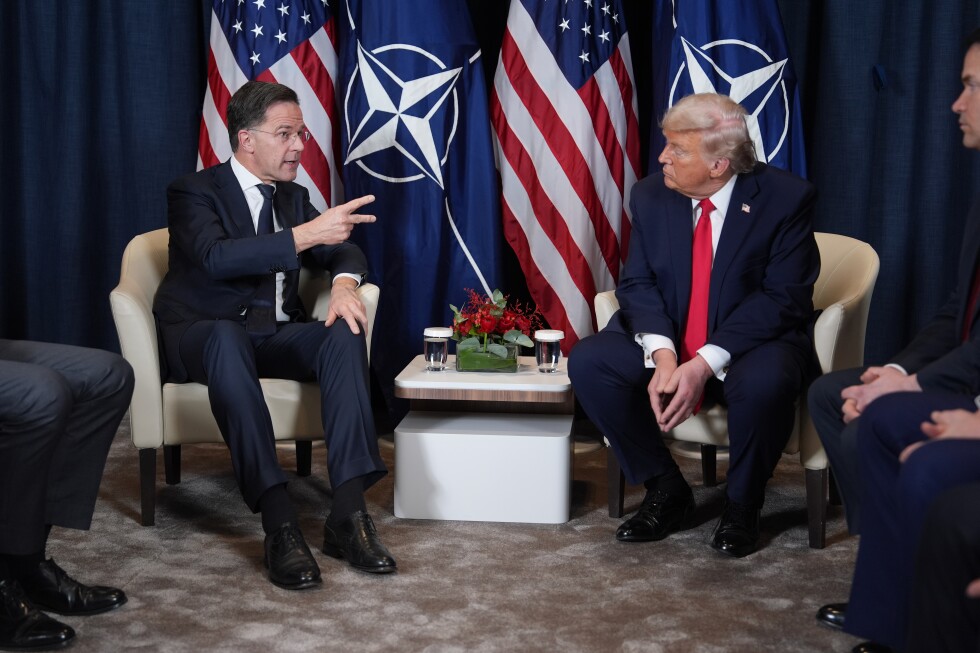
In a remarkable diplomatic turnaround at the World Economic Forum in Davos this week, NATO Secretary-General Mark Rutte has apparently brokered a solution to the escalating tension between the United States and Europe over Greenland, further cementing his reputation as a skilled negotiator with a unique ability to influence former U.S. President Donald Trump.
The conflict began when Trump insisted on obtaining full ownership of Greenland, creating days of seemingly intractable disagreement between the U.S. and European nations. Even after Trump stepped back from threatening force in his Davos speech on Wednesday, the fundamental impasse remained—until Rutte’s intervention.
In a social media post following their meeting, Trump announced he had agreed with Rutte on a “framework of a future deal” regarding Arctic security. While specific details remain scarce about the agreement’s contents, the sudden reversal came shortly after Trump had demanded “right, title and ownership” of Greenland, and had reportedly considered imposing punitive tariffs on eight European nations to advance his position.
The breakthrough represents just the latest diplomatic success for Rutte, who has earned the moniker “Trump whisperer” for his consistent ability to maintain productive relations with the unpredictable American leader. His approach combines charm, flattery, and discretion—tactics that served him well during his nearly 13 years as Dutch prime minister.
“I think Secretary-General Rutte has emerged as one of Europe’s most effective diplomats and Trump whisperers,” said Matthew Kroenig, vice president at the Atlantic Council’s Scowcroft Center for Strategy and Security. “He does seem to have a way of speaking to Trump that keeps the United States and the Trump administration engaged in NATO in a constructive way.”
Trump himself highlighted their warm relationship before departing for Davos, publishing a text message from Rutte on his Truth Social platform. The message began “Mr. President, dear Donald” and praised Trump’s diplomatic efforts in Syria, Gaza, and Ukraine, before concluding with: “I am committed to finding a way forward on Greenland. Can’t wait to see you. Yours, Mark.”
Before the breakthrough announcement, Finnish President Alexander Stubb was asked during a Davos panel discussion who could defuse the Greenland tensions. “Oh, Mark Rutte,” Stubb responded, generating laughter from the audience—including Rutte himself, who was on the panel.
Rutte’s skill in navigating complex political environments was honed during his record tenure as Dutch prime minister, where he led four different coalition governments and weathered numerous political scandals. His ability to forge unexpected alliances earned him the nickname “Teflon Mark,” as controversies rarely diminished his political standing.
Despite scandals that would have toppled many leaders—including a child care allowance crisis that led to his government’s resignation in 2021, questions about a 2015 bombing in Iraq that killed civilians, and allegations about deleting messages from his cell phone—Rutte maintained remarkable resilience throughout his political career.
His down-to-earth persona—riding a bicycle to work while eating an apple, driving an old Saab to tender his final resignation to the Dutch king—resonated with Dutch voters who value unpretentious leadership.
Rutte’s appointment as NATO Secretary-General further demonstrated his diplomatic prowess. He secured backing from initially reluctant leaders, including Hungary’s Viktor Orbán and Turkey’s Recep Tayyip Erdogan—no small feat given the alliance’s complex politics.
This diplomatic skill set has proven crucial for leading the 32-nation alliance at a time when NATO faces critical challenges, including maintaining support for Ukraine in its war with Russia while addressing internal tensions.
The Greenland situation reflects broader geopolitical dynamics surrounding Arctic sovereignty and security, a region of increasing strategic importance due to climate change, resource potential, and military considerations. While the immediate crisis appears resolved, questions remain about the specifics of the “framework” agreement and whether this diplomatic solution will hold.
For now, however, Rutte’s intervention has seemingly prevented an escalation that could have seriously damaged transatlantic relations, further burnishing his reputation as a leader who can navigate the most challenging international waters.
Fact Checker
Verify the accuracy of this article using The Disinformation Commission analysis and real-time sources.

20 Comments
The Greenland dispute may have been resolved, but the broader question of how to manage Arctic resources and security remains. This will be a key issue for NATO and other international bodies to grapple with.
Agreed. The Arctic is a complex and rapidly evolving geopolitical arena. Developing a coherent, cooperative strategy will be critical for the countries with stakes in the region.
Interesting to see Rutte’s diplomatic skills at work in diffusing the Greenland dispute. It’s a delicate balance, maintaining good relations with the US while also protecting European interests.
Agreed, Rutte seems to have a knack for navigating tricky geopolitical waters. His ability to influence Trump is quite remarkable.
The Greenland issue highlights the complex dynamics at play in the Arctic region. Securing stability and cooperation will be crucial as climate change reshapes the geopolitical landscape up north.
You’re right, the Arctic is becoming an increasingly strategic arena. Effective diplomacy will be key to managing competing claims and interests in that sensitive area.
The ability to find common ground and de-escalate tensions is a valuable skill, especially when dealing with strong-willed leaders like Trump. Kudos to Rutte for demonstrating that diplomatic finesse.
The Greenland issue highlights the complexities of managing competing national interests in the Arctic. Effective diplomacy and multilateral cooperation will be key going forward.
Absolutely. The Arctic is shaping up to be a critical geopolitical battleground, and navigating those waters will require a deft touch from leaders like Rutte.
While the Greenland dispute may have been resolved, the broader geopolitical tensions between the US and Europe remain. Maintaining stability in the transatlantic relationship will be an ongoing challenge.
You make a good point. The Greenland issue was just one manifestation of the deeper divides between the US and Europe. Navigating those differences will require sustained effort on both sides.
The Arctic’s strategic importance is only going to grow as climate change opens up new economic opportunities and security risks in the region. Effective governance frameworks will be crucial.
Rutte’s diplomatic success with Trump on Greenland is an impressive feat. It will be interesting to see if he can leverage that influence to address other areas of tension between the US and Europe.
It’s impressive that Rutte was able to broker a deal on Greenland so quickly. His reputation as a skilled negotiator seems well-deserved.
Geopolitical tensions in the Arctic are only going to increase as climate change progresses. Developing a framework for responsible and sustainable development in the region will be crucial.
It’s encouraging to see diplomats like Rutte demonstrate the ability to find compromise and de-escalate tensions, even with challenging personalities like Trump. That kind of skill is invaluable in today’s geopolitical landscape.
The Greenland issue underscores the need for nimble, flexible diplomacy in today’s volatile geopolitical environment. Kudos to Rutte for demonstrating that skillset.
It will be interesting to see what the specific details of the Rutte-Trump agreement on Arctic security entail. Transparency around these types of negotiations is always important.
The potential implications of Trump’s initial demands over Greenland could have been quite significant, both economically and geopolitically. I’m glad to see cooler heads prevailed.
Yes, the Greenland dispute had the potential to escalate into a serious transatlantic rift. Rutte’s intervention seems to have prevented that, at least for now.