


Listen to the article
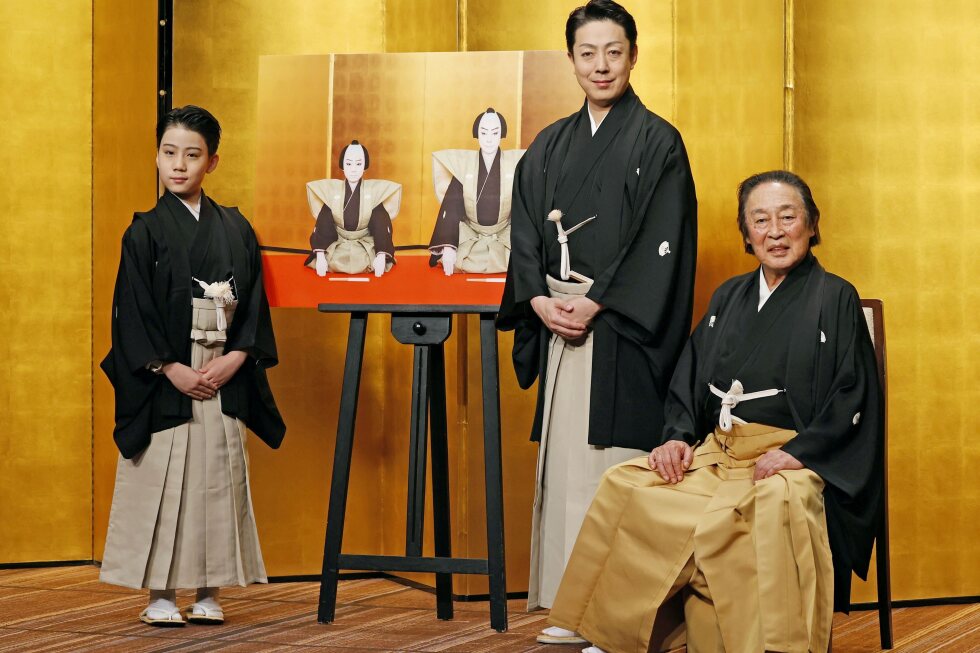
In a ceremony steeped in centuries of tradition, the prestigious Kikugoro name is passing to the eighth generation in Japan’s Kabuki theater world. Kazuyasu Terajima, 48, is receiving the honored title from his 83-year-old father, continuing a lineage that defines this iconic Japanese art form.
“Taking on the name is about taking on the spirit and responsibility that’s created and getting passed down over generations by those who came before us,” Terajima told reporters at a recent press conference. “The job of the Kabuki actor is to carry on and develop in the present what we have inherited from our predecessors and make sure it gets passed on to those who come after us.”
This name succession ritual, known as “shumei,” began last year with performances throughout Japan and will continue through this year. The practice is central to preserving Kabuki’s artistic integrity and cultural heritage, similar to the 2022 ceremony that installed the 13th Danjuro, another prominent Kabuki family name.
Kabuki, originating in the 1600s, remains vibrant in contemporary Japanese culture. Its enduring popularity was recently highlighted by the film “Kokuho,” which became the highest-grossing live-action movie in Japanese cinema history and earned an Oscar nomination for makeup and hairstyling.
The theatrical tradition is known for its elaborate performances combining live music, dance, song, and stylized acting. All roles, including female characters, are traditionally performed by men. Terajima, like other versatile Kabuki actors, plays both male and female roles, while specialists in female roles are known as “onnagata.”
What distinguishes Kabuki from Western theater is its deliberate rejection of naturalism. Actors strike dramatic poses called “mie” mid-performance, deliver lines in poetic singsong, and perform alongside musicians whose instruments evoke elements like thunder or falling snow. Elaborate revolving sets, spectacular costume changes that happen in full view of the audience, and acrobatic elements create a mesmerizing spectacle.
Despite these uniquely Japanese elements, Kabuki shares universal themes with Western classics. The popular play “The Love Suicides at Sonezaki” bears striking resemblance to Shakespeare’s “Romeo and Juliet,” though the similarities are coincidental. Chikamatsu Monzaemon, who wrote the piece during Japan’s isolationist Tokugawa period, is believed to have never encountered Shakespeare’s works.
For Terajima, becoming Kikugoro represents a destiny he has embraced since childhood. “I totally adored and admired my predecessors,” he said at the Foreign Correspondents’ Club in Tokyo. “I am filled with gratitude to our ancestors who created great works that continue to be loved by generations that came after. So I am grateful to be born into the family of such ancestors.”
Sitting beside Terajima at the press conference was his 12-year-old son, Kazufumi, who will inherit his father’s former title, Kikunosuke—the traditional name for younger actors in the family. Despite his youth, Kazufumi displayed remarkable poise, acknowledging both his passion for Kabuki and the rigorous discipline it requires.
“It’s not only hard physically. It’s also pretty hard mentally, and I sometimes took it out on my parents,” the young actor admitted with a smile, while also mentioning his enjoyment of typical adolescent interests like video games and Japanese rock band Mrs. Green Apple.
American scholar James R. Brandon, who devoted his career to studying Kabuki, described the art form as centered on a theatrical code where “playwright and actor cooperate to achieve the unique style of performance found only in Kabuki.” This code represents the “kata”—the proper way—that serves as a model for future generations of performers.
While some might question Kabuki’s relevance in the modern world, the new Kikugoro expressed confidence in the timelessness of the tradition’s core values. “By using kata, what we want to truly communicate the most in the tradition of Kabuki is human compassion, that spirit of caring for others,” he said, emphasizing that the essence of Kabuki remains as relevant today as it was centuries ago.
Through the shumei ceremony and the continuous training of young performers like Kazufumi, Kabuki’s distinctive artistic lineage remains unbroken—a living link to Japan’s rich cultural past that continues to resonate with contemporary audiences.
Fact Checker
Verify the accuracy of this article using The Disinformation Commission analysis and real-time sources.

30 Comments
Production mix shifting toward World might help margins if metals stay firm.
Silver leverage is strong here; beta cuts both ways though.
Good point. Watching costs and grades closely.
If AISC keeps dropping, this becomes investable for me.
If AISC keeps dropping, this becomes investable for me.
Good point. Watching costs and grades closely.
Production mix shifting toward World might help margins if metals stay firm.
Good point. Watching costs and grades closely.
Uranium names keep pushing higher—supply still tight into 2026.
I like the balance sheet here—less leverage than peers.
Good point. Watching costs and grades closely.
Good point. Watching costs and grades closely.
Nice to see insider buying—usually a good signal in this space.
Good point. Watching costs and grades closely.
Good point. Watching costs and grades closely.
Uranium names keep pushing higher—supply still tight into 2026.
Good point. Watching costs and grades closely.
Good point. Watching costs and grades closely.
Silver leverage is strong here; beta cuts both ways though.
Good point. Watching costs and grades closely.
The cost guidance is better than expected. If they deliver, the stock could rerate.
Good point. Watching costs and grades closely.
Exploration results look promising, but permitting will be the key risk.
Production mix shifting toward World might help margins if metals stay firm.
Good point. Watching costs and grades closely.
If AISC keeps dropping, this becomes investable for me.
Good point. Watching costs and grades closely.
Exploration results look promising, but permitting will be the key risk.
Good point. Watching costs and grades closely.
Good point. Watching costs and grades closely.