


Listen to the article
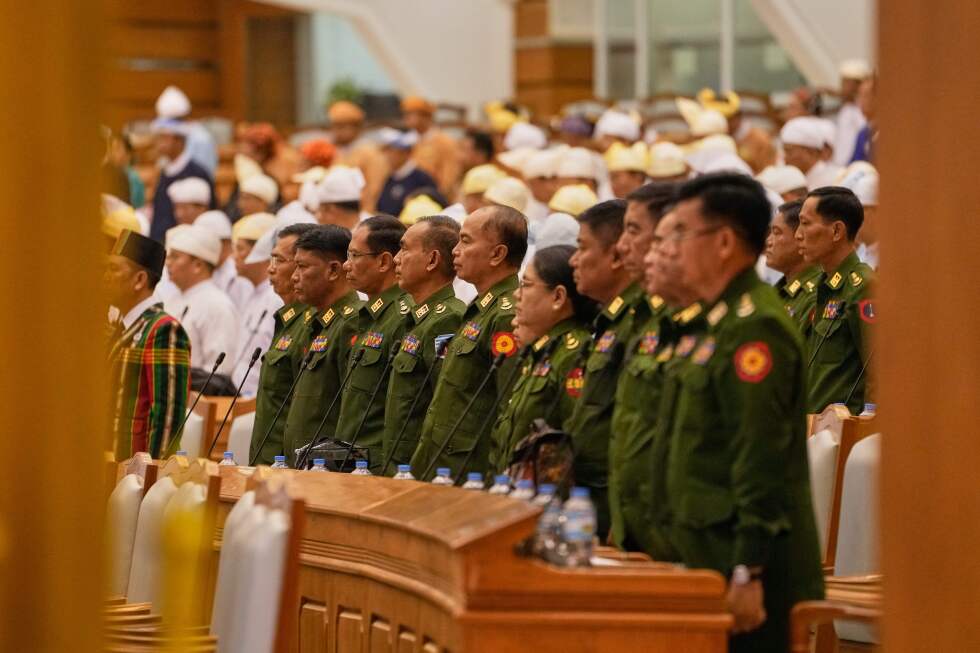
Myanmar’s parliament has approved a new cabinet dominated by former military leaders and officials who served in the previous military-led government under General Min Aung Hlaing, raising concerns about the country’s promised transition to civilian rule.
The 30-minister cabinet, approved without objection on Thursday in Naypyitaw, includes 24 current or former military officers and representatives from the military-backed Union Solidarity and Development Party (USDP). Eighteen ministers previously served in the military government that has ruled Myanmar since the February 2021 coup, while four others held official positions under the same administration.
Min Aung Hlaing, who led the 2021 military takeover that ousted the democratically elected government of Aung San Suu Kyi, will be sworn in as president on Friday along with two vice presidents and the newly approved cabinet members.
“The appointments were approved with no objections,” announced Parliament Speaker Aung Lin Dwe during Thursday’s session, as the legislative body also reappointed the chairman of the constitutional tribunal, the attorney general, and judges of the Supreme Court.
Several appointees face international sanctions imposed by Western governments, including the United States, European Union, and United Kingdom. These officials have been sanctioned for their roles in supporting the military junta or for alleged human rights violations during the military’s crackdown on opposition forces.
The cabinet appointments follow Myanmar’s widely criticized elections held in December and January. These polls were condemned internationally as neither free nor fair, with most major opposition parties either banned or boycotting the process. The Association of Southeast Asian Nations (ASEAN), which has attempted to mediate Myanmar’s crisis through its “Five-Point Consensus” plan, refused to recognize the election results.
Voting could not take place in substantial parts of the country due to ongoing armed conflict between the military and resistance forces, including ethnic armed organizations and the People’s Defense Forces (PDF). Since the 2021 coup, Myanmar has descended into a brutal civil war that has displaced over 2 million people and caused a severe humanitarian crisis.
Political analysts view the new government as a thinly veiled continuation of military rule. “This is essentially the same military government with a fresh coat of paint,” said a Southeast Asia political risk analyst who requested anonymity due to security concerns. “The recycling of cabinet members from the previous military administration indicates there will be no meaningful political reform.”
The military junta has faced widespread resistance since seizing power. What began as peaceful protests evolved into armed resistance after the military’s violent crackdown on demonstrators. The National Unity Government (NUG), formed by elected lawmakers and representatives from ethnic minority groups, continues to operate as a shadow government with growing international recognition.
Myanmar’s economy has contracted significantly since the coup, with the World Bank estimating that the economy is now 30 percent smaller than it would have been without the military takeover. Foreign investment has plummeted, and many international companies have suspended operations or withdrawn from the country entirely.
The new cabinet’s formation comes amid escalating violence in Myanmar’s Rakhine State, where the Arakan Army has made significant territorial gains against military forces, and in the Sagaing Region, where resistance forces control substantial territory.
Despite promises of an eventual return to civilian rule and new elections, the military-dominated cabinet suggests Myanmar remains firmly under military control with little prospect for genuine democratic transition in the immediate future.
Fact Checker
Verify the accuracy of this article using The Disinformation Commission analysis and real-time sources.

9 Comments
While the military may have the upper hand for now, public sentiment and international pressure could still force some concessions towards a more inclusive government. Myanmar’s people deserve a genuine democratic transition.
This cabinet lineup seems like a clear attempt to consolidate military control rather than move towards civilian rule as promised. Concerning that several appointees face international sanctions – that’s not a good sign.
Disappointing to see the military tightening its grip on power in Myanmar. This cabinet lineup does not inspire confidence in the country’s democratic future. International sanctions may be the only leverage left.
The lack of objections in parliament raises doubts about the independence and integrity of the political process in Myanmar. Appointing so many former military leaders is a worrying sign for the future.
This cabinet composition is a major setback for Myanmar’s democratic aspirations. Maintaining military dominance will only further alienate the public and prolong the country’s political and economic instability.
I’m curious to see if this cabinet will make any meaningful changes or if it will just maintain the status quo of military dominance. Myanmar’s path to democracy remains highly uncertain given these developments.
Concerning developments in Myanmar. Sticking with military leaders and officials from the previous junta does not bode well for a democratic transition. I hope international pressure can push for more inclusive governance.
This cabinet lineup is a worrying sign that the military is firmly entrenched and has no plans to loosen its grip on power. Myanmar’s democratic aspirations appear to be increasingly out of reach.
It’s disheartening to see Myanmar taking steps backward rather than forward on the path to democracy. I hope the international community can find ways to pressure the military to change course and allow for more inclusive governance.