


Listen to the article
Myanmar’s Military Leader Min Aung Hlaing Assumes Presidency After Controversial Election
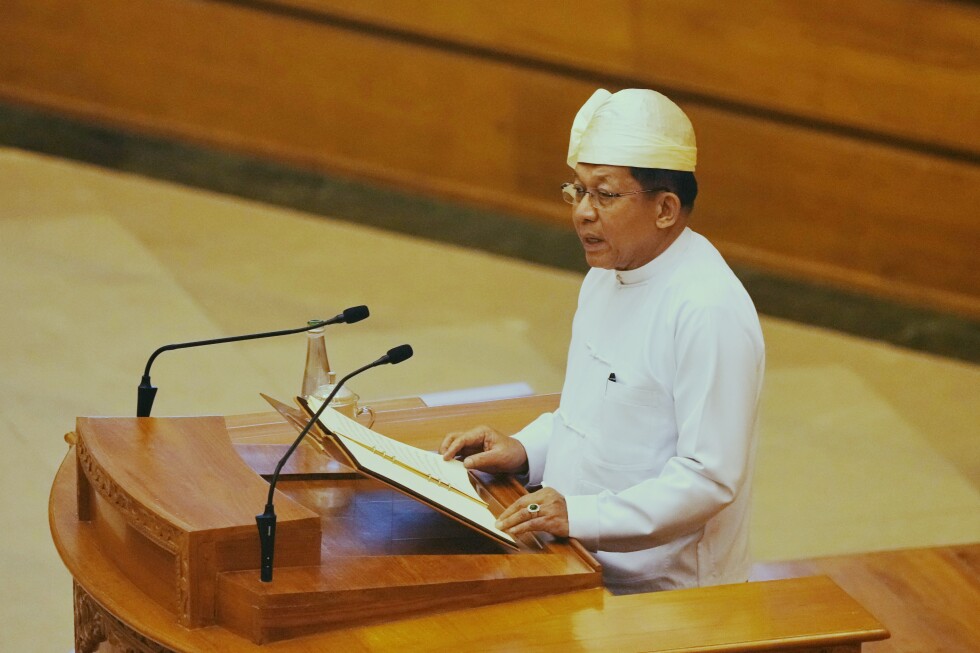
Min Aung Hlaing, Myanmar’s military commander who has ruled the Southeast Asian nation with an iron grip since the 2021 coup, was sworn in as president on Friday following an election widely condemned by international observers.
The inauguration ceremony, held in the newly renovated parliament building in the capital Naypyitaw, marks what experts describe as a superficial transition to civilian rule. In reality, analysts view this move as an attempt by the military to maintain control behind a veneer of democratic legitimacy.
“Myanmar is back on the path to democracy and moving toward a better future,” Min Aung Hlaing claimed in his inaugural address. The 69-year-old leader also pledged to pursue peace with warring ethnic rebels and restore relations with the Association of Southeast Asian Nations (ASEAN), which has pressured Myanmar over its political instability.
However, the circumstances surrounding his rise to the presidency tell a different story. The general election held in December and January was neither free nor fair according to United Nations experts and human rights organizations. Aung San Suu Kyi’s popular National League for Democracy (NLD) party, which won landslide victories in 2015 and 2020, was notably absent from the ballot after being forced to dissolve in 2023 for refusing to register under new military regulations.
The Bangkok-based Asian Network for Free Elections highlighted the severely restricted nature of the vote in a report released Friday. “The junta’s elections were held in only 42% of Myanmar’s territory, under a restrictive legal framework that barred legitimate political competition,” the report stated. “Every aspect of the staged elections was carefully engineered to ensure a predetermined outcome.”
Min Aung Hlaing’s five-year presidential term follows a well-established pattern in Myanmar’s troubled political history, where military strongmen install themselves as civilian leaders to legitimize their rule. His inauguration was conducted alongside First Vice President Nyo Saw, a former general and close adviser, and Second Vice President Nan Ni Ni Aye, an ethnic Karen politician from the military-backed Union Solidarity and Development Party (USDP).
The composition of the new cabinet further underscores the military’s continued dominance. Twenty-eight of the thirty cabinet members have direct military connections, being either current or former generals, lawmakers from the USDP, or members of the previous military government. The pro-military bloc controls nearly 90% of seats in Myanmar’s two-chamber legislature.
As required by Myanmar’s constitution, Min Aung Hlaing relinquished his post as commander-in-chief last week, with his close aide, General Ye Win Oo, assuming the powerful military position. This tactical transition maintains the military’s control over both civilian governance and armed forces.
Min Aung Hlaing’s controversial past includes overseeing a brutal 2017 counterinsurgency campaign against the Rohingya Muslim minority that forced hundreds of thousands to flee to neighboring Bangladesh. That operation, conducted while Suu Kyi led the civilian government, drew international condemnation with some observers accusing Myanmar’s military of genocide.
Since the military seized power in February 2021, Myanmar has descended into a devastating civil war. According to the Assistance Association for Political Prisoners, nearly 8,000 civilians have been killed and over 22,000 political detainees remain imprisoned. The actual death toll from the ongoing conflict is believed to be significantly higher.
Meanwhile, 80-year-old Suu Kyi, Myanmar’s democratically elected leader before the coup, continues serving a 27-year prison sentence on charges widely considered politically motivated.
The ongoing civil war prevented voting in large swaths of the country during the recent election, with armed resistance groups controlling significant territory. Min Aung Hlaing now faces the formidable challenge of addressing this conflict while attempting to gain international recognition for his government amid widespread skepticism about its legitimacy.
Regional experts suggest Myanmar’s path to genuine democratic governance remains uncertain, with the military showing little willingness to relinquish its grip on power despite mounting domestic resistance and international pressure.
Fact Checker
Verify the accuracy of this article using The Disinformation Commission analysis and real-time sources.

8 Comments
It’s alarming to see the military chief who led the 2021 coup now assuming the presidency through a sham election. This move appears to be an attempt to legitimize the junta’s authoritarian control over Myanmar. I hope the international response is strong and unified in condemning this power grab.
Absolutely. The military’s actions undermine the democratic will of the people. Maintaining pressure and sanctions will be crucial to pushing for a return to true civilian rule.
This is a deeply troubling development that undermines Myanmar’s fragile democratic progress. The military’s continued dominance, despite the veneer of a ‘civilian’ presidency, is a major setback for the country’s people. I hope the international response is strong and unified in condemning this power grab.
This is a disappointing and worrying development. The military’s continued dominance in Myanmar, despite the pretense of a democratic transition, is a major setback for the country’s people. I hope the international community redoubles efforts to hold the junta accountable and support a genuine democratic process.
This looks like a concerning development in Myanmar. The military’s continued grip on power despite the veneer of a ‘civilian’ presidency is deeply troubling. I hope the international community maintains pressure on the junta to uphold human rights and restore genuine democratic governance.
Agreed. The lack of free and fair elections is a major setback. Myanmar’s people deserve a legitimate, democratic government, not military rule.
The military’s tightening grip on power in Myanmar is extremely concerning. Swearing in the coup leader as president through a fraudulent election process is a clear attempt to consolidate authoritarian control. The people of Myanmar deserve much better than this.
Agreed. The international community must maintain pressure and sanctions to push for a restoration of democratic rights and freedoms in Myanmar.