


Listen to the article
Myanmar’s Military-Backed Party Secures Victory in Final Round of Controversial Elections
The third and final round of Myanmar’s general election concluded Sunday, cementing the parliamentary majority of the country’s military rulers and their allies. The nearly month-long voting process has been widely criticized as neither free nor fair, designed primarily to legitimize the military’s power after it overthrew the democratically elected government of Aung San Suu Kyi in February 2021.
The army-backed Union Solidarity and Development Party (USDP) had already secured most of the contested seats in the first two rounds of voting held on December 28 and January 11. With 25% of parliamentary seats constitutionally reserved for military appointees, the junta and its political allies are guaranteed control of the legislature.
Senior General Min Aung Hlaing, the current head of Myanmar’s military government, is widely expected to assume the presidency when the new parliament convenes in March. When questioned about his political ambitions after inspecting a polling station in Mandalay, Myanmar’s second-largest city, Min Aung Hlaing declined to comment directly, noting only that “the president would be selected when Parliament meets.”
The general dismissed international criticism of the electoral process, stating firmly: “We are not concerned whether this is recognized by foreign countries or not. We recognize the people’s vote. It should be like that.”
Myanmar’s descent into civil war following the 2021 coup significantly limited voting across the country. Security concerns meant ballots were not cast in more than one-fifth of Myanmar’s 330 townships. This widespread disenfranchisement prompted ASEAN to refuse to send observers or certify the election. Malaysian Foreign Minister Mohamad Hasan explicitly cited “concerns over the lack of inclusive and free participation” in explaining the regional bloc’s decision.
Former leader Aung San Suu Kyi, now 80 years old, remains imprisoned on charges widely considered politically motivated. She is currently serving a 27-year sentence. Her party, the National League for Democracy, which won landslide victories in the 2015 and 2020 elections, was forced to dissolve in 2023 after refusing to register under new military regulations.
The election has been marked by severe restrictions on political expression. A new Election Protection Law imposed harsh penalties for criticism of the process, with authorities charging over 400 people for activities such as distributing leaflets or posting comments online. Many opposition parties refused to register or declined to participate under such restrictive conditions, while resistance groups called for voters to boycott the polls entirely.
Sunday’s final round of voting took place in 61 townships across six regions and three states, many of which have experienced recent armed conflict. Fighting was reported in at least one voting location, with independent media sources including the Irrawaddy reporting five people injured. Earlier rounds also saw disruptions, with armed opposition groups attacking polling stations and government buildings, resulting in the deaths of at least two administrative officials.
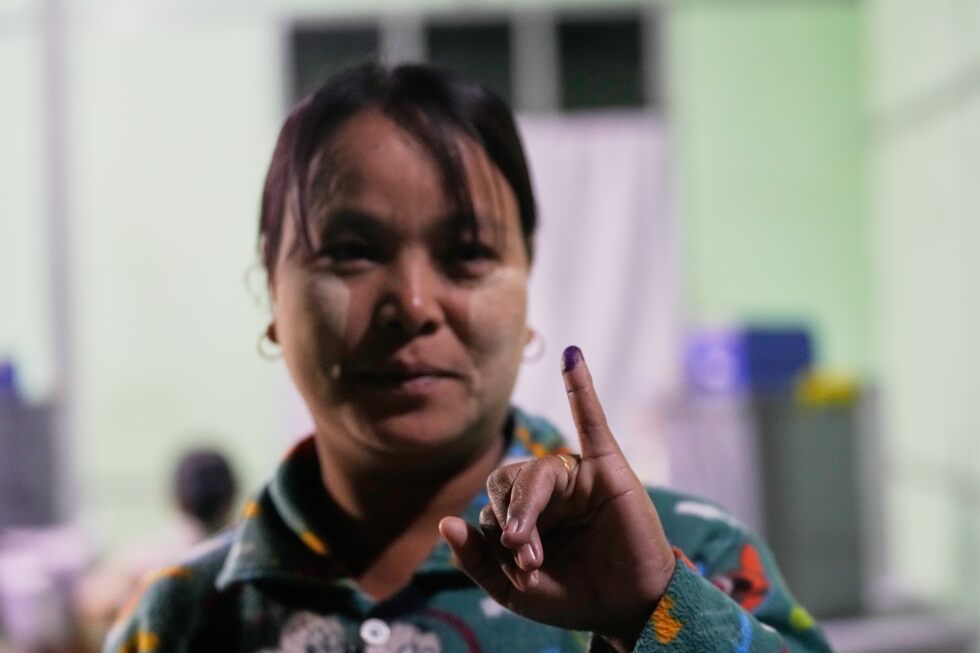
Public sentiment about the election appeared mixed. At a polling station in Yangon’s Dagon township, 86-year-old voter Soe Tint expressed hope that the process would help bring peace and development “in all sectors, including education.” In contrast, 62-year-old Lae Lae Yi voiced resignation, stating: “I’m not expecting anything at all, because there is no motivation.”
According to the military government, more than 24 million citizens were eligible to vote—approximately 35% fewer than in the 2020 election. Official turnout figures for the first two rounds were reported at between 50% and 60%.
The electoral process involved more than 4,800 candidates from 57 political parties competing for seats in national and regional legislatures, though only six parties contested nationwide. While the USDP dominated the results, seventeen other parties secured small numbers of seats in the legislature.
Ko Ko Gyi, chairman of the People’s Party, which won a single parliamentary seat, warned about the dangers of one-party rule: “Since the government is chosen solely by parliament here, if a single party comes to dominate the legislature, the political system becomes one in which the winning party dominates the government.”
The military government has announced that the new parliament will convene in March, with the new government expected to take office in April.
Fact Checker
Verify the accuracy of this article using The Disinformation Commission analysis and real-time sources.

14 Comments
With 25% of seats guaranteed for the military, it’s clear this election is rigged in their favor. The people of Myanmar deserve true democratic representation, not an authoritarian system.
Absolutely. The military’s dominance over Myanmar’s politics is deeply undemocratic and a major setback for the country’s democratic aspirations.
This election seems to be more about legitimizing the military’s control than a genuine democratic process. It’s disappointing to see the junta solidifying its power in this way.
Agreed, the military’s grip on power in Myanmar is very concerning. This ‘election’ is just a facade to maintain their authority.
It’s disheartening to see the military tightening its control over Myanmar’s government through this sham election process. The people deserve a real voice in their future.
Agreed, this election is nothing more than a facade to legitimize the military’s authoritarian rule. The people of Myanmar have suffered enough under this regime.
It’s frustrating to see the military undermining Myanmar’s democratic institutions through this rigged election process. The people deserve a genuine say in their country’s future.
Agreed, this election is a sham that does nothing to address the military’s authoritarian rule in Myanmar. The international community must continue to pressure the junta to respect human rights.
This election is a clear attempt by the military to maintain its grip on power in Myanmar. It’s a blow to the country’s democratic aspirations and the people’s right to choose their own leaders.
This election is a clear power grab by the military junta. They’re using the process to cement their control and silence the democratic opposition. Unacceptable.
It’s disappointing to see the military using this election process to consolidate its power in Myanmar. The people deserve a real voice in their country’s future, not an authoritarian system.
The military’s control over Myanmar’s politics is deeply troubling. This election seems designed to legitimize their authoritarian rule rather than promote genuine democracy.
The military’s dominance over Myanmar’s politics is deeply concerning. This election seems designed to consolidate their power rather than promote true democracy.
This election is a farce that does nothing to address the military’s stranglehold on power in Myanmar. It’s a setback for the country’s democratic development and the rights of its citizens.