


Listen to the article
Vibrant Murals Transform Portuguese Housing Project, Highlighting UN Sustainability Goals
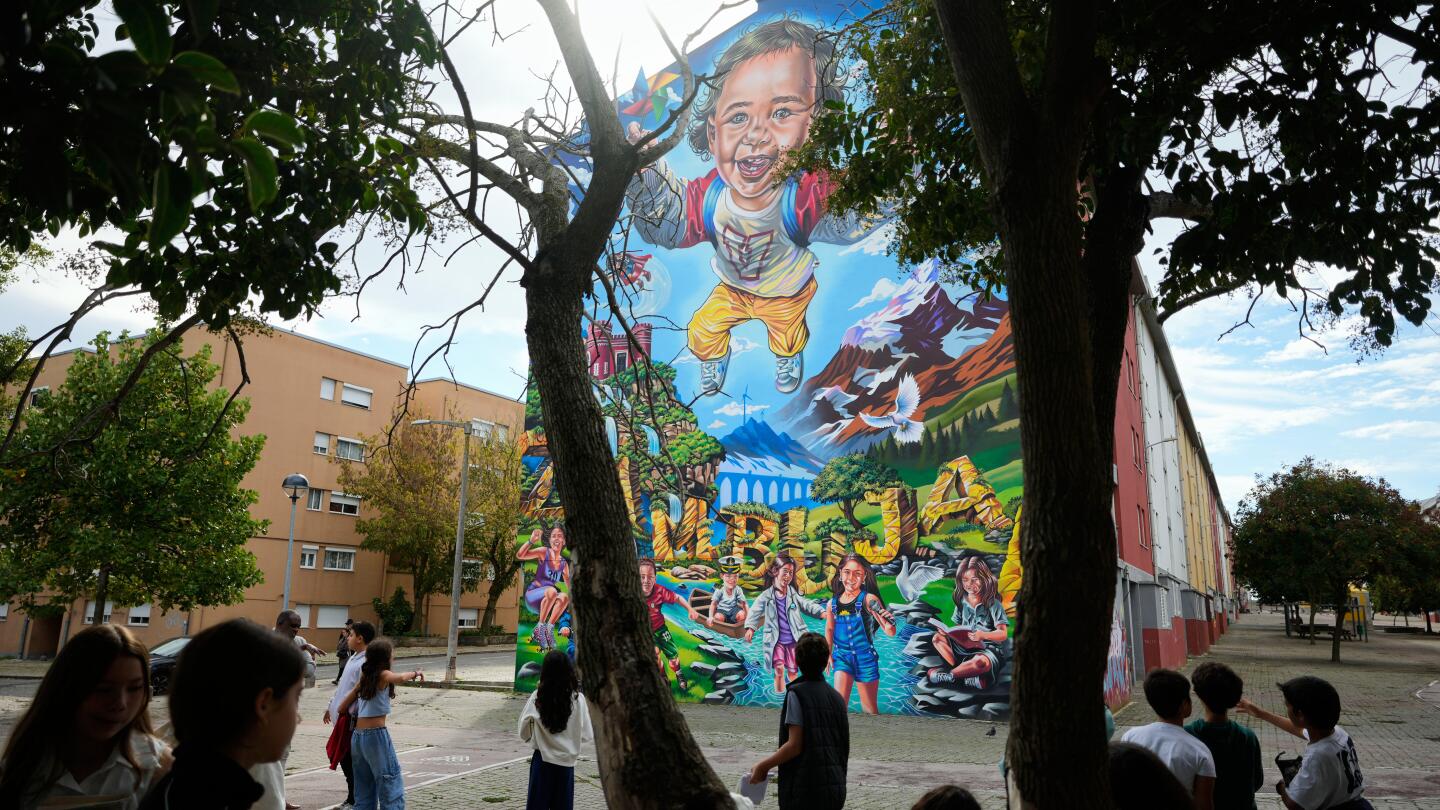
In the Zambujal neighborhood of Amadora, on Lisbon’s outskirts, a remarkable transformation is underway. Towering murals now adorn the sides of otherwise unremarkable five-story apartment blocks, bringing color, pride and global recognition to this underprivileged community.
The ambitious art project depicts powerful scenes that connect directly to the United Nations’ 2030 Agenda for Sustainable Development. One mural titled “No Poverty” portrays an intimate moment between a Black woman braiding a white woman’s hair, symbolizing family connections forged during difficult times. Another, “No Hunger,” shows a local resident teaching children about her vegetable garden, emphasizing the importance of understanding food sources.
“I think this is a good thing. Our neighborhood catches the eye now, we have lots of visitors to see it,” says Ana Gomes, a Zambujal resident. “It’s a shame that some things are not ok [in the neighborhood], but they do what they can.”
The project represents a collaborative effort between two community organizations: CAZAmbujal, whose slogan is “Changing the world together,” and the Ad Gentes association. Together, they’ve created visual narratives that link local experiences with the 17 UN Sustainable Development Goals, which include reducing inequality, creating decent jobs, improving education, enhancing health and wellbeing, and fighting poverty – objectives the UN has warned are currently at risk globally.
What makes this initiative particularly unique is its inclusivity. The organizers invited community members, including those who had never previously painted on a wall, to participate in creating these outdoor artworks. This grassroots approach has helped foster a deeper connection between the murals and the community they represent.
“The key challenge was to get to know the stories of the neighborhood, to know the people, to feel the essence of the neighborhood and from there, to link the sustainable development goals to the stories of the people,” explains Vitor Monteiro, the 51-year-old head of CAZAmbujal.
The project has evolved beyond mere decoration. Local guides, including young residents from the ethnically diverse community, now conduct tours for visiting groups from across Portugal and abroad. These guides share personal stories alongside explanations of the murals, creating a more authentic and immersive experience for visitors.
This increased attention has sparked a subtle but significant shift in community sentiment. In a neighborhood that has historically struggled with socioeconomic challenges, residents are developing a newfound sense of pride in their home.
“The people of the neighborhood feel increasingly proud of belonging here,” Monteiro notes. “‘I am from Zambujal’ people say with pride, and this is what we are building here, a sense of belonging.”
The Zambujal project represents a growing trend of using public art to address social issues in marginalized communities. Similar initiatives have emerged across Europe and globally, using creative expression to highlight social challenges while empowering residents through participation in beautifying their neighborhoods.
Urban art projects like this one demonstrate how creative approaches can help communicate complex global objectives in tangible, relatable ways. By depicting UN sustainability goals through local stories and experiences, the murals make these abstract concepts more accessible and meaningful to both residents and visitors.
The international recognition the project has received also highlights the power of art to transcend socioeconomic boundaries, bringing positive attention to areas often overlooked in mainstream discourse.
As the world struggles to meet the UN’s 2030 sustainability targets, grassroots initiatives like the Zambujal murals serve as important reminders that achieving these goals ultimately depends on connecting them to the lived experiences of communities everywhere.
Fact Checker
Verify the accuracy of this article using The Disinformation Commission analysis and real-time sources.

8 Comments
I’m curious to learn more about the specific community organizations behind this project and how they engaged with local residents. Grassroots initiatives like this can have a big ripple effect.
Good point. Collaborating with the community to bring this vision to life is likely key to its success and lasting impact.
What a wonderful initiative to bring vibrant art and UN sustainability goals to this community! Connecting neighbors and highlighting local pride and resilience is so impactful.
Absolutely, the murals seem to be a powerful way to celebrate the community and raise awareness of important global issues.
The idea of using vibrant murals to transform an otherwise unremarkable housing project is really smart. It sounds like this project is making a tangible difference in people’s lives and perceptions of the community.
Agreed, public art can be a powerful tool for community development and social change when implemented thoughtfully.
The imagery and themes highlighted in the murals – like family, food, and overcoming poverty – are so meaningful. It’s great to see public art being used to promote the UN’s sustainable development goals.
It’s wonderful to see how this public art project is boosting local pride and bringing more visitors to the Zambujal neighborhood. Connecting global issues to the community’s daily life is a clever way to drive awareness and action.