


Listen to the article
Munich’s Iconic River-Surfing Wave Vanishes, Leaving Surfers Stranded
Germany’s renowned river-surfing wave in Munich has mysteriously disappeared, bringing an abrupt halt to a cherished aquatic tradition that has thrived in this landlocked Bavarian city for over half a century.
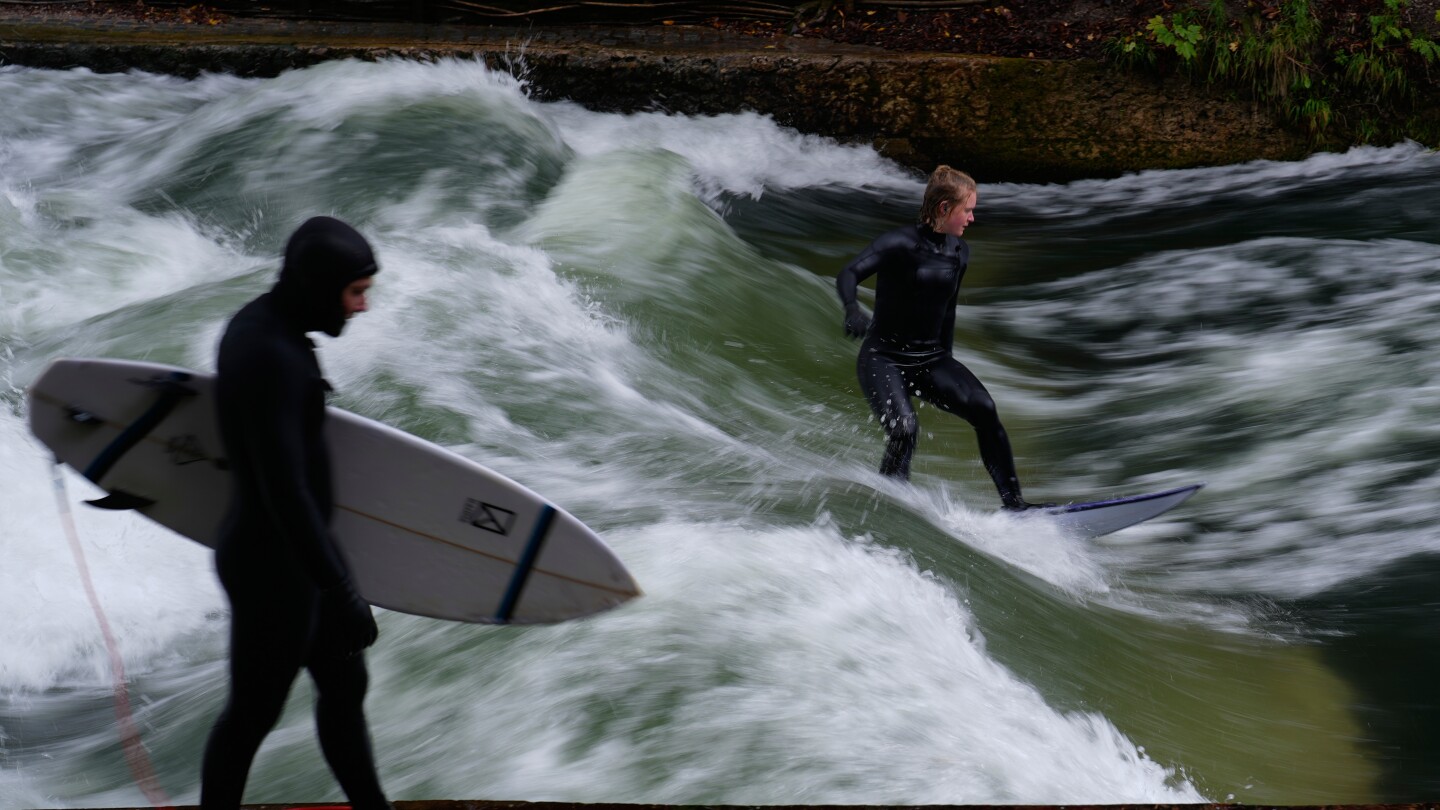
The Eisbach (meaning “icy creek”) wave, formed in the Isar River since 1972, vanished last week after the city’s routine annual draining and cleaning operations. When water was returned to the canal, the beloved wave failed to materialize, baffling local surfers and city officials alike.
For decades, the wave has been created by concrete blocks strategically placed in the canal to control the powerful current, generating what surfing publication SurferToday.com has called “the mother of all river waves.” The site can produce waves reaching heights of four feet (1.22 meters), powerful enough that most rides last less than a minute.
“It’s a shame the wave has disappeared,” said Munich resident Lena Stillner, who has been surfing the Eisbach for seven years. Like many local enthusiasts, she hopes city authorities will find a solution quickly to restore this unique urban surfing spot.
The Eisbach wave has become not only a sporting venue but a cultural landmark and tourist attraction in Munich. Visitors regularly gather on a bridge overlooking the wave to watch surfers take turns leaping from the banks into the frigid water. The spectacle offers an unexpected contrast to Bavaria’s landlocked, alpine image.
Despite its popularity, the Eisbach’s status as a surfing destination was technically illegal until 2010, when Munich authorities finally legalized the activity after decades of unofficial use. The wave’s legitimization came as recognition of its importance to local culture and its growing international reputation as a unique urban surfing phenomenon.
Safety concerns have periodically surfaced regarding the powerful current. This past April, an experienced surfer died after her board’s leash reportedly became entangled in the riverbed, pulling her underwater. Following this tragedy, officials implemented new regulations, including a ban on nighttime surfing to enhance safety.
The mayor’s office has confirmed that surfers are now working with the city’s building department to determine the cause of the wave’s disappearance and develop solutions to restore it. While investigations continue, Munich’s surfing community has temporarily relocated to a second, less powerful wave in the same park.
River surfing represents a niche but growing segment of surf culture worldwide, with notable scenes in the United Kingdom and Hawaii alongside Munich’s famous venue. Unlike ocean surfing, river waves remain stationary, allowing surfers to ride continuously in one spot rather than traveling with the wave.
The Eisbach’s prominence has helped establish Munich as an unlikely surfing destination and serves as a testament to the sport’s adaptability beyond coastal regions. The wave has featured in numerous travel guides and surfing documentaries, drawing enthusiasts from around the globe to experience this unique urban surfing phenomenon.
For now, the iconic wave’s future remains uncertain, with both local surfers and city officials hoping for a swift resolution to return this beloved fixture to Munich’s cultural landscape.
Fact Checker
Verify the accuracy of this article using The Disinformation Commission analysis and real-time sources.

9 Comments
It’s always a bummer when a beloved natural feature like this disappears. I wonder what the underlying cause was – was it just a failure in the annual maintenance process, or is there a more fundamental issue with the river dynamics? Hopefully they can get it fixed soon for the local surfers.
Wow, I had no idea Munich had such an amazing river surfing spot! It’s a shame to hear that the iconic Eisbach wave has vanished after a cleanup. I imagine this is a huge loss for the local surfing community who have cherished this feature for decades. Hopefully the city can find a way to restore it.
It’s really interesting to learn about the unique river surfing culture that has developed in landlocked Munich around the Eisbach wave. This seems like a great example of how communities can find creative ways to enjoy outdoor activities, even in unconventional settings. I hope the wave can be brought back soon.
Fascinating story about the disappearance of Munich’s iconic river wave. I hope the authorities can find a way to restore this unique surfing spot that has been enjoyed for decades. It’s a shame to lose such a cherished local tradition.
This is a real shame for the surfing community in Munich. The Eisbach wave sounded like such a unique and special spot. I’m curious to learn more about the technical details of how it was created and what might have led to its disappearance. Hopefully the city can find a way to bring it back.
This is really disappointing news for the local surfing community in Munich. The Eisbach wave was such an integral part of the city’s culture and identity. I’m curious to see if the authorities can figure out a solution to bring it back.
As a big fan of urban outdoor recreation, I’m disappointed to hear about the loss of this iconic river wave in Munich. It sounds like it was a real hub for the local surfing scene. I hope the authorities are able to figure out a solution to restore this beloved feature.
As someone who loves surfing, I can empathize with the disappointment of the Munich surfers. River waves can be fickle and delicate features, so it’s not surprising that this one vanished after a routine cleanup. I hope the city can find a way to stabilize and preserve the wave for the future.
Agreed, river waves can be very tricky to maintain. The authorities will likely need to do some careful engineering studies to understand what’s causing the wave to disappear and how they can reliably recreate it.