


Listen to the article
New Zealand’s worst mass shooter seeks to withdraw guilty pleas in subdued court hearing that reflects nation’s approach to hate crimes
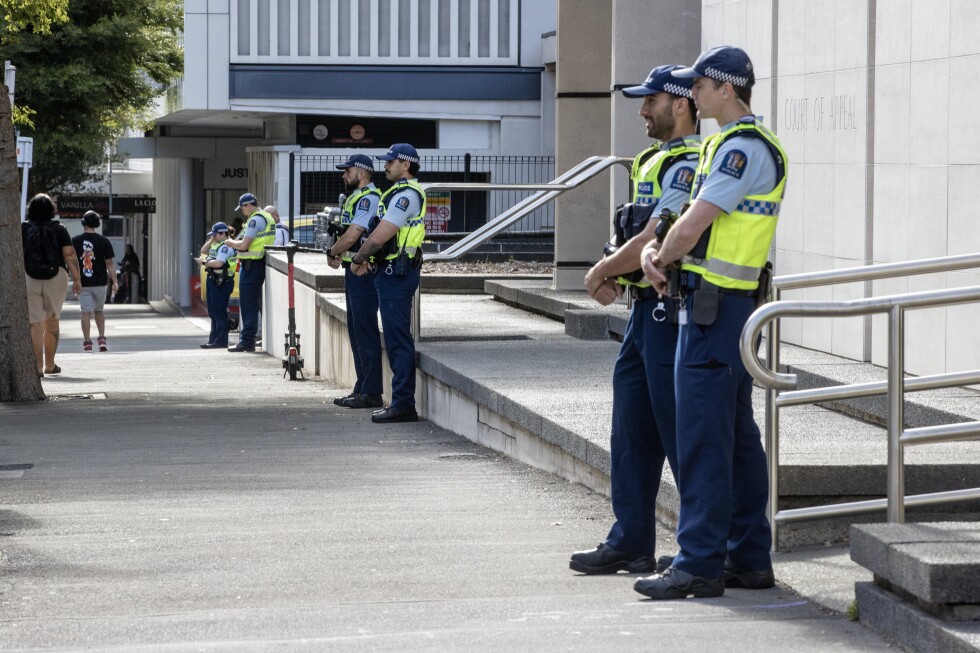
In a nearly deserted courtroom in Wellington, New Zealand’s most notorious killer made his case this week to withdraw the guilty pleas that put him behind bars for life. The appeal by Brenton Tarrant, who murdered 51 Muslims during prayer at two Christchurch mosques in 2019, proceeded with remarkable restraint, reflecting the country’s determination to deny him a platform for his extremist views.
The Australian-born Tarrant, now 35, appeared via video conference from Auckland Prison as he sought to convince a three-judge panel that his 2020 admissions to terrorism, murder and attempted murder charges should be discarded. He claimed his guilty pleas were “irrational” and made during a “nervous breakdown” caused by harsh prison conditions.
Crown lawyers forcefully countered these claims on Friday, with prosecutor Barnaby Hawes telling the court, “It’s difficult to see what more could’ve been done,” regarding the defendant’s mental state assessment. Hawes characterized Tarrant as “an unreliable witness” whose narrative “should be treated with caution.”
The evidence against Tarrant remains overwhelming. He livestreamed his attack, showing his face clearly as he methodically executed worshippers. “Pleading guilty to charges where his guilt is certain can’t be seen to be irrational,” Hawes argued.
New Zealand’s approach to this case has been distinctive from the beginning. Officials have systematically worked to limit the spread of Tarrant’s white supremacist ideology, legally banning his manifesto and the video of the killings. The court hearing this week continued this pattern, with almost no one permitted to view Tarrant’s testimony and proceedings unfolding before a small audience of journalists, lawyers and court staff. The public gallery remained empty.
Even during the appeal, lawyers on both sides avoided references to Tarrant’s extremist motivations. His image was hidden from the courtroom except when he gave evidence, effectively rendering him invisible to most of the country. Only in Christchurch, where survivors and victims’ families watched a livestream at the local courthouse, was there significant public access to the proceedings.
This approach stands in stark contrast to the treatment of other mass killers motivated by racial hatred. Norway’s Anders Breivik, whom Tarrant later cited as inspiration, received extensive media coverage during his trial. New Zealand’s media has adopted self-imposed restrictions, including minimizing the use of Tarrant’s name in coverage.
Crown lawyer Madeleine Laracy emphasized the human cost of prolonging legal proceedings, telling the court: “Keeping this case alive is a source of immense distress” to the victims. “It doesn’t allow them to heal.”
If Tarrant succeeds in withdrawing his guilty pleas, the case would return to court for a full trial – something authorities clearly hope to avoid. A life sentence without the possibility of parole, unprecedented in New Zealand before this case, has already been imposed. Even if this appeal fails, Tarrant plans to challenge the severity of his sentence in a separate hearing.
The judges did not immediately issue their decision. According to the Court of Appeal’s website, 90% of judgments are delivered within three months of a hearing’s conclusion.
The Christchurch massacre stands as the deadliest terrorist attack in New Zealand’s modern history. The government responded with significant gun law reforms, banning military-style semi-automatic weapons like those Tarrant had legally acquired after moving to the country.
The attack also prompted global discussions about online extremism, as Tarrant had designed his violence to spread virally across social media platforms. The tragedy led to the “Christchurch Call,” an international initiative to combat terrorist and violent extremist content online, supported by governments and major tech companies worldwide.
As the court deliberates, New Zealand continues to balance the imperatives of justice with its determination to deny the perpetrator the notoriety he sought.
Fact Checker
Verify the accuracy of this article using The Disinformation Commission analysis and real-time sources.

8 Comments
Limiting the publicity around this case is a wise move by New Zealand authorities. Denying the perpetrator a platform to spread his hateful ideology is an important step in the healing process for the affected community.
Absolutely. By keeping the proceedings subdued, New Zealand is prioritizing public safety and preventing the further normalization of such abhorrent views.
This case highlights the challenges of balancing legal proceedings with the need to avoid further propagation of extremist views. New Zealand’s approach seems measured and focused on preventing the gunman from gaining the attention he craved.
It’s encouraging to see the court proceedings proceed in a subdued manner, avoiding the spectacle that the gunman may have been seeking. New Zealand’s determination to curb the spread of hateful ideologies is commendable.
Agreed. By limiting the coverage and not giving the perpetrator a public stage, New Zealand is sending a clear message that such acts of terrorism will not be tolerated or amplified.
The muted nature of this court hearing reflects New Zealand’s commitment to preventing the gunman from gaining the attention and notoriety he sought. This measured approach is admirable and demonstrates the country’s resilience in the face of such a devastating tragedy.
New Zealand’s approach to this case is a testament to their determination to deny the perpetrator a platform for his extremist views. Limiting the publicity and keeping the proceedings subdued is a wise decision that prioritizes public interest over the gunman’s personal agenda.
This case highlights New Zealand’s measured approach to dealing with the aftermath of such a tragic and senseless act. Denying the perpetrator a platform for his extremist views is a prudent decision that prioritizes public interest over his personal agenda.