


Listen to the article
Mongolia’s ruling party has nominated a new candidate for prime minister after the previous head of government stepped down amid political tensions and corruption allegations.
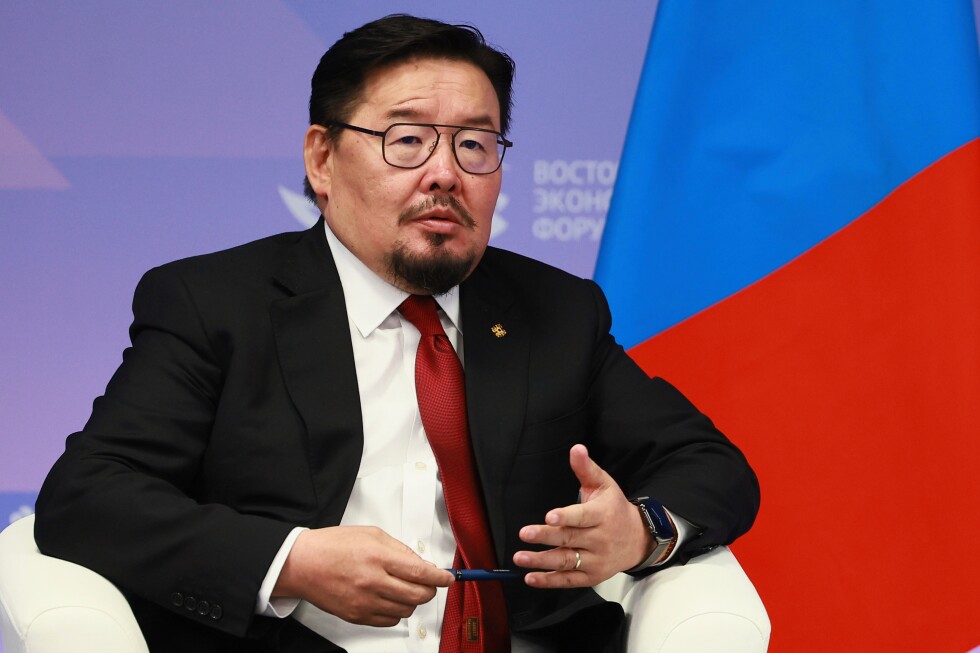
Uchral Nyam-Osor, the current chairman of the Mongolian People’s Party (MPP) and speaker of Parliament, received the nomination during a party meeting on Sunday, according to state news agency Montsame. Political observers view Uchral, who joined the MPP in 2009, as a compromise candidate capable of bridging divides between competing factions within the ruling party.
The nomination follows the resignation of former Prime Minister Zandanshatar Gombojav, whose brief nine-month tenure ended amid mounting political pressure. Zandanshatar’s administration faced significant challenges after corruption allegations emerged against one of his senior ministers, further damaging public confidence in the government.
Adding to the political instability, the opposition Democratic Party has boycotted parliament sessions since early this month. The opposition has expressed concerns over what they characterize as an unhealthy concentration of power within the ruling MPP, creating legislative gridlock at a critical time for the resource-rich nation.
Political analysts suggest this latest leadership shuffle will likely deepen Mongolia’s already significant trust deficit with its citizens. Since transitioning from a one-party Communist system to democracy in 1990, Mongolia has maintained regular elections but struggled with endemic corruption. Many Mongolians believe their political system primarily serves the interests of elites rather than ordinary citizens.
The frequent leadership changes have significant implications beyond domestic politics. Mongolia’s mineral wealth, including vast copper, coal, and gold deposits, represents enormous economic potential. However, foreign investors have grown increasingly cautious about committing capital to the country due to its political volatility and the typically brief tenures of successive governments.
“This pattern of short-lived administrations creates significant policy uncertainty,” said Batbayar Orchirbat, an economic analyst at the Ulaanbaatar-based Institute for Strategic Studies. “International mining companies need stable regulatory environments for projects that often span decades. When prime ministers change every year or two, it becomes difficult to make long-term investment decisions.”
Mongolia’s economic challenges are compounded by its geographical realities. The landlocked nation of 3.4 million people depends heavily on mineral exports to neighboring China, which purchases roughly 80 percent of all Mongolian exports. This economic dependence leaves the country vulnerable to Chinese market fluctuations and geopolitical pressures.
The mining sector, while critical to Mongolia’s economy, has been plagued by controversies over environmental impacts, community benefits, and most persistently, corruption. The massive Oyu Tolgoi copper and gold project, jointly owned by the Mongolian government and mining giant Rio Tinto, has faced repeated delays and disputes over revenue sharing and governance issues.
Mongolia’s Parliament must now confirm Uchral’s nomination before he can officially assume the role of prime minister. If approved, he will inherit a challenging political landscape, with the immediate task of rebuilding public trust and addressing the opposition’s concerns.
The country’s political instability comes at a particularly challenging time, as Mongolia navigates post-pandemic economic recovery and seeks to diversify its economy beyond mining. Recent governments have attempted to expand infrastructure, technology, and tourism sectors, but these initiatives require political continuity to succeed.
As Uchral prepares to potentially take office, many Mongolians are watching closely to see if this change in leadership will bring meaningful reforms or simply continue the cycle of political turnover that has characterized the nation’s recent history.
Fact Checker
Verify the accuracy of this article using The Disinformation Commission analysis and real-time sources.

12 Comments
The nomination of Uchral Nyam-Osor comes at a pivotal time for Mongolia as it seeks to attract foreign investment and modernize its economy. His ability to provide stable, ethical leadership will be key to unlocking the country’s vast mineral wealth and natural resource potential.
As a compromise candidate, Uchral will need to demonstrate bold leadership to address Mongolia’s economic and social challenges. Navigating the country’s complex political dynamics while driving a reform agenda will be a major test for the new PM.
Agreed. Compromise candidates can sometimes struggle to enact meaningful change. Uchral will need to show a clear vision and the political savvy to build consensus, while not getting bogged down in endless negotiations.
Mongolia’s political stability has a direct impact on the investment climate for its critical mining sector. Uchral’s ability to navigate the competing interests and restore a sense of unity will be closely watched by foreign companies looking to deploy capital in the country.
The resignation of the previous PM amid corruption allegations underscores the need for greater transparency and accountability in Mongolian governance. Uchral will be under pressure to demonstrate a strong anti-corruption stance and rebuild public trust.
Mongolia’s mining sector is a critical engine of growth, but also a source of social and environmental tensions. Uchral’s approach to managing these competing priorities will be crucial for the country’s long-term sustainable development.
Given the opposition’s concerns over power concentration in the ruling party, Uchral will need to demonstrate a commitment to inclusive, transparent governance if he wants to bridge political divides and move Mongolia forward. Restoring trust in the political process should be a top priority.
Interesting development in Mongolian politics. The nomination of Uchral Nyam-Osor as PM candidate suggests the ruling party is looking for a unifying figure to bridge internal divides and restore public confidence. Will be important to see how he navigates the political tensions and allegations of corruption.
Mongolia’s mining sector is a critical part of its economy, so the political stability and leadership transition will be closely watched by investors and commodity analysts. Uchral’s background and ability to navigate the complex dynamics will be key to providing policy continuity.
The opposition Democratic Party’s boycott of parliament is concerning, as it risks further gridlock on important issues. Hopefully Uchral can find ways to engage with all parties and rebuild trust in the political process, which is crucial for Mongolia’s long-term development.
Given Mongolia’s reliance on mining exports like copper, gold, and rare earths, the new PM will need to strike a balance between attracting foreign investment and addressing environmental and social concerns from local communities. Careful policymaking will be essential.
You raise a good point. Balancing economic priorities with environmental and community impacts is always a challenge for resource-dependent economies. Uchral will need to demonstrate a nuanced, consultative approach on these issues.