


Listen to the article
Venezuelan Migrants Cautious About Return Despite Maduro’s Downfall
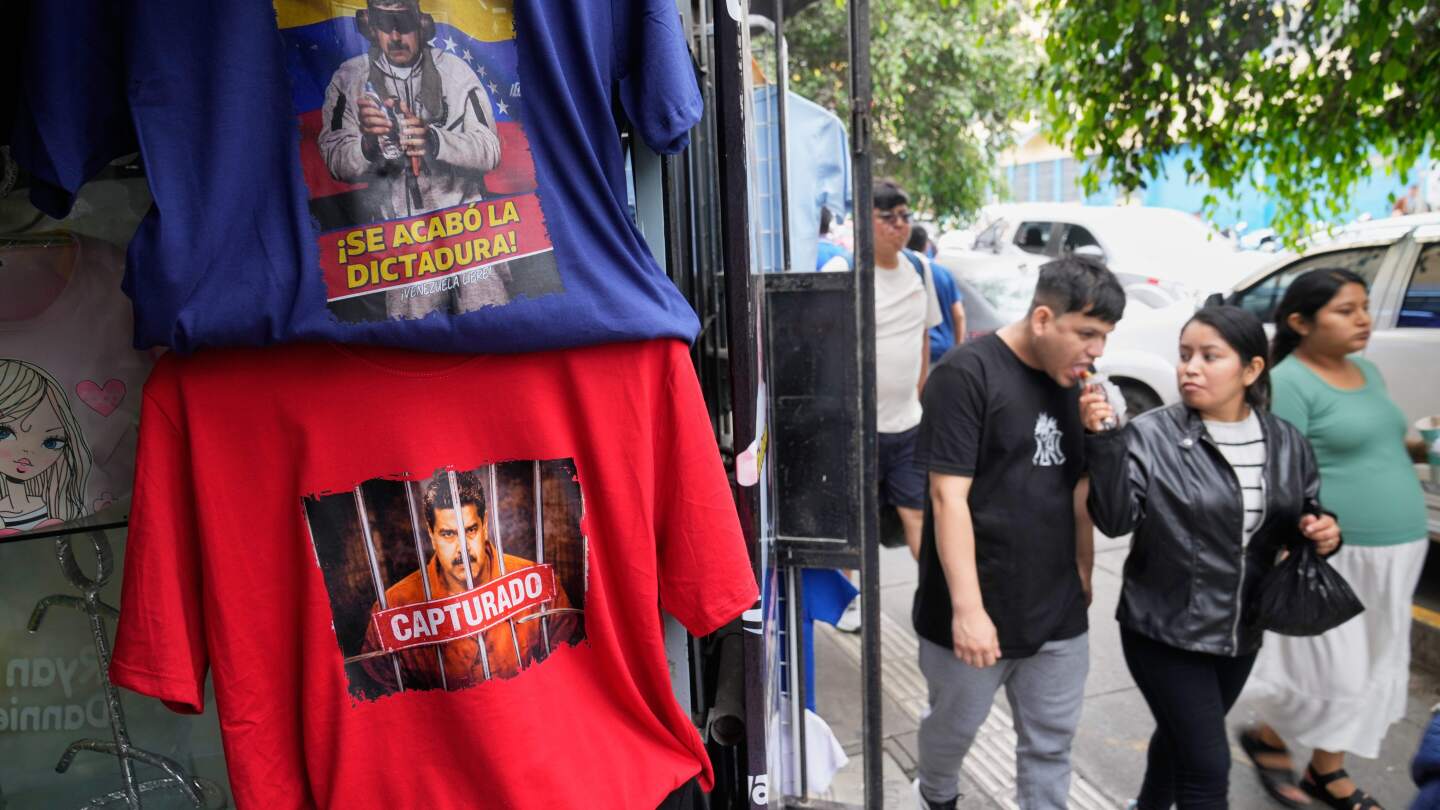
In a bustling textile market in Lima, Peru, 22-year-old Venezuelan graphic designer Yanelis Torres has been overwhelmed with orders for T-shirts featuring captured former Venezuelan President Nicolás Maduro with phrases like “Game Over.” While officials from Washington to Lima have begun encouraging the return of Venezuela’s 8 million displaced citizens, Torres has no immediate plans to leave her adopted home.
“I have a lot of things here,” Torres explained from her shop, adding that meaningful change in Venezuela will take time. “You’ve got to keep an eye on it, know what’s going on, but not lose hope.”
This sentiment echoes throughout the Venezuelan diaspora across the Americas, who greeted news of Maduro’s capture with a mixture of joy and caution. Many were particularly concerned by U.S. President Donald Trump’s statement that he would work with Maduro’s vice president, now interim President Delcy Rodríguez, rather than the opposition.
Venezuela’s economy remains in shambles, and despite Maduro’s capture, most of the government apparatus remains intact. This reality has tempered the enthusiasm for an immediate return among the estimated 7 million Venezuelan migrants and refugees scattered throughout Latin America and another 1 million in the United States.
Colombia hosts the largest population with 2.8 million Venezuelans, followed by Peru with 1.5 million, according to data from R4V, a tracking network coordinated by the United Nations High Commissioner for Refugees and the International Organization for Migration.
The exodus was driven by devastating political and economic crises in what was once one of Latin America’s wealthiest nations. Today, an estimated 80 percent of Venezuelans live in poverty despite the country possessing the world’s largest proven oil reserves.
Eduardo Constante, 36, who left Venezuela in 2017 during what he described as a “hunger crisis,” exemplifies the complex journey many migrants have undertaken. Speaking from a shelter in Monterrey, Mexico, Constante recounted spending three months in Colombia, three years in Peru, another three in Chile, and finally making the dangerous trek through the Darien jungle toward the U.S. border—only to find it closed to asylum seekers.
“I had plans in Europe, but if things settle down in Venezuela, I’m going to Venezuela,” he said, though his optimism is tempered by reports from family still there about food scarcity and security forces searching people’s cellphones for signs of opposition.
Maureen Meyer, vice president for programs at WOLA, a Washington-based human rights organization focused on Latin America, cautioned that “we’re nowhere near where we’re going to have a country where people that fled feel that they could be comfortable returning.”
The situation is particularly precarious as political shifts in host countries create increasing pressure on Venezuelan migrants. In Chile, ultra-conservative President-elect José Antonio Kast, who takes office in March, has made deporting undocumented immigrants central to his campaign, recently warning Venezuelans that “they have 63 days left to leave our country and to have the possibility of returning with all of their papers in order.”
Peru and Colombia are also scheduled to elect new presidents this year, with immigration likely to be a significant issue. Kast and Peru’s interim President José Jerí have discussed creating a humanitarian corridor through Chile, Peru, and Ecuador to facilitate Venezuelans’ return.
In Santiago’s “little Caracas,” initial celebrations have subsided as residents face the reality of their situations. Alexander Leal, 66, who arrived with his wife in 2018, sells homemade ice cream while dreaming of an eventual return. “It won’t be this year, but maybe it will be next year,” he said. “That is everyone’s aspiration, that the country is fixed.”
Others, like Yessica Mendoza, a 27-year-old undocumented Uber driver and mother in Chile, see no path back. “Returning is not an option,” she stated firmly.
Colombia, while having received more Venezuelans than any other country and generally lauded for its integration efforts, faces its own challenges. President Gustavo Petro has had a tense relationship with the United States under Trump, adding another layer of complexity to the regional response.
Ángel Bruges, a 54-year-old who runs an empanada business in Bogota after living there for six years with his wife and daughter, expressed gratitude for Colombia’s hospitality but dismissed the idea of returning. “Returning would be crazy,” he said, mindful of the fear his relatives in Venezuela continue to experience.
Back in Lima, Torres measures her expectations carefully. Four years after leaving Venezuela, she hopes to someday make extended visits to family there. For now, though, she describes Peru as “marvelous” while continuing to fulfill orders for T-shirts featuring her country’s deposed president, telling customers that if she doesn’t have what they want, she’ll make it—a fitting metaphor for the resilience of Venezuela’s diaspora as they navigate an uncertain future.
Fact Checker
Verify the accuracy of this article using The Disinformation Commission analysis and real-time sources.

7 Comments
While the capture of Maduro is undoubtedly a major event, it’s clear the road to recovery for Venezuela will be long and difficult. The cautious optimism of the diaspora is an understandable response to the challenges ahead.
Fascinating to see how the Venezuelan diaspora is responding cautiously to the latest developments. With the economy in shambles and the government apparatus still largely intact, it’s understandable they would be hesitant to return home just yet.
I’m curious to learn more about the U.S. strategy of working with Maduro’s vice president rather than the opposition. That seems like an interesting political move, though the long-term impacts remain to be seen.
This is a complex situation with a lot of nuance. It’s good to see the Venezuelan diaspora taking a measured approach and keeping a close eye on developments, rather than rushing to return home before real change is achieved.
The graphics and merchandise coming out of the Venezuelan expat community could provide some fascinating cultural insights as the country goes through this turbulent transition. I’ll be interested to see how artistic expression evolves.
This situation serves as a sobering reminder of the human toll of political turmoil. My heart goes out to all the Venezuelans struggling to rebuild their lives and find stability in a very uncertain time for their country.
The T-shirt designs featuring Maduro’s capture seem like an interesting creative outlet for Venezuelan expats to process the situation. It will be critical to see what meaningful changes come next for the country.