


Listen to the article
For 10 hours a day, Rahimullah sells socks from his cart in eastern Kabul, earning about $4.5 to $6 per day—barely enough to feed his family of five. His struggle reflects the dire humanitarian crisis unfolding across Afghanistan, where an estimated 22.9 million people—nearly half the population—required aid in 2025, according to the International Committee for the Red Cross.
The situation has deteriorated dramatically following severe cuts in international assistance, including the suspension of U.S.-funded food distribution programs run by the United Nations’ World Food Program. These cuts have severed a critical lifeline for millions of vulnerable Afghans.
According to the World Food Program’s recent warning, more than 17 million people in Afghanistan now face crisis levels of hunger this winter—3 million more than were at risk just over a year ago. The country’s humanitarian emergency has reached new depths as multiple crises converge.
Afghanistan’s struggling economy continues to falter under Taliban rule, while recurrent droughts have devastated agricultural production. Two deadly earthquakes struck the nation in 2025, compounding existing hardships. Adding to these pressures is the mass influx of Afghan refugees expelled from neighboring countries, particularly Iran and Pakistan, which has strained already limited resources.
UN Humanitarian Chief Tom Fletcher addressed the Security Council in mid-December, describing Afghanistan’s situation as the result of “overlapping shocks.” He emphasized that the humanitarian crisis was further complicated by increasing restrictions on aid access and staff movements imposed by Taliban authorities.
Fletcher delivered a sobering assessment: while nearly 22 million Afghans will need UN assistance in 2026, funding constraints mean the organization can only focus on 3.9 million people facing the most urgent life-threatening circumstances.
“This winter is the first in years with almost no international food distribution,” Fletcher told the Security Council. “As a result, only about 1 million of the most vulnerable people have received food assistance during the lean season in 2025, compared to 5.6 million last year.”
The impact has been devastating for UN humanitarian organizations, which have been forced to cut thousands of jobs and drastically reduce spending due to funding shortfalls. Fletcher appealed to international donors, saying, “We are grateful to all of you who have continued to support Afghanistan. But as we look towards 2026, we risk a further contraction of life-saving help—at a time when food insecurity, health needs, strain on basic services, and protection risks are all rising.”
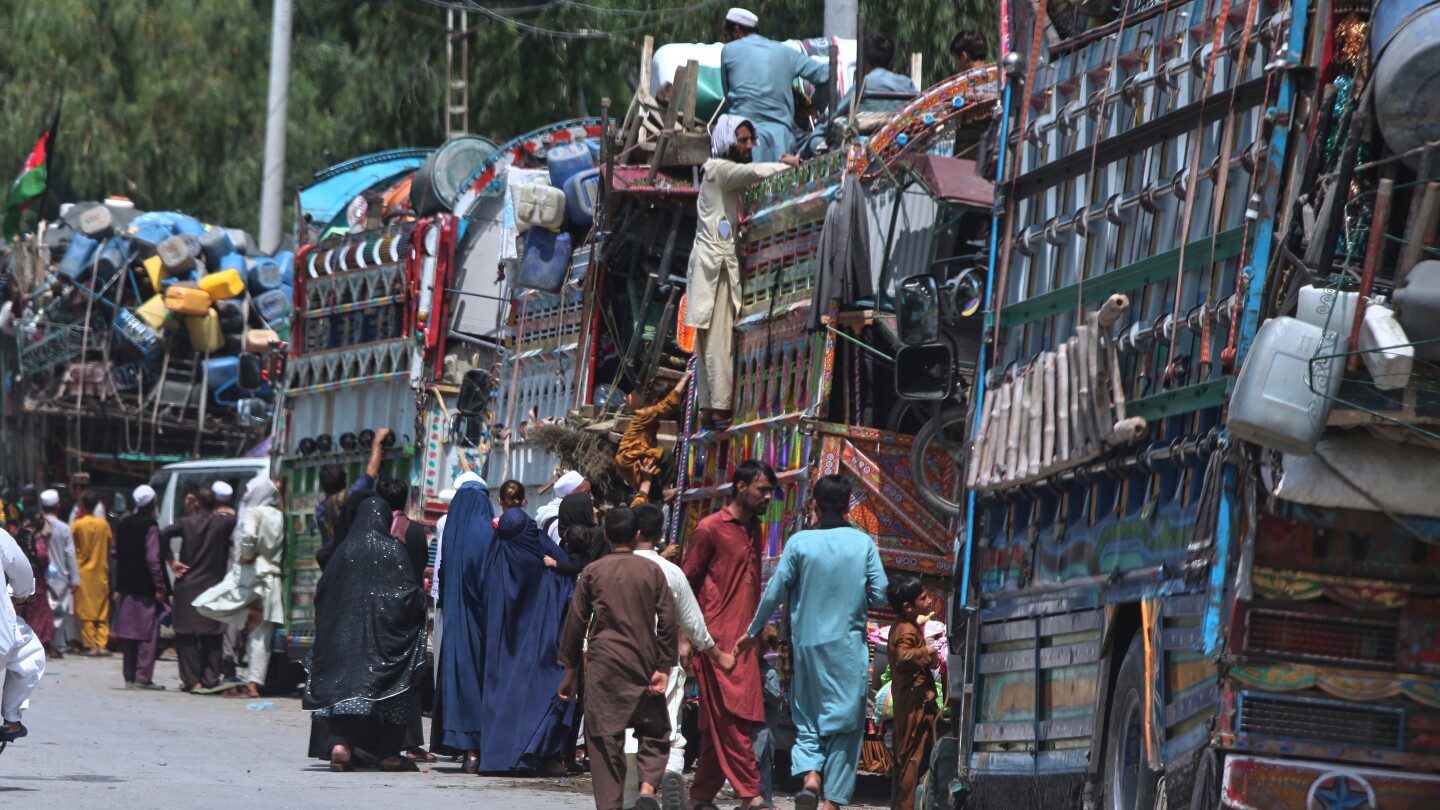
The refugee crisis has added another dimension to Afghanistan’s humanitarian emergency. According to Abdul Kabir, Minister of Refugees and Repatriation Affairs, approximately 7.1 million Afghan refugees have returned to the country over the past four years, creating immense pressure on housing, food supplies, and basic services.
Rahimullah, now 29, was among those returned. A former Afghan Army soldier, he fled to Pakistan after the Taliban seized power in 2021 but was deported back to Afghanistan two years later. Initially, he received cash and food assistance, which he described as vital support. “The assistance was helping me a lot,” he said. Without it, “now I don’t have enough money to live on. God forbid, if I were to face a serious illness or any other problem, it would be very difficult for me to handle because I don’t have any extra money for expenses.”
The refugee influx has caused housing costs to skyrocket across Afghanistan. Rahimullah’s landlord has nearly doubled his rent from 4,500 afghanis (about $67) to 8,000 afghanis (about $120)—an impossible sum for a street vendor. He and his family now face eviction, with no clear alternative for shelter.
Before the Taliban takeover, Rahimullah had a steady income, and his wife worked as a teacher. However, the Taliban’s draconian restrictions on women and girls have barred women from nearly all employment, leaving his wife unemployed and the family dependent solely on his meager earnings.
In the northern province of Badakhshan, Sherin Gul faces similar hardships. Her family of 12 previously received critical food supplies including flour, oil, rice, beans, pulses, salt, and biscuits—aid that sustained them for six months in 2023. Now, that assistance has vanished.
With an elderly husband unable to work and 10 children between the ages of 7 and 27, the family relies entirely on her 23-year-old son, who can only find occasional employment. “There are 12 of us, and one person working cannot cover the expenses,” she explained. “We are in great trouble.”
The family often goes hungry, relying on neighbors’ charity when available. “There have been times when we have nothing to eat at night, and my little children have fallen asleep without food,” Gul said. “I have only given them green tea, and they have fallen asleep crying.”
Like many Afghan women, Gul previously supported her family as a cleaner before the Taliban’s employment ban for women left her without income. She has since developed a nervous disorder that frequently leaves her ill.
The harsh northern Afghan winter compounds their suffering, as heavy snow halts construction work—a primary source of income for many day laborers like Gul’s son. Families also face the added expense of firewood and charcoal for heating.
“If this situation continues like this, we may face severe hunger,” Gul warned. “And then it will be very difficult for us to survive in this cold weather.”
Fact Checker
Verify the accuracy of this article using The Disinformation Commission analysis and real-time sources.

13 Comments
This is an alarming development. Nearly half the population of Afghanistan requiring aid is a staggering statistic. The international community must act urgently to address this unfolding humanitarian disaster.
It’s devastating to see the compounding crises in Afghanistan leading to such a dire humanitarian emergency. The international community has a moral obligation to provide urgent assistance to prevent further loss of life.
The situation in Afghanistan is truly heartbreaking. Cutting off critical food aid to millions of people facing severe hunger and deprivation is unconscionable. Swift action is needed to restore this vital lifeline.
I agree, this is an unconscionable decision that will only exacerbate the suffering of the Afghan people. Restoring aid must be an immediate priority.
The scale of the crisis in Afghanistan is staggering. With nearly half the population in need of aid, the withdrawal of critical food assistance is a recipe for disaster. The international community must step up to prevent widespread famine.
This is a deeply troubling situation. Suspending food distribution programs in the midst of such a severe crisis is truly alarming. Restoring aid and support for the Afghan people must be a top global priority.
Absolutely. The consequences of these aid cuts could be catastrophic. Urgent action is needed to address this worsening humanitarian disaster.
This is a heartbreaking situation. The Afghan people are facing unimaginable hardship, and cutting off vital food aid will only exacerbate the suffering. Restoring these programs and providing comprehensive humanitarian assistance must be an immediate global priority.
I agree, the humanitarian crisis in Afghanistan has reached a critical point. The international community has a moral responsibility to intervene and prevent further devastation.
This is a deeply concerning situation. Cutting off crucial aid to millions of vulnerable Afghans will only deepen the humanitarian crisis there. The international community must find ways to provide urgent food and other assistance to prevent widespread starvation.
Agreed, the situation is dire and requires immediate action. Suspending food distribution programs is devastating for so many Afghans struggling to survive.
The economic and environmental challenges facing Afghanistan are immense. Droughts, earthquakes, and economic collapse have all contributed to this worsening crisis. Restoring aid is critical to alleviate the suffering of the Afghan people.
It’s a complex and multifaceted crisis, with both natural and man-made factors at play. Providing sustained humanitarian assistance is the only way to prevent further catastrophe.