


Listen to the article
Myanmar’s Military-Backed Party Claims Victory in Controversial Election
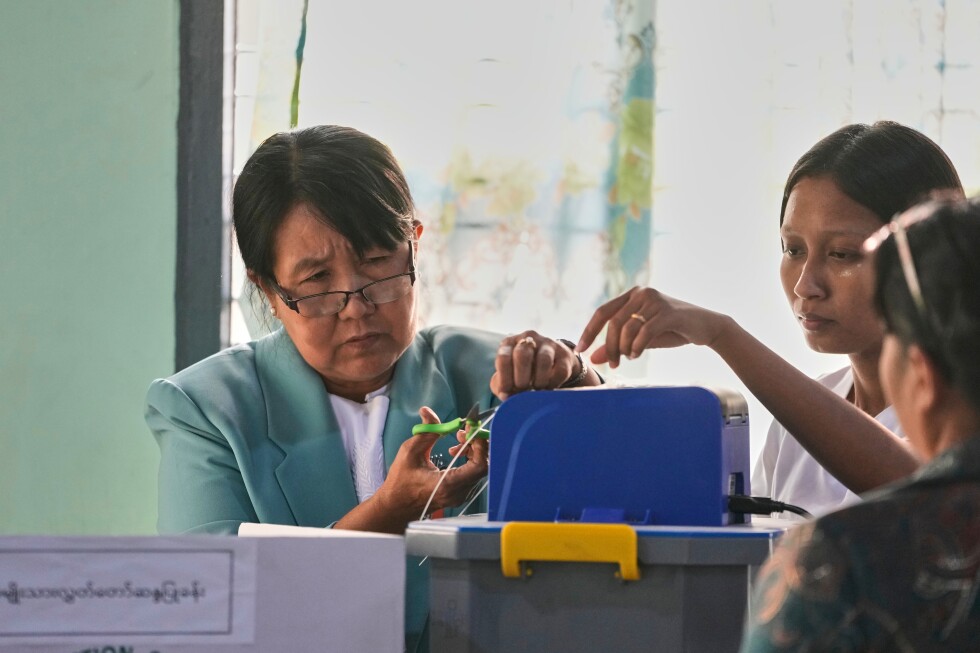
Myanmar’s military-backed Union Solidarity and Development Party (USDP) declared victory Monday in the country’s first election since the military seized power in 2021, setting the stage for a new government that critics say merely legitimizes army rule.
A senior USDP official, speaking on condition of anonymity, told The Associated Press that the party won 57 seats out of 61 contested in the lower house during the final phase of voting held Sunday. Vote counting for upper house and regional legislative seats continues, with final results expected later this week.
Based on current figures, the USDP has secured at least 290 seats across Parliament’s two chambers. Combined with the 166 seats automatically reserved for military appointees—a provision enshrined in the military-drafted constitution—the alliance commands well over the 294 seats needed to form a government.
The election, held in three phases on December 28, January 11, and January 25, took place amid ongoing civil conflict and faced widespread international criticism. Major opposition parties were excluded from participation, and the junta tightly restricted political dissent. Notably, 67 of Myanmar’s 330 townships—primarily areas controlled by armed resistance groups—did not participate in the vote, reducing the originally planned 664-member parliament to 586 seats.
More than 4,800 candidates from 57 political parties competed for positions in national and regional legislatures, though only six parties contested on a nationwide basis. The USDP, led by a former general, was widely expected to dominate the results given the restrictions placed on the electoral process.
The military seized power in February 2021, ousting the democratically elected government of Aung San Suu Kyi, whose National League for Democracy party had won a landslide victory in the 2020 election. The military claimed widespread voting irregularities, allegations rejected by international observers.
The coup triggered widespread opposition that has evolved into a civil war, with anti-junta forces controlling significant portions of the country. The ongoing conflict has displaced hundreds of thousands of civilians and devastated Myanmar’s economy, which has contracted sharply since the takeover.
Following the finalization of results, the new parliament members and military appointees will propose three candidates for president, with one to be elected to the position. The other two nominees will become vice presidents. Senior General Min Aung Hlaing, who currently leads the military government, is widely expected to assume the presidency when the new parliament convenes.
Tom Andrews, a special rapporteur for the United Nations human rights office, urged the international community on Friday to reject both the election results and any power arrangements that emerge from them, describing the process as fundamentally flawed.
Min Aung Hlaing has dismissed international criticism, stating on Sunday: “The people who live in Myanmar are the ones who vote. Not those from outside. We are not concerned whether this is recognized by foreign countries or not. We recognize the people’s vote. It should be like that.”
The election comes amid ongoing international sanctions against the military regime and its business interests. The Association of Southeast Asian Nations (ASEAN) has also largely excluded Myanmar’s military leadership from its high-level meetings since the coup, though the bloc’s unified approach has shown signs of fracturing in recent months.
Human rights groups have documented widespread abuses by security forces since the takeover, including the killing of more than 4,000 civilians according to monitoring groups, mass detentions, and the use of airstrikes against civilian targets.
With the military now poised to formalize its grip on power through this contested electoral process, Myanmar’s political crisis shows no signs of resolution, as resistance forces continue their struggle against military rule across the country.
Fact Checker
Verify the accuracy of this article using The Disinformation Commission analysis and real-time sources.

11 Comments
This election in Myanmar raises serious concerns about democracy and human rights. Excluding major opposition parties undermines the legitimacy of the process. I hope the international community closely monitors the situation and pushes for inclusive, free, and fair elections in the future.
Agreed. The military’s dominant role is deeply troubling. True democracy requires space for all political voices, not just those favored by the junta.
Myanmar’s mining and energy sectors have significant potential, but the country’s political turmoil creates uncertainty. Investors should carefully weigh the risks and opportunities before engaging in the market.
As a resource-rich country, Myanmar’s mining and energy sectors will be worth watching going forward. However, sustainable development requires transparent governance and respect for the rights of local communities.
Good point. Responsible resource management must go hand-in-hand with democratic reforms and protection of human rights.
This election outcome is a setback for Myanmar’s democratic transition. The military’s continued dominance is troubling for the mining and energy industries, which require a stable, transparent regulatory environment to thrive.
Agreed. Sustainable growth in these sectors will be difficult without genuine political reforms and rule of law.
Myanmar’s rich natural resources, including minerals and energy, could be a boon for the country. However, the military’s consolidation of power raises concerns about equitable development and environmental protection.
This election result is concerning for the future of Myanmar’s mining and energy sectors. Investors should closely monitor the political and regulatory environment for potential risks and challenges.
While the military-backed party’s victory may provide short-term stability, true long-term growth in Myanmar’s mining and energy industries will require a more inclusive political process and rule of law.
Absolutely. Sustainable development depends on good governance, not just military control.