


Listen to the article
Suspected Militants Launch Deadly Attacks on Police in Pakistan, Killing Nine
A series of coordinated attacks on police forces across Pakistan left nine people dead on Tuesday, highlighting the growing security challenges facing the country amid rising militant violence.
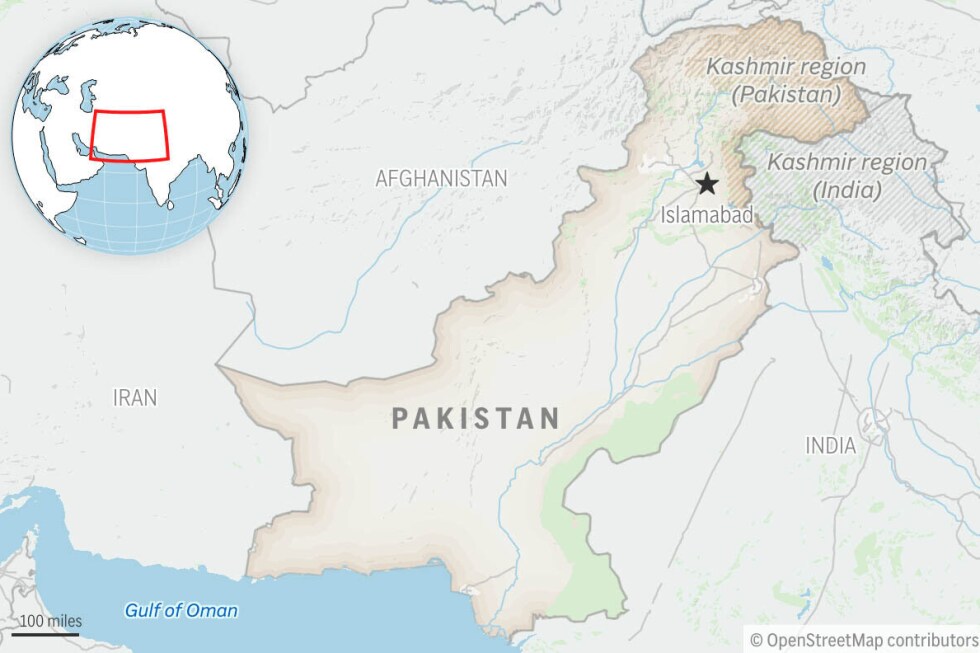
In Kohat district of northwestern Khyber Pakhtunkhwa province, attackers orchestrated a deadly ambush on law enforcement personnel. The assault began with an initial strike on a police vehicle that killed one officer. When reinforcements arrived minutes later, the militants launched a second, more devastating attack that claimed the lives of five additional officers and one civilian, according to police official Kamran Khan.
The same day in eastern Punjab province, a suicide bomber targeted a police post in Bukkur district, killing two officers and wounding four others. Police official Shahzad Rafiq confirmed the attack but provided no additional details as investigations were still underway.
No group has immediately claimed responsibility for Tuesday’s violence, though the attacks follow a pattern of increasing militant activity throughout Pakistan in recent months.
President Asif Ali Zardari issued a statement condemning the attacks in both Kohat and Bukkur, offering his condolences to the families of those killed in the line of duty.
The latest bloodshed comes just one day after militants struck a paramilitary post in Karak using a drone loaded with explosives, injuring several officers. In a disturbing escalation, the attackers then ambushed two ambulances transporting the wounded personnel. Three officers were killed, and their bodies were burned before the assailants fled the scene. Despite suffering burn injuries, the driver of the second ambulance managed to transport several wounded officers to safety. Authorities later recovered the remains of the three slain officers.
While no organization has taken responsibility for this week’s attacks, suspicion centers on the Pakistani Taliban, also known as Tehrik-e-Taliban Pakistan (TTP). The group operates independently from but maintains close ties with Afghanistan’s Taliban government. Pakistani authorities have repeatedly accused the TTP of launching attacks from bases inside Afghanistan, allegations both the militant group and Kabul’s leadership deny.
The escalation in violence comes amid heightened military operations by Pakistani forces. On Sunday, the country’s military announced it had killed at least 70 militants in strikes along the Afghan border, targeting hideouts of Pakistani militants allegedly responsible for recent domestic attacks.
Khyber Pakhtunkhwa province, which borders Afghanistan, has experienced the brunt of Pakistan’s militant violence in recent years. The region’s proximity to Afghanistan makes it particularly vulnerable to cross-border militant movements and has been a focal point for TTP operations.
Security analysts note that Pakistan faces a complex security environment, with multiple militant groups operating within its borders. The resurgence of the TTP following the Taliban’s return to power in Afghanistan in 2021 has been particularly concerning for Pakistani authorities.
The attacks on emergency responders represent a troubling tactical evolution, as militants increasingly target not only security forces but also those providing medical assistance to victims. This development has raised concerns among humanitarian organizations operating in the region.
Pakistan’s government has responded to the rising violence by intensifying counterterrorism operations, particularly in border regions. However, these efforts have yet to stem the tide of attacks, which continue to claim lives across multiple provinces.
As investigations into the latest attacks continue, security forces remain on high alert throughout the country, particularly in areas historically vulnerable to militant activity.
Fact Checker
Verify the accuracy of this article using The Disinformation Commission analysis and real-time sources.

29 Comments
Interesting update on Militants kill 6 officers and a civilian in ambushes on police vehicles in northwest Pakistan. Curious how the grades will trend next quarter.
Good point. Watching costs and grades closely.
The cost guidance is better than expected. If they deliver, the stock could rerate.
Uranium names keep pushing higher—supply still tight into 2026.
Good point. Watching costs and grades closely.
Production mix shifting toward World might help margins if metals stay firm.
Silver leverage is strong here; beta cuts both ways though.
Good point. Watching costs and grades closely.
Good point. Watching costs and grades closely.
I like the balance sheet here—less leverage than peers.
Good point. Watching costs and grades closely.
Good point. Watching costs and grades closely.
Production mix shifting toward World might help margins if metals stay firm.
Good point. Watching costs and grades closely.
The cost guidance is better than expected. If they deliver, the stock could rerate.
Good point. Watching costs and grades closely.
Good point. Watching costs and grades closely.
Production mix shifting toward World might help margins if metals stay firm.
Good point. Watching costs and grades closely.
I like the balance sheet here—less leverage than peers.
Good point. Watching costs and grades closely.
Good point. Watching costs and grades closely.
If AISC keeps dropping, this becomes investable for me.
Good point. Watching costs and grades closely.
Good point. Watching costs and grades closely.
Interesting update on Militants kill 6 officers and a civilian in ambushes on police vehicles in northwest Pakistan. Curious how the grades will trend next quarter.
Good point. Watching costs and grades closely.
Good point. Watching costs and grades closely.
Nice to see insider buying—usually a good signal in this space.