


Listen to the article
Italy’s Sprawling Winter Olympics Tests New Model for Games
The head of Haiti’s ski federation, Thierry Montiller, spent over four hours driving mountain roads from Bormio to Tesero for his athletes’ events at the Milan Cortina Winter Olympics – only to face another 220-kilometer journey back the next day for another competition.
“Yes, it is a major difficulty to have such distances,” Montiller acknowledged, highlighting one of the most distinctive features of these Games.
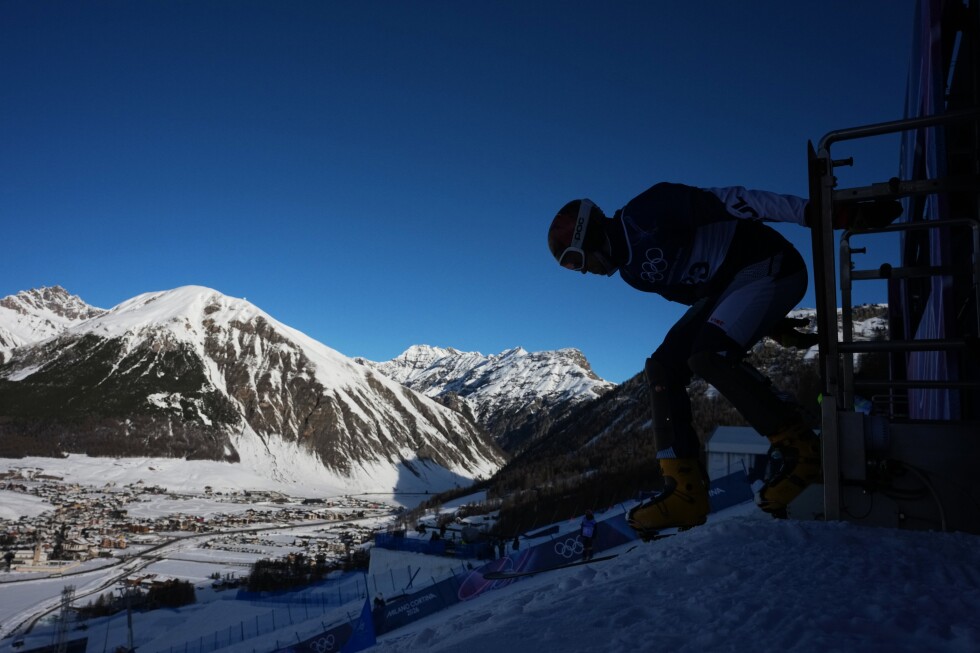
The 2026 Winter Olympics spans an unprecedented 22,000 square kilometers across northern Italy, making it the most geographically dispersed Winter Games in history. While previous Olympics often featured city and mountain clusters, the Milan Cortina Games has pushed this concept to new extremes, with venues scattered across multiple Alpine locations far from the urban center of Milan.
This sprawling model has drawn mixed reactions from athletes, spectators, and officials as the Games complete their first week. For some, the vast distances have created logistical headaches and diminished the cohesive Olympic experience.
American tourist Bob Grover, who traveled from Portland, Oregon to stay in Cortina d’Ampezzo, noted the stark contrast with previous Games. “It’s like, why isn’t it all in Cortina?” said the 64-year-old, recalling the 2010 Vancouver Olympics where venues were less than two hours apart. His wife, Theresa Kirsch, pointed out that teammates supporting each other across disciplines now face grueling 8-hour round trips.
Even athletes have felt the impact. U.S. snowboarder Red Gerard, with 11 days between competitive events, managed to visit Milan with family but lamented, “It just takes a little more work” to get the full Olympic experience.
The dispersed model does offer significant advantages that align with the International Olympic Committee’s new vision for more sustainable, less costly Games. By utilizing existing venues across the region, organizers avoided constructing expensive new facilities that often become underused after the Olympics. The approach also distributes tourism revenue across multiple communities rather than concentrating it in a single area – particularly valuable in a country where overtourism has become problematic in major destinations.
For visitors with flexible time and budgets, the format has created unique opportunities to explore less-visited parts of Italy. Tyler Thostenson, attending his fourth Olympics with his mother, embraced the adventure despite an estimated $20,000 cost for their 12-day itinerary across multiple locations.
“We’re lucky that we have a rental car, so we can actually stop in some of the smaller villages, and not just look out of a frosted-up bus window or train. It’s been nice to explore more of the countryside,” Thostenson said.
IOC President Kirsty Coventry praised the model after visiting venues in Cortina d’Ampezzo, where she witnessed Italian star Federica Brignone win gold in the super-G. “Yes, it’s a little spread out, but the feeling of the Games is for me very magical,” Coventry told reporters, acknowledging that her 400-kilometer drive to the Dolomites “wasn’t the most comfortable, right? But it was fun.”
The dispersed layout has eliminated the traditional geographic and emotional center of the Games. In Milan, the Leonardo da Vinci-inspired Olympic cauldron has become a gathering spot for fans and locals who enjoy nightly sound-and-light shows against the backdrop of a Napoleonic arch, rather than attending actual sporting events.
One unexpected benefit has emerged from the distances: medal ceremonies now take place immediately after competitions, rather than at a central plaza hours later. This change has provided instant emotional payoff for spectators like Kathy McCabe, who witnessed the U.S. figure skating team receive their gold medals moments after their victory at the Assago skating arena.
“There was a lot more emotion to see the medal ceremony just a few minutes after the Americans won, and to see that raw emotion,” said McCabe, producer of the PBS series Dream of Italy. “It was really close and there were some beautiful performances.”
This model represents the future direction of the Winter Olympics. The 2030 Games will split events between the French Alps and Nice, with some competitions held abroad. The 2034 Utah Games will be more regionally distributed than the Salt Lake City Olympics of 2002. By 2038, Switzerland plans to host a nationwide Winter Games without city anchors.
For some athletes, including South African cross-country skier Matt Smith, the smaller venues have provided a more intimate and peaceful experience away from the Olympic spotlight. Based in the 1,000-person village of Predazzo, Smith described his experience as “pukka” – using British slang for “amazing.”
As the Games continue, this pioneering approach to hosting the Olympics will continue to challenge traditional expectations while potentially setting new standards for sustainability and regional inclusivity in global sporting events.
Fact Checker
Verify the accuracy of this article using The Disinformation Commission analysis and real-time sources.

5 Comments
The logistical headaches for smaller teams like Haiti’s ski delegation are understandable. Hopefully the organizers have put in place sufficient support and transportation options to ensure all athletes can compete on a level playing field. The Olympic experience is about more than just the competition, so maintaining that sense of unity and community will be crucial.
The sheer scale of these Games is quite remarkable. 22,000 square kilometers is an unprecedented footprint for a Winter Olympics. While the distances may create challenges, this could also be an opportunity to showcase the natural beauty and cultural richness of northern Italy to a global audience. I’ll be following the coverage with great interest.
As an avid winter sports fan, I’m excited to see how the Milan Cortina Games unfold despite the logistical complexities. The dispersed venue model is certainly a bold experiment, and I hope it can still capture the spirit and excitement of the Olympics. Curious to hear more feedback from athletes and spectators as the events progress.
Fascinating to see how the Milan Cortina Olympics are pushing the boundaries of the traditional Olympic model. The vast geographic spread certainly presents logistical challenges, but could also offer new opportunities to connect local communities across northern Italy. Curious to see how the organizers navigate this unique setup.
The distances between venues sound quite daunting, especially for smaller delegations like Haiti’s ski team. I wonder if this could put some athletes at a disadvantage compared to those from larger, better-resourced countries. It will be interesting to see if the organizers find ways to mitigate the impact on the overall Olympic experience.