


Listen to the article
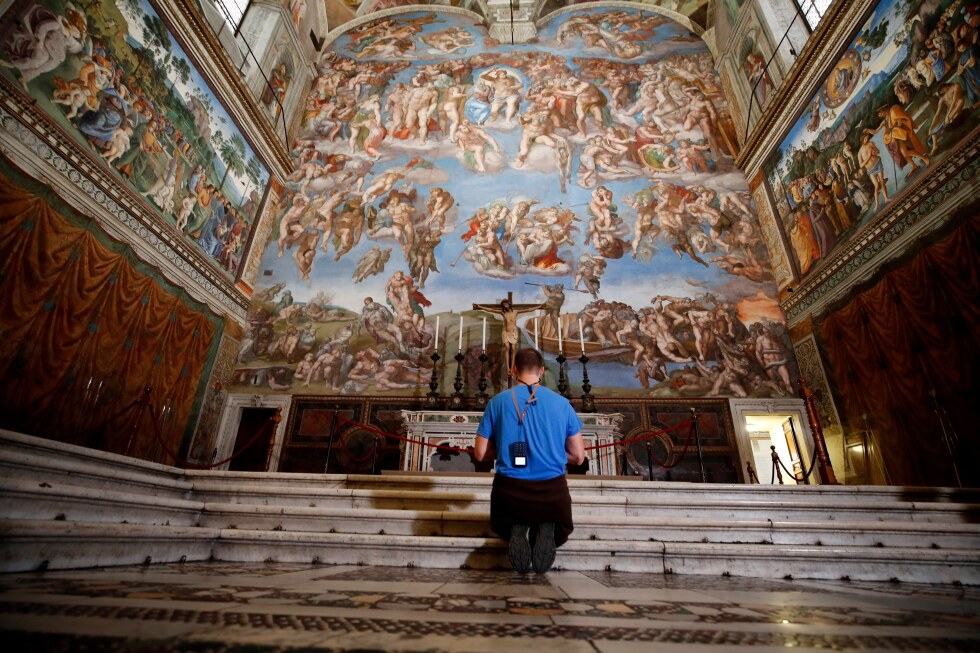
Michelangelo’s “The Last Judgment,” the imposing fresco of heaven and hell which dominates the Sistine Chapel, is undergoing its first major restoration in three decades, the Vatican announced Monday.
The ambitious cleaning project will span three months but won’t interrupt public access to one of Rome’s most celebrated tourist attractions. Visitors will still be able to enter the chapel, though scaffolding will partially obstruct views of the monumental artwork during the restoration process.
According to Vatican Museums officials, the primary focus of the restoration is removing a “widespread whitish haze” that has gradually formed on the fresco’s surface. This haze consists of microparticles of foreign substances transported by air currents throughout the chapel – an inevitable consequence of the massive foot traffic the site experiences year after year.
“This kind of maintenance is essential for preserving cultural treasures of this magnitude,” said an art conservation expert familiar with the project. “The buildup may seem minor to the casual observer, but over time, these deposits can potentially damage the integrity of the fresco.”
The restoration marks the first major cleaning initiative since 1994, highlighting the ongoing conservation challenges faced by institutions housing irreplaceable masterpieces. With more than 6 million visitors annually crowding into the relatively small Sistine Chapel, the Vatican employs sophisticated environmental monitoring systems to track humidity and temperature fluctuations that could potentially harm the artwork.
The Sistine Chapel, named after Pope Sixtus IV who commissioned its construction in the late 15th century, houses what many art historians consider the pinnacle of Renaissance achievement. While Pope Sixtus IV established the chapel as the main papal chapel, it was his nephew, Pope Julius II, who would later commission Michelangelo to transform the interior.
Between 1508 and 1512, Michelangelo painted the chapel’s famous ceiling, including the iconic “Creation of Adam” depicting God reaching out to touch Adam’s finger. The artist returned decades later, between 1536 and 1541, to create “The Last Judgment” on the altar wall – the fresco currently undergoing restoration.
“The Last Judgment” represents a dramatic departure from Michelangelo’s earlier Sistine Chapel work. The massive fresco portrays Christ as a powerful, muscular figure at the center of a swirling composition of more than 300 figures, with the saved ascending to heaven and the damned descending to hell. Art historians have long noted its more somber tones and composition compared to the ceiling frescoes, reflecting both the evolution of Michelangelo’s style and the changing religious climate during the Counter-Reformation.
Beyond its artistic significance, the Sistine Chapel continues to serve crucial ecclesiastical functions within the Vatican. Most recently, it hosted the May conclave that elected Pope Leo XIV. The tradition of papal conclaves taking place within the chapel dates back centuries, adding another layer of historical and religious importance to the space.
The Vatican Museums have not disclosed the specific restoration techniques being employed during this cleaning process, though modern conservation approaches typically emphasize minimal intervention and reversible procedures. Experts suggest specialized vacuums and gentle chemical cleaning agents will likely be used to remove the particulate buildup without damaging the original pigments.
Conservation efforts for the Sistine Chapel have sometimes sparked controversy. The extensive 1980-1994 restoration project that cleaned the chapel’s ceiling and “The Last Judgment” generated debate among art historians about whether some of Michelangelo’s shadowing techniques were inadvertently removed along with centuries of soot and grime.
The current restoration is expected to be completed by early spring, allowing visitors to once again experience “The Last Judgment” in its full visual splendor.
Fact Checker
Verify the accuracy of this article using The Disinformation Commission analysis and real-time sources.

16 Comments
While it’s disruptive to have scaffolding obscuring the view, I understand the importance of this restoration project. Preserving Michelangelo’s work for future generations is a worthy endeavor.
You make a good point. Some temporary inconvenience is a small price to pay for the long-term preservation of such an iconic artwork.
It’s great that the Vatican is taking proactive steps to maintain this cultural treasure. Preserving masterpieces like ‘The Last Judgment’ is crucial for future generations to appreciate.
I agree. Regular upkeep and restoration of iconic artworks ensure they can be enjoyed by visitors for centuries to come. It’s an investment in our shared cultural heritage.
I wonder if any new discoveries or insights will emerge from this restoration process. Michelangelo’s masterpieces often reveal surprising details upon closer inspection.
That’s an excellent point. Even minor cleaning and preservation work can sometimes uncover hidden elements or shed new light on the artist’s techniques. I’m eager to see what this restoration might unveil.
Fascinating that this iconic fresco is undergoing its first major restoration in 30 years. Proper conservation of such cultural treasures is crucial to preserve their integrity for future generations.
Agreed. The gradual buildup of particles over time can do real damage if not addressed regularly. I’m glad the Vatican is taking proactive steps to maintain this priceless artwork.
It’s impressive that the Sistine Chapel can remain open to visitors during this major restoration project. Managing foot traffic and preserving such a delicate artwork must be a significant challenge.
Absolutely. The Vatican’s conservation experts must have a well-coordinated plan to balance public access and the fresco’s protection. It’s a testament to their expertise.
Michelangelo’s ‘The Last Judgment’ is an awe-inspiring masterpiece. It’s good to hear the Vatican is taking the necessary steps to ensure this fresco remains in pristine condition.
Absolutely. Restoring cultural treasures like this takes immense skill and care. I’m sure the final result will be stunning.
While the scaffolding may obstruct some views, I’m glad the Sistine Chapel will remain open during this restoration project. It’s important to balance public access with the preservation of such a significant work of art.
That’s a fair compromise. Keeping the chapel accessible, even with limited visibility, allows more people to experience Michelangelo’s masterpiece while the necessary conservation work is underway.
I’m curious to see how the removal of the whitish haze will impact the overall appearance of the fresco. Careful restoration can often reveal new details and nuances in these old masterpieces.
That’s a great observation. I’m sure the restoration team will be meticulous in their work to ensure the fresco’s original vibrancy is restored.