


Listen to the article
Mexico Deploys Military Forces to Jalisco Following Cartel Leader’s Death
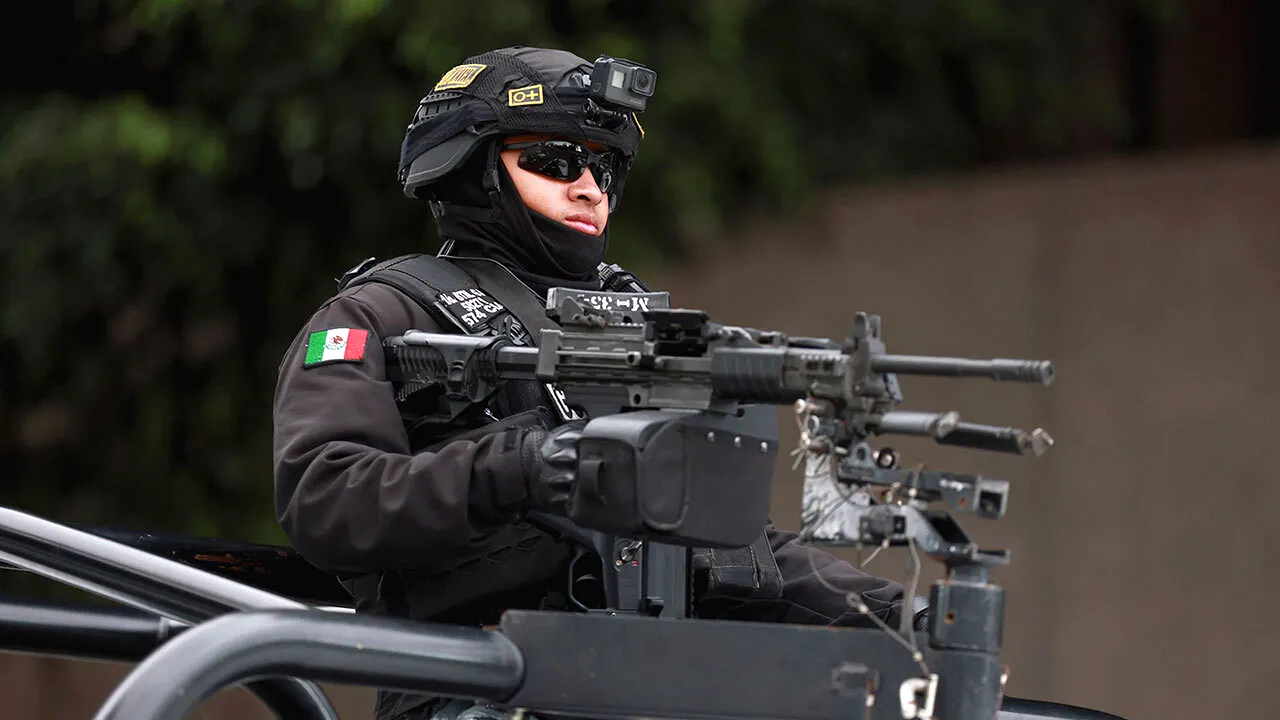
Mexico’s Navy and armed forces have significantly bolstered security operations across Jalisco state following the killing of one of the country’s most notorious drug traffickers, as authorities work to contain widespread retaliatory violence.
According to a February 24 press release from Mexico’s Secretariat of the Navy, 103 Marines and tactical vehicles arrived in Puerto Vallarta aboard the naval vessel ARM “Usumacinta” (A-412) to reinforce security operations after cartel members targeted businesses and property in several neighborhoods. The naval contingent is conducting maritime, aerial and land patrols with support from boats, aircraft and ground vehicles.
The naval reinforcement comes alongside a broader military response, with federal authorities deploying approximately 2,000 additional soldiers to Jalisco, according to Reuters. This surge in military presence follows the killing of Nemesio Oseguera Cervantes, known as “El Mencho,” leader of the powerful Jalisco New Generation Cartel (CJNG).
El Mencho’s death triggered immediate and violent retaliation from cartel members, including roadblocks, vehicle burnings, and armed clashes across multiple Mexican states. The violence was severe enough to force the closure of Puerto Vallarta’s international airport and the postponement of several soccer matches in affected regions.
While Mexican officials have presented the operation as a major victory against organized crime, security analysts caution that the power vacuum created by El Mencho’s death could lead to prolonged instability.
David Mora, an analyst at the International Crisis Group, noted that “El Mencho left no clear heir, and the remaining leaders could dispute control.” He warned that ongoing turf wars between the CJNG and smaller criminal groups, particularly in neighboring Guanajuato and Michoacán states, could intensify as rivals attempt to exploit the cartel’s leadership crisis.
The killing represents a significant achievement for President Claudia Sheinbaum’s administration and has been viewed favorably by Washington, which had offered a $10 million reward for information leading to El Mencho’s capture. However, Mora cautioned that it remains “far from clear the killing will aid the president’s ultimate goal of pacifying Mexico.”
Duncan Wood, a visiting fellow for North America at the Wilson Center, described the operation as “a meaningful assertion of Mexican state authority against one of the country’s most violent criminal organizations.” However, he emphasized that the long-term impact will depend on the resilience of the CJNG’s decentralized structure and the Mexican government’s ability to maintain a comprehensive security strategy.
“The chaos that followed was real, but temporary,” Wood said. “In the medium term, the focus shifts to the resilience of the CJNG’s decentralized cells and the Mexican government’s capacity to sustain a comprehensive security strategy.”
The Embassy of Mexico in the United States reported on February 24 that conditions were gradually improving, with transit corridors reopening, public services being restored, and Puerto Vallarta International Airport resuming domestic operations. The embassy noted that some local security measures remain in place as authorities coordinate with international partners to ensure safety at transportation hubs and tourist destinations.
The CJNG has grown into one of Mexico’s most powerful and violent criminal organizations over the past decade, with operations spanning multiple states and international drug trafficking networks. Under El Mencho’s leadership, the cartel became known for its willingness to directly confront security forces and rival criminal groups with sophisticated weaponry and tactics.
Whether the current surge of military forces can prevent a broader escalation remains uncertain. Security experts are closely monitoring potential power struggles within the cartel and the possibility of continued violent clashes with rival groups seeking to exploit the leadership vacuum.
The aftermath of El Mencho’s death represents a critical test for Mexico’s security strategy and its ability to address the structural factors that have allowed powerful cartels to flourish despite decades of military-led operations targeting their leadership.
Fact Checker
Verify the accuracy of this article using The Disinformation Commission analysis and real-time sources.

10 Comments
I’m curious to know more about the specific tactics and resources the military is deploying in Jalisco. Coordinating land, air and maritime operations must be a significant logistical challenge. Curious to hear updates on their effectiveness.
The CJNG is an extremely powerful and dangerous cartel. El Mencho’s death is a significant blow, but it’s not surprising to see them lashing out violently. Sustained military presence will be crucial to maintaining stability in Jalisco.
This is a complex situation with a lot of moving parts. While the military response is warranted, I hope authorities are also focusing on long-term solutions to weaken the influence of cartels in the region. Addressing the root causes is key.
This is a delicate situation that requires a multi-faceted approach. While the military presence is important for restoring order, I hope the authorities are also investing in economic development, education, and social programs to provide alternatives to cartel recruitment and reduce the appeal of the drug trade in the long run.
The deployment of additional troops is a necessary response to the violent retaliation by the cartel. Securing Puerto Vallarta and the surrounding region should be the top priority to prevent further disruption and property damage.
It’s good to see the Mexican government taking decisive action to respond to this crisis. The deployment of additional troops is a necessary step, but I hope they are also working closely with local authorities and community leaders to address the underlying issues that allow cartels to thrive in the region.
The scale of the military deployment, with 2,000 additional troops, shows how serious the situation is. Hopefully this surge in forces can quickly restore order and prevent further escalation of cartel violence. Safety of the public must be the top priority.
The death of El Mencho is a significant blow to the CJNG, but we’ve seen time and again that cartels are resilient and often able to adapt. Sustained pressure from the military and law enforcement will be crucial to prevent the cartel from regrouping and retaliating further.
This is a concerning situation in Jalisco. It’s good to see the military taking steps to restore order and protect the public after the death of the cartel leader. Hopefully the unrest can be contained quickly.
This is a complex situation with no easy solutions. While the military presence is necessary to restore order, I hope authorities are also working on long-term strategies to weaken the cartel’s grip on the region through economic development, anti-corruption efforts, and community engagement.