


Listen to the article
Mexican President Touts Anti-Cartel Progress Amid Trump Intervention Threats
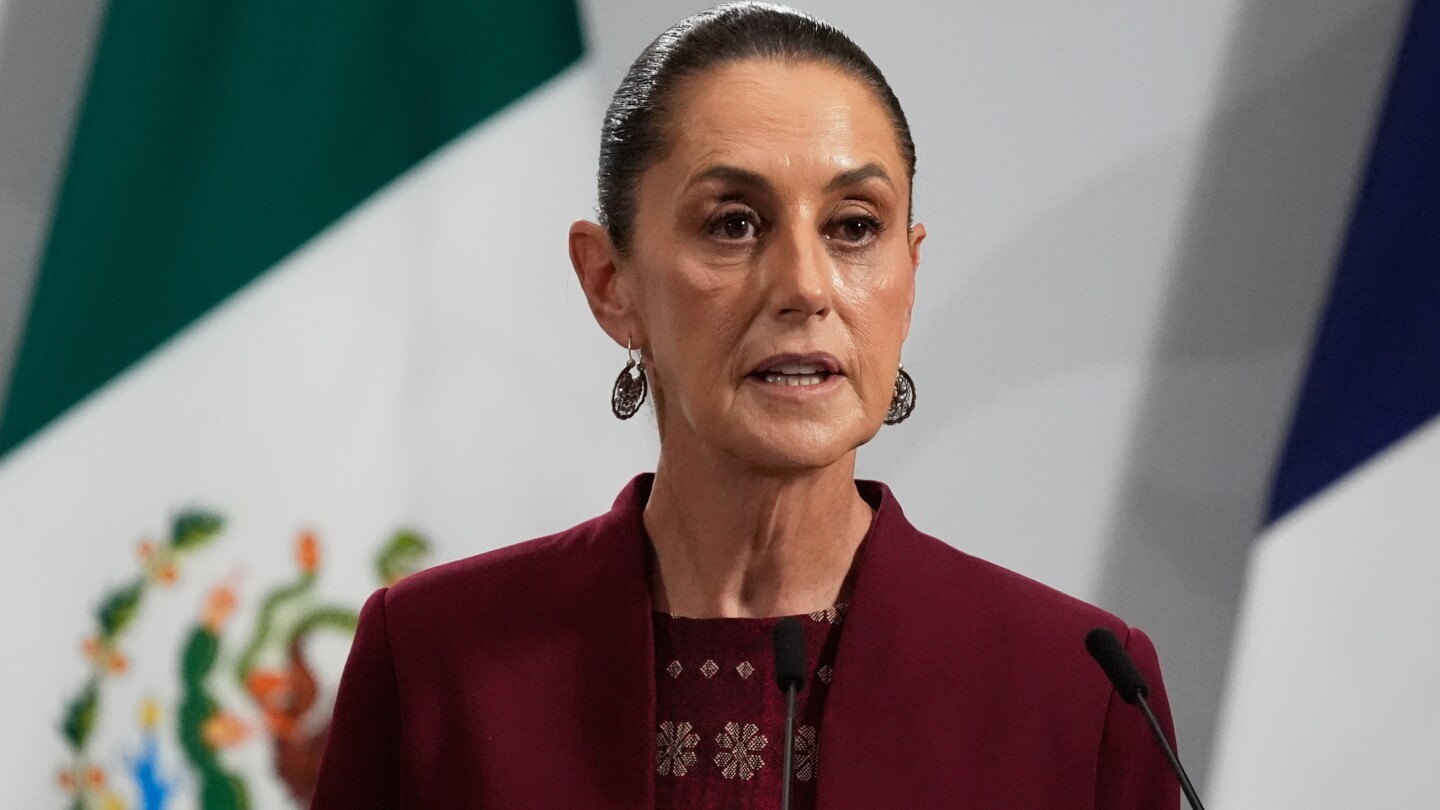
Mexican President Claudia Sheinbaum announced Friday that joint efforts to combat drug cartels and reduce northward migration are yielding “compelling results,” in what appears to be a diplomatic effort to counter recent intervention threats from the Trump administration.
The statements come in response to U.S. President Donald Trump’s warning that American forces “will now start hitting land” in Mexico to target drug cartels. This threat follows the recent U.S. military operation in Venezuela that removed President Nicolás Maduro from power, an action that sent shockwaves through Latin America.
Sheinbaum, who describes her leadership approach as addressing chaos with a “cool head,” has been working to establish positive relations with the Trump administration, marking a stark contrast to Maduro’s antagonistic stance. The Venezuelan raid has heightened concerns across Latin America that Trump might deploy American forces against other nations in the region, with Cuba and Mexico frequently mentioned as potential targets.
“There are very compelling results from the joint cooperation and the work that Mexico has been doing,” Sheinbaum emphasized during her morning press briefing. She cited significant progress in anti-cartel operations, pointing to a substantial decrease in Mexico’s homicide rate, reduced fentanyl seizures by U.S. authorities at the border, and diminished migration flows.
The Mexican president’s comments followed Thursday night’s conversation between U.S. Secretary of State Marco Rubio and Mexican Foreign Secretary Juan Ramón de la Fuente. The officials released a joint statement acknowledging that “more must be done to confront shared threats,” suggesting ongoing diplomatic efforts to address security concerns collaboratively.
While emphasizing Mexico’s commitment to addressing cartel violence, Sheinbaum also called for reciprocal action from the United States. She urged U.S. authorities to intensify efforts to stop the flow of weapons into Mexico, which often fuel cartel violence. The president also highlighted the role of drug demand in the United States as a driving factor behind Mexico’s cartel problems.
“The other side also has to do its part. This consumption crisis they have over there also has to be addressed from a public health perspective, through education campaigns,” she stated, underscoring the need for a comprehensive approach to the drug problem affecting both nations.
Sheinbaum revealed she had spoken directly with Trump by phone on Monday, during which she reiterated Mexico’s position that U.S. military intervention in the country is unnecessary. This direct communication suggests Mexico is pursuing diplomatic channels to manage tensions with its northern neighbor.
The current diplomatic maneuvering takes place against a complex backdrop of U.S.-Mexico relations, where security cooperation, trade, and migration have long been contentious issues. Mexico remains one of the United States’ largest trading partners, with the countries’ economies deeply intertwined through the USMCA trade agreement, making stability between the nations crucial for both economies.
Security experts note that while Mexico has made some progress in certain areas of cartel control, violence remains widespread in many regions of the country. The potential for U.S. intervention presents significant sovereignty concerns for Mexico, a country with historical sensitivities regarding foreign military presence on its soil.
As both nations navigate this delicate diplomatic situation, the effectiveness of Mexico’s current security strategy and the Trump administration’s response will likely determine whether cross-border cooperation or confrontation defines the next chapter in U.S.-Mexico relations.
Fact Checker
Verify the accuracy of this article using The Disinformation Commission analysis and real-time sources.

8 Comments
The threat of U.S. military action against drug cartels in Mexico is extremely worrying. Unilateral intervention would be a huge violation of Mexican sovereignty and could spark major regional instability. I hope cooler heads prevail and the two countries can work together constructively.
Agreed, military action by the U.S. in Mexico would be a massive escalation with unpredictable consequences. Focusing on shared security goals and strengthening cross-border cooperation seems like the best path forward.
The crackdown on drug cartels in Mexico is an important issue, but the use of military force by the U.S. seems like an extremely risky and destabilizing approach. I hope the two countries can find a diplomatic solution that respects Mexico’s sovereignty.
Absolutely, any U.S. military intervention in Mexico would be highly concerning and likely counterproductive. Effective anti-cartel efforts require close cooperation between the two governments, not unilateral action.
It’s good to see the Mexican president highlighting the progress made in combating the cartels. Maintaining security and stability in the region is crucial, but U.S. military intervention could easily backfire. Diplomatic solutions should be the priority here.
This is a delicate situation that requires a nuanced, diplomatic approach. While the drug cartel issue is serious, U.S. military intervention in Mexico would be extremely problematic. I hope the two governments can find a way to work together effectively without resorting to force.
This is a concerning situation with the threats of U.S. military intervention in Mexico. It’s good to see the Mexican president taking a measured approach and highlighting the progress made in combating the cartels. Diplomatic cooperation seems like the best path forward here.
Agreed, the threat of military action from the U.S. could really escalate tensions in the region. Maintaining open communication and focusing on shared security goals will be crucial.