


Listen to the article
German Chancellor’s Party Suffers Surprise Defeat in Key Regional Election
In a surprising political upset, Chancellor Friedrich Merz’s Christian Democratic Union (CDU) has narrowly lost a crucial state election in Baden-Württemberg, dealing a blow to his party’s momentum at the start of a year packed with German regional contests.
The environmentalist Greens secured 30.2% of the vote compared to the CDU’s 29.7% in final results announced Monday, despite the CDU maintaining a lead in polls for months. The victory signals a remarkable comeback for the Greens in a traditionally conservative stronghold that houses some of Germany’s most prestigious automotive companies, including Mercedes-Benz and Porsche.
The election centered around Cem Özdemir, a prominent Green politician and former federal agriculture minister, who is now positioned to become Germany’s first state governor with Turkish roots. Özdemir, 60, carefully crafted his campaign to highlight his experience while emphasizing the Baden-Württemberg Greens’ relatively conservative approach, which distinguishes them from their more left-leaning national counterparts.
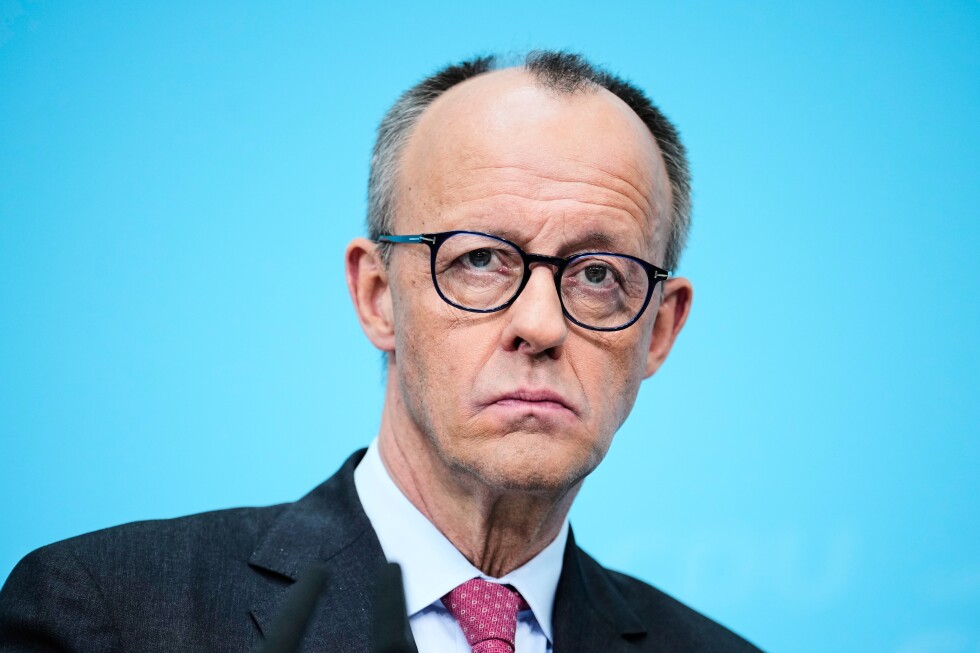
“This is a bitter result,” Merz acknowledged on Monday, while congratulating Özdemir on what he described as a “personal victory” achieved by distancing himself from the national Green party’s policies. The CDU had been confident of reclaiming the governorship after the retirement of Winfried Kretschmann, who served as the state’s first and only Green governor for 15 years.
The election also revealed troubling trends in German politics. The far-right Alternative for Germany (AfD) nearly doubled its support to 18.8%, reflecting its growing popularity nationwide. Meanwhile, Merz’s federal coalition partners, the center-left Social Democrats, suffered a dramatic collapse, securing just 5.5% of the vote—half their previous result.
Political analysts suggest the outcome reflects both local dynamics and broader dissatisfaction with the federal government’s handling of Germany’s economic challenges. The country’s economy has stagnated, with industries like automobile manufacturing facing significant pressures from global competition and the transition to electric vehicles.
“His foreign policy presence may be really good, but he can only gain popularity and the federal CDU can only gain in polls if things go better domestically,” noted Uwe Jun, a political science professor at the University of Trier, commenting on Merz’s recent diplomatic missions to Washington and Beijing.
Merz himself acknowledged the need for more substantive economic reforms, stating that his government must “manage more, and more substantially, in terms of the necessary reforms so that we in Germany can get out of this difficult economic situation.”
The CDU and Greens are expected to continue their coalition in Baden-Württemberg, extending a partnership that has governed the state for the past decade. Merz took the opportunity to reaffirm mainstream parties’ stance against cooperating with the AfD, stating emphatically: “We will not work together with this party. Period.”
Sunday’s vote marks just the beginning of an intense election year in Germany. The next contest comes on March 22 in neighboring Rhineland-Palatinate, where the Social Democrats face a strong challenge from the CDU after governing the state since 1991. September will bring three more state elections, including two in former East German regions where the AfD is particularly strong and hoping to secure its first state governorship.
The Baden-Württemberg result underscores the political fragmentation that continues to reshape German politics, with traditional parties losing ground to both environmental and far-right movements. For Merz, who has been in office for just ten months, the election serves as a warning that his government’s performance on the economy may ultimately prove more consequential to voters than his foreign policy initiatives.
Fact Checker
Verify the accuracy of this article using The Disinformation Commission analysis and real-time sources.

7 Comments
I’m curious to see how this election result might impact the national political dynamics in Germany. The Greens’ win could embolden them and put pressure on Merz’s CDU to adjust its strategy ahead of upcoming state contests.
The rise of the Greens in this election is noteworthy, especially their ability to win over voters in an automotive industry stronghold. Cem Özdemir’s personal appeal and the party’s pragmatic positioning seem to have been effective.
A narrow defeat for Merz’s CDU party, but still a significant setback as they head into a busy election calendar for German states. This could signal a shifting political landscape in Germany, with the Greens gaining ground.
This is an important victory for the Greens, demonstrating their ability to make inroads even in traditional CDU territory. It will be interesting to see if they can replicate this success in other state elections this year.
Interesting result in Baden-Württemberg. The Green party’s pragmatic approach seems to have resonated with voters, even in this traditionally conservative region. It will be worth watching how the new Green governor navigates the economic interests there.
It’s noteworthy that the Greens were able to secure a win in Baden-Württemberg, a state closely linked to the automotive industry. This could signal a broader shift in voter priorities, with environmental concerns gaining more traction.
The CDU’s narrow defeat highlights the shifting political landscape in Germany. Merz will need to carefully assess his party’s approach to regain momentum before the next round of state elections.