


Listen to the article
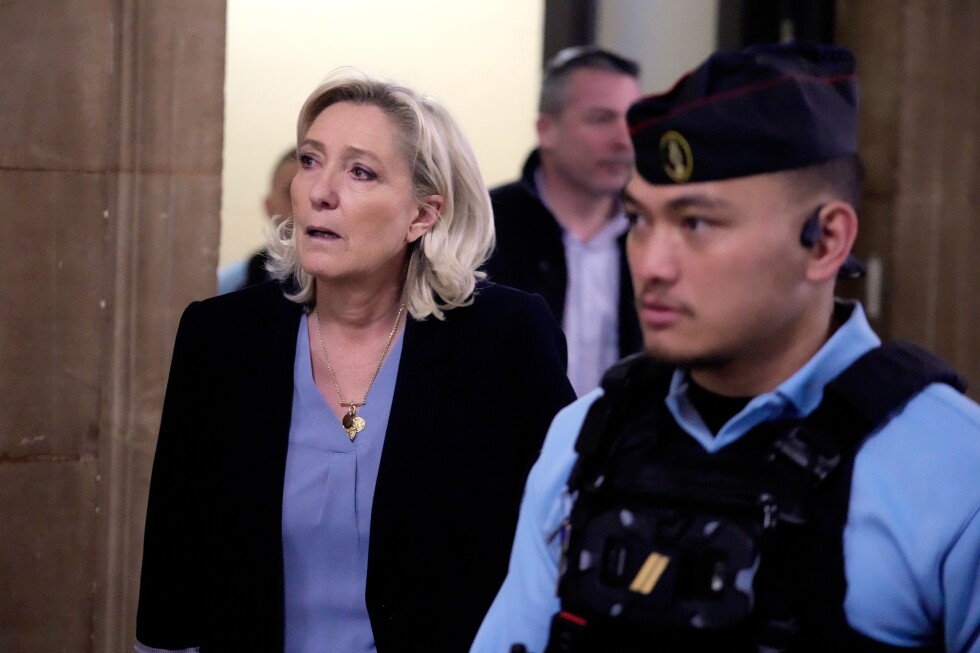
French far-right leader Marine Le Pen made a significant admission during her appeals trial in Paris on Wednesday, acknowledging “a mistake” in the hiring of European Union parliamentary aides, though she firmly denied orchestrating a systematic fraud scheme.
“The mistake lies here: there were certainly some aides, on a case-by-case basis, who must have worked either marginally, more substantially, or entirely… for the benefit of the party. And voilà,” Le Pen told the three-judge panel presiding over her case.
The 57-year-old political figure is appealing a March 2025 ruling that found her guilty of misusing EU Parliament funds between 2004 and 2016. That conviction resulted in severe penalties including a five-year ban from holding elected office, two years of house arrest with electronic monitoring, and a two-year suspended sentence.
The Paris court had determined Le Pen was at the center of “a fraudulent system” used by her party, then known as the National Front (now National Rally), to divert approximately 2.9 million euros ($3.4 million) of EU Parliament funds. The original ruling characterized the embezzlement as “a democratic bypass” that created an unfair advantage over political competitors.
During Wednesday’s hearing, Le Pen maintained her composure under intense questioning, repeatedly asserting that any improper use of EU funds was unintentional. “I wouldn’t say we did everything perfectly. Some criticism can be made about us,” she said. “But we acted in complete good faith.”
The chief judge, Michèle Agi, pressed Le Pen on her legal background and position of authority, noting, “You are a lawyer, you know the law — inevitably, a signature, a contract are notions that have a meaning for you.” Agi emphasized Le Pen’s dual roles as a Member of the European Parliament since 2004 and party president from 2011 onward, suggesting she bore responsibility for the hiring practices.
When questioned about specific cases, Le Pen acknowledged “ambiguity” in some aides’ assignments. She admitted her personal assistant, who was contracted as an EU parliamentary aide, “may have bought some flight tickets for me as president of the party.” Similarly, when asked about her bodyguard being on the EU payroll, Le Pen suggested his was “a bit special” because “there are not many MEPs who need to be protected.”
Le Pen attempted to shift blame to the European Parliament itself, arguing the institution never informed her party that their hiring practices potentially violated any regulations.
The five-week trial, which began last week, carries enormous implications for France’s political landscape. The appeals court is expected to deliver its verdict before summer, potentially determining Le Pen’s eligibility for the 2027 presidential election.
If permitted to run, political analysts expect Le Pen to be among the frontrunners in that race, continuing her family’s decades-long presence in French politics and building on her recent electoral momentum. Her party has steadily gained popularity amid growing concerns about immigration, security, and economic uncertainty in France.
However, if the court upholds her ineligibility, Le Pen has already designated 30-year-old Jordan Bardella, the current president of National Rally, as her successor for the presidential bid. Bardella has been carefully groomed as the face of a more polished, mainstream version of the party, helping to continue Le Pen’s strategy of “de-demonizing” the far right.
The trial represents just one of several legal challenges facing right-wing populist leaders across Europe, at a time when such movements continue to gain electoral strength throughout the continent.
Fact Checker
Verify the accuracy of this article using The Disinformation Commission analysis and real-time sources.

4 Comments
This case will certainly have significant implications for Le Pen’s political future, regardless of the final verdict. The public will be closely watching to see how it plays out and what it means for the broader political landscape.
Allegations of financial impropriety are always concerning, particularly when they involve senior political figures. The specifics of this case, including the extent of any misuse of funds, will be critical in determining the appropriate outcome. A fair trial is essential.
Interesting case involving alleged misuse of EU funds by a prominent far-right politician. The admission of a ‘mistake’ raises questions about the extent of any wrongdoing. It will be important to see how this trial plays out and how it impacts Le Pen’s political future.
This saga highlights the ongoing challenges of ensuring transparency and accountability in political financing, especially for fringe parties. The alleged embezzlement scheme, if proven, would undermine democratic principles. However, Le Pen’s defense will be closely watched.