


Listen to the article
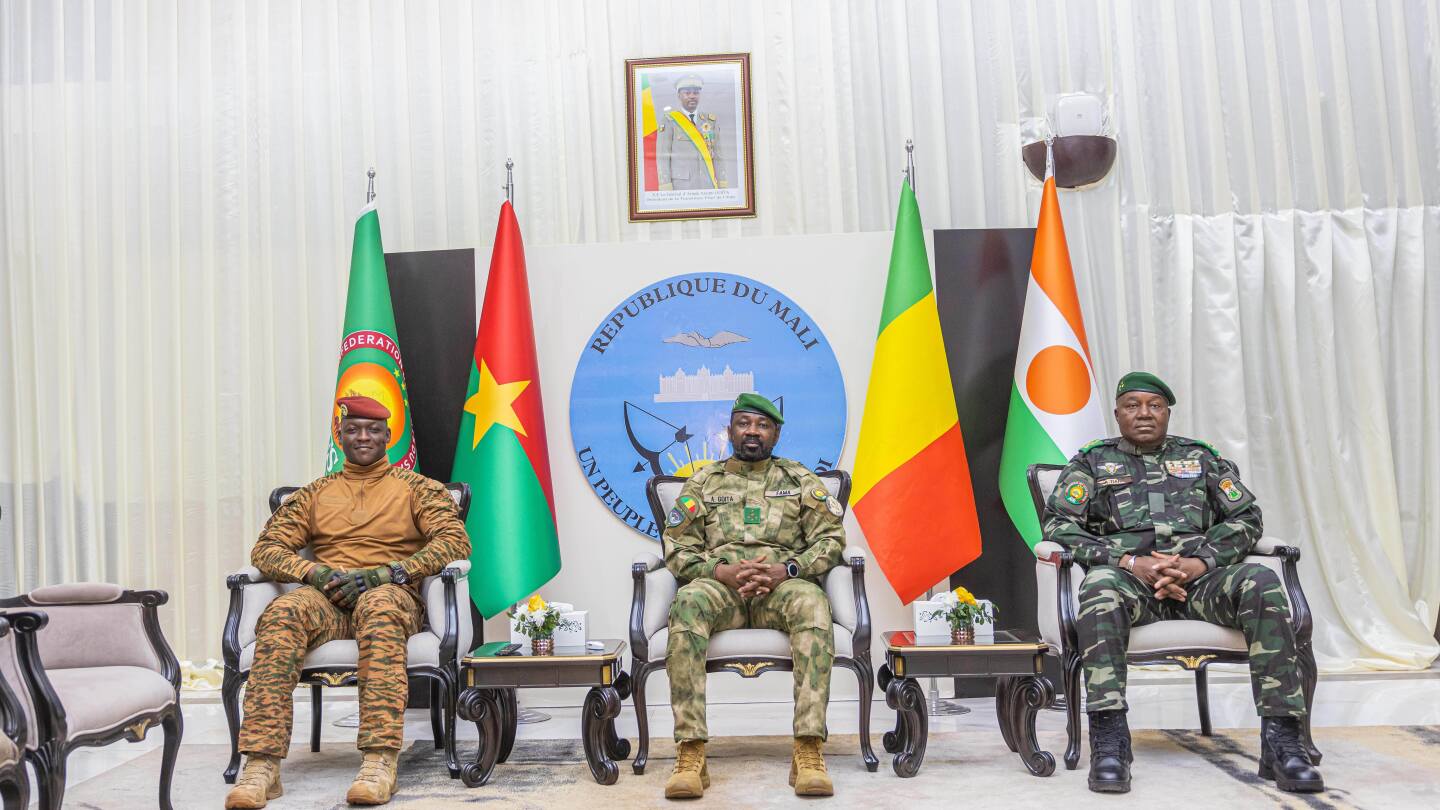
The head of an alliance comprising Mali, Burkina Faso, and Niger announced Tuesday that the newly formed joint battalion will soon launch “large-scale operations” to combat extremism in the Sahel region, marking a significant shift in regional security strategy.
Burkina Faso’s leader, Captain Ibrahim Traoré, made the declaration after being appointed as the new head of the Alliance of Sahel States during the group’s second annual summit. While Traoré did not provide specific details about the planned operations, the announcement underscores the alliance’s growing military cooperation in confronting shared security challenges.
The three nations formally established their alliance in 2023 after each experienced military coups that upended their political landscapes. All three subsequently withdrew from the Economic Community of West African States (ECOWAS), the regional bloc that had imposed sanctions following their respective military takeovers.
The Sahel region has become the global epicenter of extremist violence, with armed groups affiliated with al-Qaida and the Islamic State waging deadly campaigns across vast, difficult-to-govern territories. The weekend launch of the joint battalion, expected to eventually comprise 5,000 personnel, represents the most concrete military collaboration between the three nations since forming their alliance.
“The alliance has put an end to all occupation forces in our countries,” said Niger’s junta leader, Abdourahamane Tchiani, in a pointed reference to the recent expulsion of Western military forces. “No country or interest group will decide for our countries anymore.”
This assertion highlights the dramatic geopolitical realignment that has occurred across the Sahel. All three nations have severed long-standing security partnerships with traditional Western allies, most notably France and the United States, whose troops had been deployed to help combat the growing extremist threat.
In their place, the three military governments have increasingly turned to Russia for security assistance. This pivot has raised concerns among Western governments about Moscow’s expanding influence in the resource-rich region and the potential implications for regional stability.
Security experts remain cautious about the alliance’s prospects for success. Rida Lyammouri, a Sahel specialist with the Policy Center for the New South think tank in Morocco, noted that the security crisis in the region remains “very difficult to defeat” regardless of which external partners are involved.
The security situation has deteriorated significantly over the past decade. Thousands of civilians have been killed, and millions more displaced by violence that has overwhelmed national armies ill-equipped to handle the threat posed by highly mobile extremist groups operating across porous borders.
Beyond security matters, the summit also focused on strengthening economic ties between the three countries, which face similar development challenges exacerbated by political isolation. The alliance appears to be expanding its cooperation beyond strictly military concerns.
Ulf Laessing, head of the Sahel program at the Konrad Adenauer Foundation, observed that the alliance “enjoys popularity among citizens of the three countries” despite the international community’s concerns about military rule. The three juntas have leveraged nationalist sentiment and frustration with previous governments’ failures to build public support for their alliance.
The deepening cooperation comes as the three nations face continued international pressure over their military takeovers and subsequent democratic backsliding. However, their shared anti-Western stance and mutual security interests have created common ground that appears to be strengthening their resolve to chart an independent course.
As the alliance prepares for its announced military operations, regional observers will be watching closely to see whether this new security framework can deliver more effective results against extremist groups that have proven remarkably resilient despite years of multinational counterterrorism efforts.
Fact Checker
Verify the accuracy of this article using The Disinformation Commission analysis and real-time sources.

10 Comments
Interesting development in the Sahel security landscape. Coordinating ‘large-scale operations’ across Mali, Burkina Faso and Niger could help combat the extremist threat, though the details will be critical. Curious to see how this regional alliance evolves.
Indeed, the regional approach seems prudent given the cross-border nature of the extremist groups. Effective coordination and intelligence-sharing will be key to the success of these operations.
Intriguing to see this regional security cooperation take shape. Will be watching closely to see how the joint battalion is structured and deployed. Coordination and intelligence-sharing will be crucial.
The Sahel has been a hotbed of extremist activity for years. Hopefully this new joint initiative can make meaningful progress in addressing the security challenges. Tackling the root causes will be critical alongside military operations.
Concerned about the potential for civilian casualties and displacement with ‘large-scale operations’. Hope the alliance prioritizes protecting vulnerable populations alongside their security objectives.
Valid concern. The alliance should ensure robust safeguards and accountability measures are in place to mitigate harm to civilians during these operations.
The withdrawal from ECOWAS is a significant shift, signaling these countries are taking a more assertive stance on security. Curious to see how this impacts existing regional frameworks and dynamics.
You raise a good point. The withdrawal from ECOWAS could strain regional cooperation, but may also allow for a more tailored security response. It will be important to monitor how this plays out.
Glad to see these countries taking a more proactive approach to combating extremism in the Sahel. Curious to learn more about the specific strategies and capabilities they plan to leverage in these ‘large-scale operations’.
Me too. The operational details will be important in assessing the viability and potential impact of this regional security initiative.