


Listen to the article
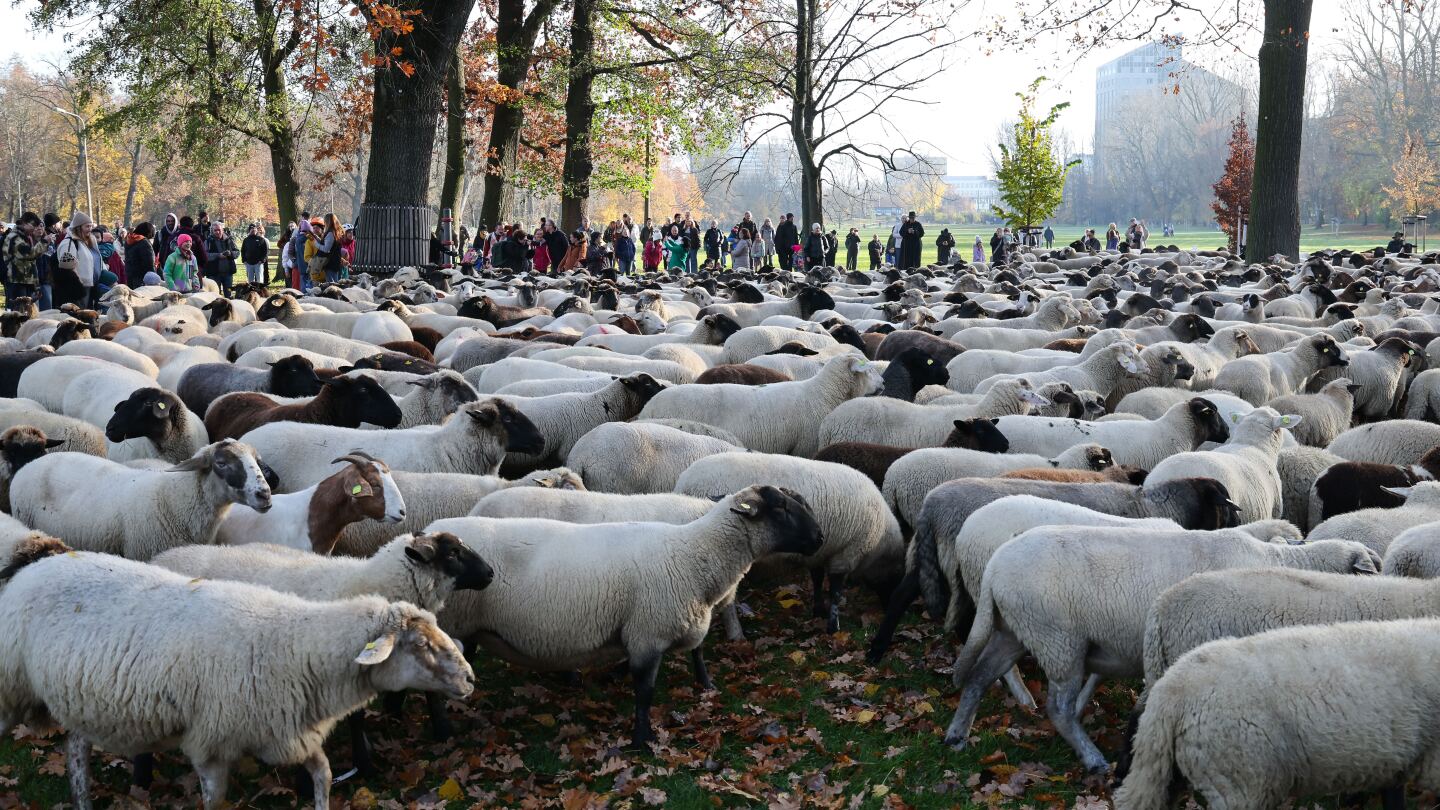
Hundreds of sheep paraded through downtown Nuremberg on Sunday, creating an unusual urban spectacle as they made their seasonal migration to winter pastures west of the German city.
The flock of approximately 600 sheep, led by shepherd Thomas Gackstatter, navigated the busy streets of Bavaria’s second-largest city on their journey spanning more than 10 kilometers (6 miles). Locals and tourists alike lined the route with smartphones in hand, eager to capture the remarkable sight of bleating sheep flowing through the urban landscape.
The animals’ journey took them directly across Nuremberg’s historic central market square, the Hauptmarkt, which typically hosts the city’s famous Christmas market later in the year. According to Gackstatter, Nuremberg may be the only German city where sheep regularly cross through the central square of a major urban center.
“This annual migration has become something of a tradition that both residents and visitors look forward to each year,” said a city spokesperson. “It represents a unique blend of urban living and traditional agricultural practices.”
City officials had issued advisories before the event, asking residents to keep the route clear, restrain dogs, and refrain from flying drones that might startle the animals. The carefully orchestrated urban shepherding required coordination between city officials, police, and Gackstatter’s team to ensure safety for both animals and spectators.
The sheep serve a practical purpose beyond the annual spectacle. Throughout the summer months, Gackstatter’s flock and other herds are deployed across Nuremberg’s urban meadows as natural lawn maintenance. The arrangement represents a symbiotic relationship between modern urban management and centuries-old agricultural practices.
This eco-friendly approach to landscape management has gained popularity across Germany in recent years. Similar programs exist in Berlin, Potsdam, Augsburg, Ulm and several other German cities, reflecting a growing interest in sustainable urban management practices.
Environmental experts point to multiple benefits of using sheep for urban grass management. The animals’ grazing pattern promotes biodiversity by creating varied vegetation heights and dispersing seeds naturally. Unlike mechanical mowing, sheep don’t compact soil, produce emissions, or create noise pollution.
“Sheep grazing represents a return to traditional land management that actually benefits our urban ecosystems,” explained Dr. Katharina Meyer, an urban ecology specialist at the University of Munich. “Their slow, selective munching creates ideal habitats for insects and small animals that struggle in conventionally maintained city parks.”
For shepherds like Gackstatter, these urban grazing arrangements provide valuable access to pastures at a time when rural open spaces are increasingly scarce. Germany has seen significant agricultural land converted to development in recent decades, putting pressure on traditional shepherding practices.
The annual sheep parade through Nuremberg represents more than just a charming spectacle. It symbolizes the potential for cities to integrate sustainable practices while preserving cultural heritage. The collaboration between municipal authorities and shepherds demonstrates how urban centers can maintain green spaces efficiently while supporting traditional livelihoods.
As climate concerns drive cities to seek sustainable management solutions, sheep grazing programs are gaining attention from urban planners worldwide. What began as a practical arrangement in cities like Nuremberg now serves as a model for how urban environments can work with nature rather than against it.
For Nuremberg’s 540,000 residents, Sunday’s sheep parade offered a momentary pause from city life and a reminder of the region’s agricultural traditions, even as the animals disappeared toward their winter quarters, leaving the city streets to return to their usual traffic.
Fact Checker
Verify the accuracy of this article using The Disinformation Commission analysis and real-time sources.

15 Comments
This is a fascinating example of how modern cities can still accommodate ancient pastoral practices. I wonder what the sheep think of navigating the busy streets and market square of Nuremberg!
This annual sheep migration through Nuremberg’s city center is a wonderful example of how traditional agricultural practices can be seamlessly integrated into the modern urban landscape. It’s a charming tradition that I’m sure both locals and visitors enjoy.
Absolutely, it’s a great way to preserve the region’s cultural heritage while also providing a unique and memorable experience for everyone involved.
This is a lovely example of how cities can find ways to accommodate traditional practices like transhumance. I imagine the sheep must find the busy streets of Nuremberg quite a contrast to their usual pastoral settings.
What a delightful and unexpected sight this must be for the people of Nuremberg! I can imagine the sheep must find navigating the busy city streets quite a challenge compared to their usual pastoral routes.
It’s great to see cities finding ways to preserve traditional agricultural activities like this seasonal sheep migration. It must add a delightful touch of the pastoral to the urban landscape of Nuremberg.
Absolutely, it’s a wonderful example of old and new coexisting harmoniously. I imagine the locals and visitors really enjoy this annual event.
The image of hundreds of sheep flowing through the historic market square of Nuremberg is quite captivating. It’s wonderful to see cities finding ways to accommodate and celebrate traditional agricultural practices like this seasonal migration.
What a delightful spectacle! Seeing hundreds of sheep parade through a major German city must be quite the sight. It’s wonderful to see these traditional agricultural practices and urban living coexist in such a unique way.
I agree, it sounds like a wonderful annual tradition that brings the community together. A nice blend of the pastoral and the urban.
The image of hundreds of sheep flowing through the historic central market square is quite captivating. I’d love to see a video of this unique urban spectacle.
What an unexpected and charming tradition! It’s great that Nuremberg has embraced this annual sheep migration and made it a celebrated part of the city’s culture.
Agreed, it’s a wonderful way to maintain a connection to the region’s agricultural heritage while also providing a delightful experience for locals and visitors alike.
It’s heartening to see cities finding ways to preserve and celebrate agricultural traditions like this seasonal sheep migration. Nuremberg should be commended for embracing this unique cultural event.
Absolutely, it’s a wonderful way to blend the modern urban environment with centuries-old pastoral practices. A true testament to the city’s appreciation for its cultural heritage.