


Listen to the article
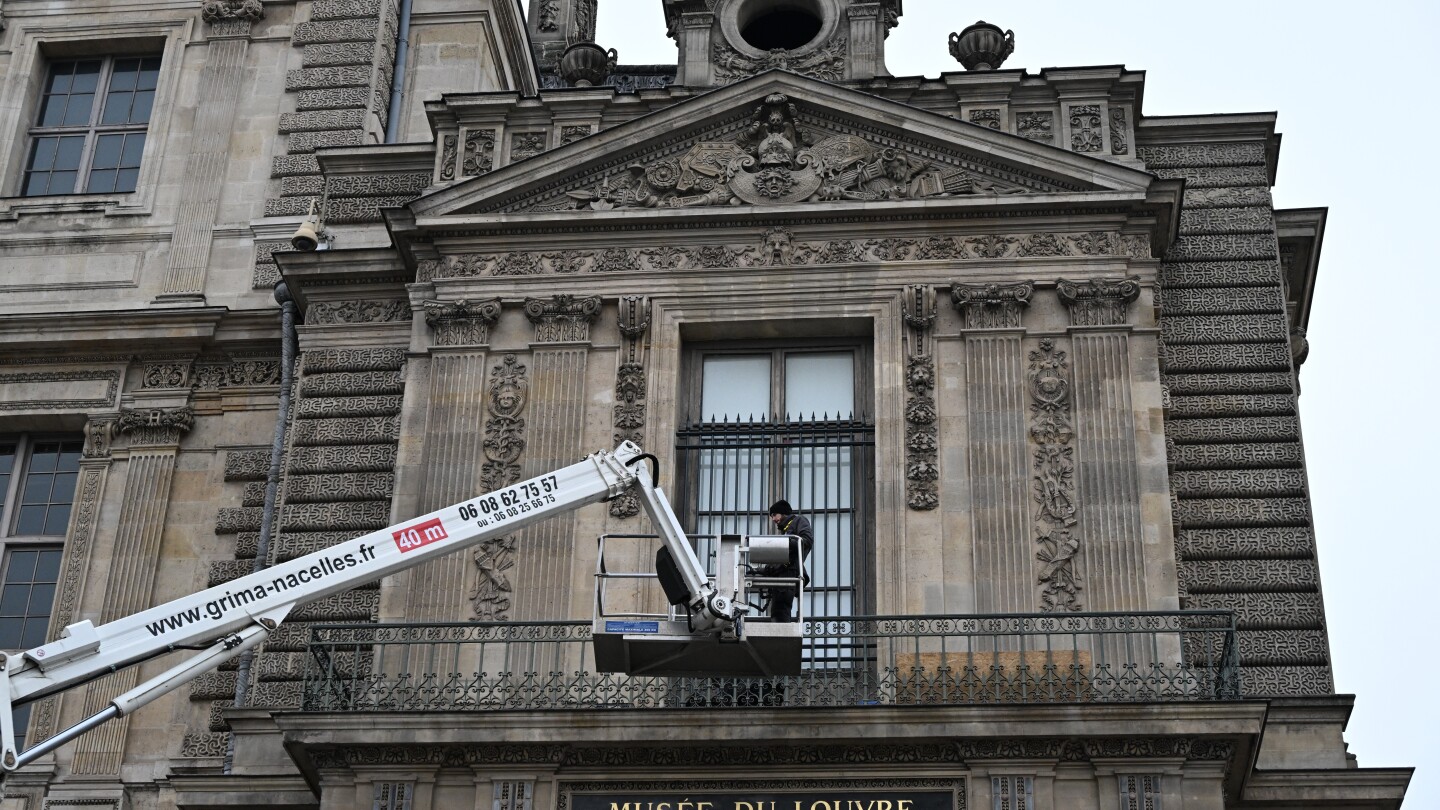
Workers began installing security bars Tuesday on the window that thieves used to break into the Louvre Museum’s Apollo Gallery during October’s daring jewelry heist, signaling a new phase in the landmark’s security upgrade.
The operation at the world’s most-visited museum took place while the Louvre was closed to the public. Maintenance workers in safety gear used a freight lift to access a second-floor balcony, mirroring the method used by the thieves who stole crown jewels worth $102 million in the audacious theft.
“We have already worked at the Louvre — on the interior, on the exterior, inside and outside the pyramid — we’ve been here several times,” Samuel Lasnel of maintenance lift company Grima-Nacelles told The Associated Press. Lasnel’s crew arrived before dawn to carry out the high-profile security enhancement.
The October 19 heist exposed significant vulnerabilities in the security protocols of one of the world’s most prestigious cultural institutions. On that day, a team of thieves disguised as workers used a similar lift to reach the gallery, then cut through the window to gain entry. In just eight minutes, they managed to steal an array of priceless items, including tiaras, emerald earrings, and a sapphire necklace before making their escape.
The swift professional nature of the theft shocked the international museum community and raised questions about security measures at major cultural institutions worldwide. Many security experts noted that the thieves’ ability to pose as legitimate workers highlighted potential gaps in personnel verification procedures.
Law enforcement has made progress in the case, with all four suspected thieves now arrested and facing charges. However, the stolen jewels remain missing, leading to speculation about whether they have been hidden, broken down for individual gems, or possibly moved across international borders.
The theft has had ripple effects throughout the global museum community. Several major institutions have reportedly begun reviewing their own security protocols, particularly regarding contractor access and surveillance of less-trafficked entry points. Insurance companies that specialize in high-value art and antiquities have also been reassessing risk profiles for similar collections.
For the Louvre, the security breach represents both a practical and reputational challenge. The museum houses approximately 38,000 objects from prehistory to the 21st century across 72,735 square meters, making comprehensive security a complex undertaking. The Apollo Gallery, which contains the royal collection assembled by Louis XIV, represents just one of many high-value exhibition spaces that must be protected.
Museum officials have remained tight-lipped about the full extent of the security overhaul underway. The Louvre declined to comment publicly about Tuesday’s operation to install the window bars, suggesting a cautious approach to discussing security measures.
Cultural heritage security experts note that museums face a difficult balance between accessibility and protection. Too many visible security measures can detract from the visitor experience, while insufficient protections leave priceless artifacts vulnerable.
The Louvre, which welcomed approximately 8.9 million visitors in 2023 as tourism rebounded after the pandemic, must maintain its welcoming atmosphere while preventing future security breaches. The museum’s annual operating budget exceeds €240 million, with security representing a significant portion of expenditures.
As the investigation continues, questions remain about how the stolen jewels might eventually resurface. Historical precedent suggests that high-profile stolen artifacts sometimes remain hidden for years or even decades before recovery attempts. International art crime investigators continue to monitor known channels for stolen antiquities and jewelry in hopes of recovering the missing treasures.
Until then, the Louvre continues its quiet security upgrades, working to ensure that its priceless collections remain accessible to the public while protected from those who would exploit vulnerabilities for criminal gain.
Fact Checker
Verify the accuracy of this article using The Disinformation Commission analysis and real-time sources.

9 Comments
Securing the Louvre is critical given the high-profile nature of this jewel heist. Installing security bars on the window the thieves used seems like a prudent step to prevent future breaches. It will be interesting to see what other security upgrades the museum implements.
Wow, $102 million in crown jewels stolen in just 8 minutes – that’s an astonishingly brazen and efficient heist. Glad to see the Louvre is taking action to tighten security and close the vulnerabilities that were exposed. Hopefully this will deter future attempts.
The Louvre is such an iconic museum, it’s alarming to hear about this major jewelry heist. Kudos to the museum for quickly addressing the security gaps and taking steps to prevent future breaches. Improving physical access barriers like the new security bars is a smart move.
Absolutely, the Louvre needs to be a fortress to safeguard its priceless artworks and artifacts. Addressing vulnerabilities is critical.
I’m curious to learn more about the security flaws that allowed the thieves to access the gallery so easily. Upgrading the exterior and interior security, including the installation of security bars, seems like a necessary step. Hopefully these measures will better protect the Louvre’s priceless collection going forward.
Quite alarming that the Louvre’s security was so easily breached during this audacious jewel heist. The security bar installation is a good first step, but the museum should undertake a comprehensive review of its overall security system to identify and address any other vulnerabilities.
Definitely, the Louvre can’t afford any more high-profile breaches like this one. A thorough security overhaul is warranted to protect its priceless collection.
Thieves targeting the Louvre for a $102 million heist is a shocking and brazen crime. Installing security bars on the access point they used is a reasonable response, though I wonder what other security upgrades the museum may pursue to shore up its defenses.
Agreed, the Louvre should leave no stone unturned in bolstering its security protocols to prevent future high-profile thefts.