


Listen to the article
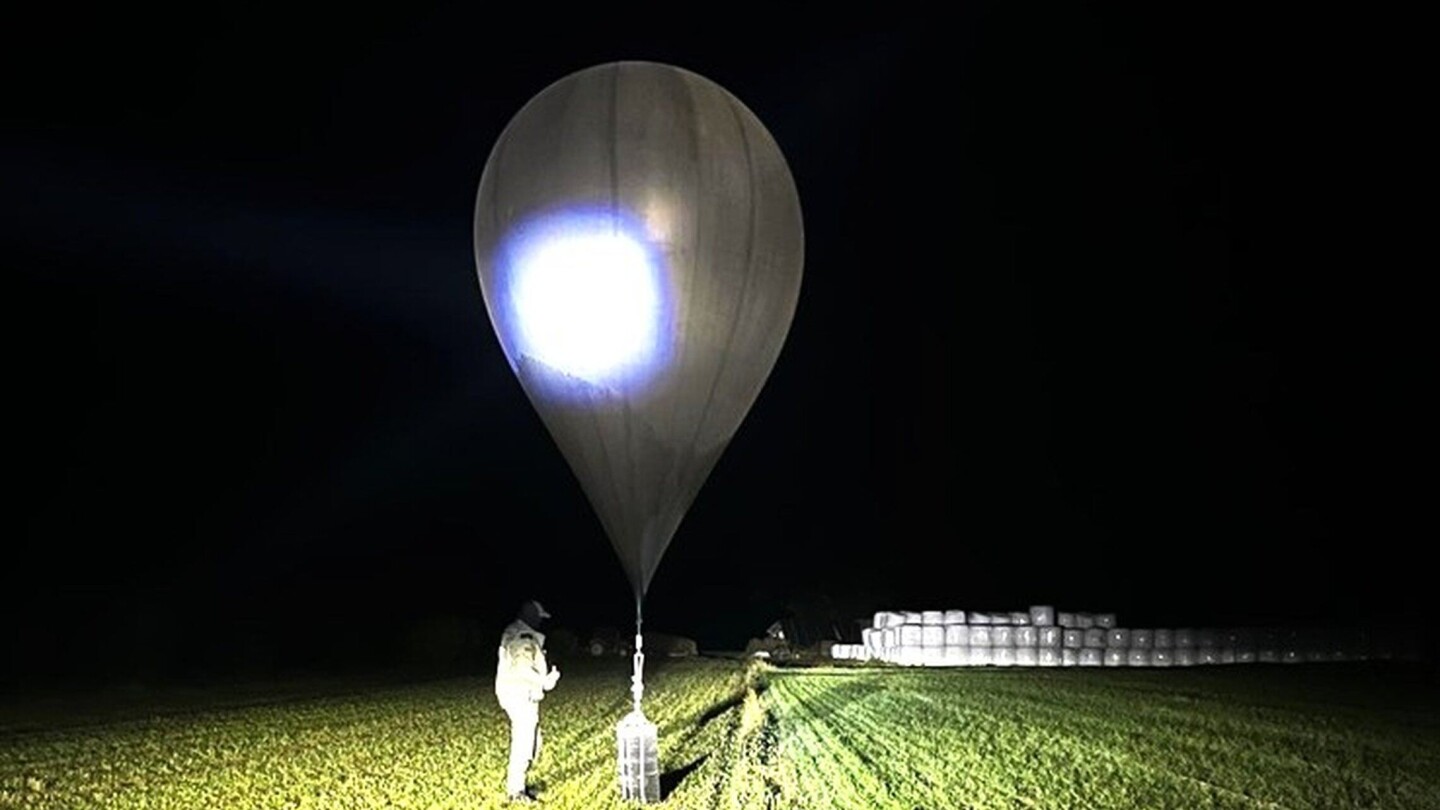
Lithuania has declared a national emergency in response to an ongoing series of airspace violations by meteorological balloons launched from neighboring Belarus, escalating tensions in a region already on high alert due to the war in Ukraine.
Prime Minister Inga Ruginienė announced the emergency measures on Tuesday, stating, “In combating the Belarusian hybrid attack, we must take the strictest measures and defend the areas most affected by this attack.” The declaration follows weeks of disruption that has forced Lithuania’s main airport to close repeatedly, affecting over 350 flights and stranding approximately 51,000 passengers since October.
The emergency status grants the Lithuanian military expanded authority to patrol border areas alongside other security services. Officials will receive additional powers from parliament, including the right to conduct searches and detain individuals, though the government has assured citizens that the impact on daily civilian life will be minimal.
While the balloons are ostensibly used for smuggling cigarettes across the border, Lithuanian authorities view their deployment as a deliberate strategy orchestrated by Belarus to cause disruption. Interior Minister Vladislav Kondratovič confirmed that Lithuanian prosecutors have launched an investigation into the incidents, with intelligence services examining potential connections to the regime of Belarusian President Alexander Lukashenko.
“I have no information that the Belarusian side is trying to curb the senders of the balloons,” Kondratovič noted. “And this is one of the proofs that this is a hybrid attack.”
The situation represents the latest friction point between Lithuania, a NATO member and staunch supporter of Ukraine, and Belarus, a key ally of Russia. In October, Lithuania closed two border crossings in direct response to the airspace violations.
Lukashenko has denied accusations that Belarus is conducting hybrid warfare against Lithuania. On Tuesday, he dismissed claims that the balloons pose any threat to civil aviation and accused Vilnius of “politicizing” the issue. The Belarusian leader called for bilateral negotiations, stating, “If you want normal relations, sit down at the table and discuss these issues. We are ready to do that.”
Belarus’ deputy foreign minister Igor Sekreta echoed this sentiment, suggesting that Lithuania perceives diplomatic engagement with Belarus as a political defeat.
This is not the first time Belarus has been accused of destabilizing activities targeting neighboring European Union states. In recent years, Lithuania, Poland, and other EU countries in the region have blamed Belarus for orchestrating migrant crises by directing people from the Middle East and Africa to their borders, as well as launching cyberattacks against their infrastructure.
Linas Kojala, head of the Geopolitics and Security Studies Center in Vilnius, explained the strategic context: “Belarus is signalling to Lithuania that it can raise the price at any moment. Yesterday with weaponized migration, today with balloons that are hardly separable from regime control.”
According to Kojala, these provocations serve a dual purpose for Lukashenko’s regime. “These steps are not only about pressure on Vilnius, they are also about breaking the regime’s international isolation, which Lukashenko sees as a strategic priority,” he said.
Analysts believe Belarus is attempting to force diplomatic engagement that could lead to sanctions relief. Belarusian political analyst Valery Karbalevich observed, “We see the reluctance of both the EU and Lithuania to talk to Lukashenko and start softening European sanctions that are painful for Belarus. This is an attempt to force European partners to sit down at the table through threats and hybrid attacks.”
The timing of the escalation is particularly notable, coming shortly after Lukashenko secured the removal of U.S. sanctions against Belarus’ national airline, Belavia. “Lukashenko wants the EU to lift or soften sanctions and he hopes to initiate negotiations by blackmailing Lithuania,” Karbalevich added.
As Lithuania implements its emergency measures, the situation highlights the complex security challenges facing NATO’s eastern flank amid Russia’s ongoing war in Ukraine and Belarus’ growing isolation from the West.
Fact Checker
Verify the accuracy of this article using The Disinformation Commission analysis and real-time sources.

19 Comments
Exploration results look promising, but permitting will be the key risk.
Good point. Watching costs and grades closely.
Good point. Watching costs and grades closely.
I like the balance sheet here—less leverage than peers.
Good point. Watching costs and grades closely.
Exploration results look promising, but permitting will be the key risk.
Good point. Watching costs and grades closely.
Good point. Watching costs and grades closely.
The cost guidance is better than expected. If they deliver, the stock could rerate.
Silver leverage is strong here; beta cuts both ways though.
Production mix shifting toward World might help margins if metals stay firm.
Good point. Watching costs and grades closely.
Good point. Watching costs and grades closely.
The cost guidance is better than expected. If they deliver, the stock could rerate.
Good point. Watching costs and grades closely.
Good point. Watching costs and grades closely.
If AISC keeps dropping, this becomes investable for me.
Good point. Watching costs and grades closely.
Good point. Watching costs and grades closely.