


Listen to the article
Living Under Russian Occupation: Four Years of Fear and Survival in Ukraine’s Seized Territories
Even from the safety of her new home in Estonia, Inna Vnukova cannot erase the terrifying memories of Russian occupation in eastern Ukraine. In February 2022, when Russia launched its full-scale invasion, Vnukova and her family hid in a damp basement in their village of Kudriashivka as armed soldiers patrolled the streets, set up checkpoints, and looted homes.
“Everyone was very scared and afraid to go outside,” Vnukova recalled, describing how Russian forces targeted Ukrainian sympathizers and civil servants like her and her husband, Oleksii.
By mid-March 2022, the situation had become unbearable. Vnukova, her 16-year-old son Zhenya, and her brother’s family made the perilous decision to flee, waving a white sheet amid mortar fire as they escaped by car to nearby Starobilsk.
“We had already said our goodbyes to life, cursing this Russian world,” said Vnukova, now 42. “I’ve been trying to forget this nightmare for four years, but I can’t.”
The Vnukovs’ story mirrors that of millions of Ukrainians who fled the invading forces. Those who remained in occupied territories—estimated between 3 to 5 million people across approximately 20% of Ukraine’s territory—face constant danger of detention or worse.
After four years of occupation, residents in areas like Mariupol, once a thriving port city of half a million, and villages like Kudriashivka struggle with damaged infrastructure, unreliable utilities, and inadequate healthcare. Even President Vladimir Putin has acknowledged these regions face “many truly pressing, urgent problems.”
In the illegally annexed regions of Donetsk, Luhansk, Kherson, and Zaporizhzhia, Russian authorities have aggressively implemented policies of forced Russification. Approximately 3.5 million residents have been compelled to obtain Russian passports—essential for accessing basic services like healthcare. The Russian language, citizenship, and cultural identity are imposed through educational curriculum and everyday governance.
“Russia uses terror in the occupied territories to physically eliminate active people working in certain fields: teachers, children’s writers, musicians, mayors, journalists, environmentalists. It also intimidates the passive majority,” explains Oleksandra Matviichuk, head of the Nobel Peace Prize-winning Center for Civil Liberties.
Human rights organizations document systemic repression in occupied areas. Russian forces established “filtration camps” to identify potentially disloyal individuals, particularly targeting government employees, military connections, and civic leaders. According to Ukrainian Human Rights Ombudsman Dmytro Lubinets, at least 16,000 civilians have been illegally detained, though the actual number could be much higher.
Stanislav Shkuta, 25, formerly from occupied Nova Kakhovka in the Kherson region, described narrowly escaping arrest multiple times before reaching Ukrainian-controlled territory in 2023. During one bus journey, Russian soldiers conducted humiliating inspections. “It was horrific. Men and women were asked to strip to the waist to see if they had Ukrainian tattoos,” Shkuta recalled.
A UN report released last summer documented systematic torture in Russian detention centers. Among 57 civilians interviewed, 52 reported severe beatings, electric shocks, sexual violence, and other forms of abuse.
The destruction of Mariupol serves as a stark example of Russia’s occupation strategy. After the brutal siege that included the bombing of the Donetsk Academic Regional Drama Theater—where nearly 600 civilians perished—Russia has sought to remake the city in its image, changing street names, implementing Moscow’s curriculum, and operating on Moscow’s time zone.
Housing issues remain acute across occupied territories. In Mariupol, newly constructed apartment blocks often go to Russian newcomers rather than displaced locals. In the first half of 2023 alone, authorities designated over 12,000 apartments in Mariupol as “ownerless” and subject to expropriation.
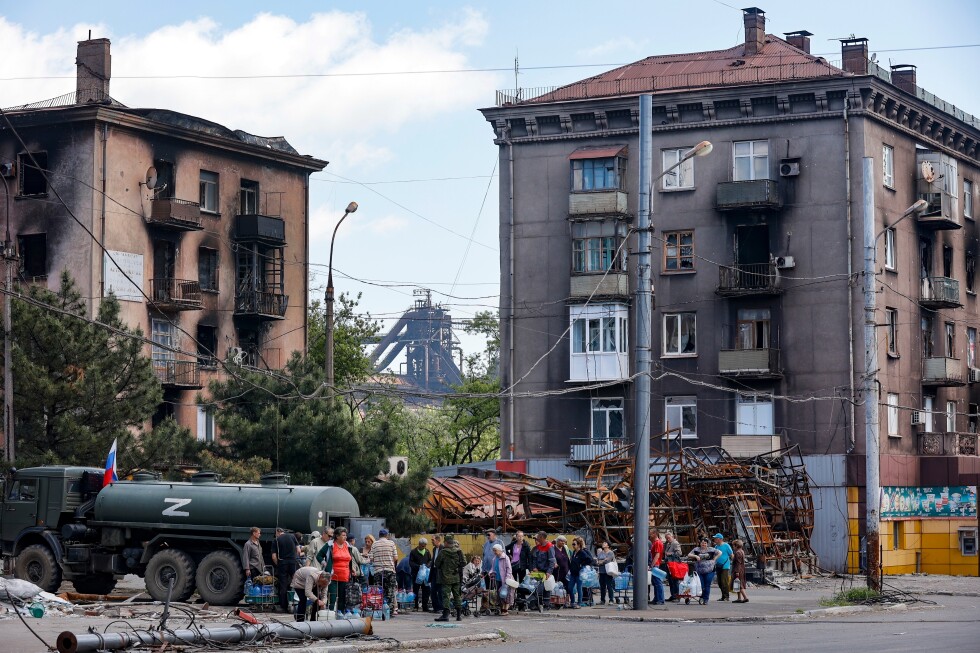
Infrastructure challenges plague occupied areas. In Alchevsk, a city in the Luhansk region, over half the homes have gone without heat for two bitterly cold months. In the Donetsk region, residents queue at water trucks that fill barrels outside apartment buildings—barrels that frequently freeze solid in winter temperatures.
“There’s constant squabbling over water,” said one resident who requested anonymity. “The lines are insane, and people who are away at work often miss the trucks’ arrival.”
Meanwhile, the Vnukov family has rebuilt their lives in Estonia. Inna works in a printing house, Oleksii as an electrician. Their son is now 20, and they have a one-year-old daughter named Alisa. Yet they still dream of returning home someday.
Only about 150 people remain in their village that once housed 800 residents, including the couple’s parents. “We’ve been dreaming of returning for four years,” Vnukova said, “but we increasingly wonder—what will we see there?”
Fact Checker
Verify the accuracy of this article using The Disinformation Commission analysis and real-time sources.

16 Comments
The accounts of targeted persecution and looting are deeply troubling. It’s clear the people of Ukraine are enduring unimaginable hardships.
We must continue to amplify these stories and hold the perpetrators of these atrocities accountable.
Heartbreaking to read about the harsh conditions and fear people face under Russian occupation in Ukraine. These stories highlight the immense human toll of this conflict.
It’s important that the world continues to shine a light on the plight of those living in the occupied territories.
Saying goodbye to life and fleeing under mortar fire is an unimaginable ordeal. These stories highlight the true human cost of this conflict.
The resilience and courage of the Ukrainian people in the face of such adversity is truly humbling.
Fleeing for one’s life in the face of such brutality is unimaginable. These testimonies underscore the urgent need for a peaceful resolution to the conflict.
I hope the international community can find ways to better protect and support those living under Russian occupation in Ukraine.
The sheer scale of displacement and suffering is truly tragic. I hope the international community can do more to support and protect the people of Ukraine.
Holding on to hope despite the horrors must take incredible strength. My heart goes out to all those impacted by this senseless war.
The level of fear, displacement, and trauma experienced by Ukrainians under Russian occupation is heartbreaking. This is a stark reminder of the high price of war.
It’s crucial that the international community continues to provide support and aid to those affected by the conflict in Ukraine.
This is a sobering reminder of the real human cost of Russia’s invasion. The bravery and resilience of those who have endured occupation is truly inspiring.
It’s crucial that we continue to document and share these stories to raise awareness and support for the people of Ukraine.
The mental and emotional toll of living in constant fear must be immense. My heart goes out to all those who have been forced to flee their homes.
Documenting these harrowing experiences is crucial to understanding the full scale of the humanitarian crisis unfolding in Ukraine.