


Listen to the article
Lebanon Approves Prisoner Transfer Agreement with Syria Amid Shifting Regional Relations
Lebanon’s Cabinet approved a pivotal agreement on Friday to transfer Syrian prisoners currently serving sentences in Lebanese prisons back to Syria, marking a significant step in recalibrating relations between the neighboring countries.
The agreement comes in the wake of dramatic political changes in Syria, where former President Bashar Assad was ousted in December 2024 following a swift offensive by Islamist-led insurgents. Former insurgent leader Ahmad al-Sharaa now serves as Syria’s interim president, creating a new diplomatic landscape in the region.
Deputy Prime Minister Tarek Mitri told reporters after the Cabinet meeting that approximately 300 Syrian prisoners would be transferred under this agreement. The issue has been particularly contentious as Lebanon holds about 2,000 Syrian nationals in its prisons, including roughly 800 detained for attacks and shootings, many without formal trials.
The relationship between Lebanon and Syria has long been marked by mutual grievances and historical tensions. Many Lebanese citizens harbor resentment over Syria’s decades-long military occupation of their country, which ended in 2005. Conversely, many Syrians remain bitter about the Lebanese militant group Hezbollah’s intervention in Syria’s civil war, where it fought in support of Assad’s government.
Damascus had previously requested that Beirut hand over Syrian prisoners to serve their remaining sentences in Syria. Lebanese judicial officials, however, had been reluctant to release individuals accused of attacks and insisted that each case required individual review.
Information Minister Paul Morcos acknowledged that while the prisoner transfer agreement represents progress, several critical issues remain unresolved between the two nations. These include the fate of Lebanese citizens believed to have disappeared into Syrian prisons during Assad’s rule and the formal demarcation of the shared border.
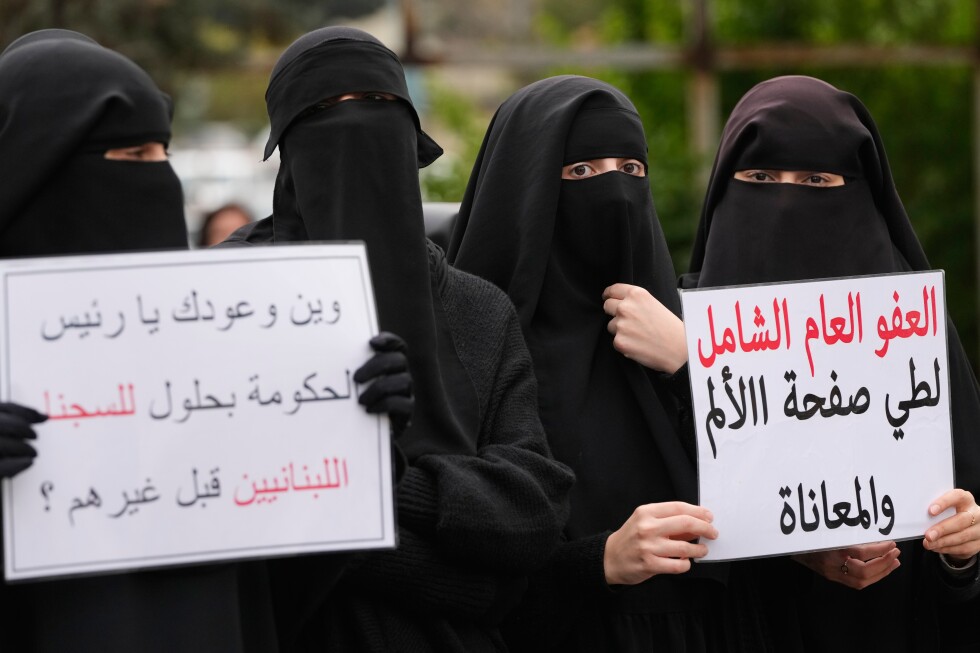
The Cabinet’s decision prompted demonstrations in downtown Beirut, where protesters gathered near the government palace ahead of the vote. They called for amnesty for Lebanese prisoners, including some who joined militant groups that fought against Assad’s forces in Syria. Among their specific demands was the release of Sunni cleric Ahmad al-Assir, who was imprisoned for his involvement in 2013 clashes that resulted in the deaths of 18 Lebanese army soldiers.
“The state found solutions for the Syrian youth who are heroes and belong to the Syrian revolution who have been imprisoned for 12 years,” protester Khaled Al-Bobbo told reporters at the demonstration. “But in the same files there are also Lebanese detainees. We demand that just as they found solutions for the Syrians, they must also find solutions for the people of this country.”
The agreement reflects the complex dynamics of Lebanon-Syria relations in a post-Assad Middle East. Since Syria’s civil war erupted in 2011, Lebanon has hosted over 1.5 million Syrian refugees, placing enormous strain on its already fragile economy and infrastructure. The refugee crisis, combined with historical grievances and border disputes, has complicated diplomatic ties between the neighbors.
Regional analysts suggest this prisoner transfer agreement could signal a broader normalization effort between Lebanon and Syria’s new leadership, potentially leading to increased coordination on refugee returns and security issues along their shared border.
As both countries navigate their new relationship, the international community is watching closely to see whether this prisoner transfer agreement might herald a more comprehensive reset in Lebanese-Syrian relations that could reshape political alliances in the eastern Mediterranean.
Fact Checker
Verify the accuracy of this article using The Disinformation Commission analysis and real-time sources.

10 Comments
This move by Lebanon’s government signals a pragmatic shift in its approach to Syria, likely driven by the new political realities on the ground. However, concerns remain about the treatment and rights of the prisoners being transferred.
This is an interesting development in the complex relationship between Lebanon and Syria. It will be important to monitor how the prisoner transfer impacts regional dynamics and security concerns on both sides of the border.
Agreed. The shift in Syria’s political leadership adds another layer of complexity to this arrangement. Careful implementation will be crucial to ensure the process is transparent and respects human rights.
This agreement reflects the evolving regional geopolitics, but Lebanon will need to carefully balance its interests with human rights considerations. The fate of the transferred prisoners will be an important barometer of the agreement’s implementation.
The prisoner transfer deal underscores the changing dynamics in the Lebanon-Syria relationship. However, concerns about the wellbeing and legal status of the detainees remain. Transparent oversight and accountability will be crucial.
Absolutely. The human rights implications of this agreement must be the top priority, regardless of the political shifts in the region.
The prisoner transfer agreement highlights the evolving regional power dynamics following the changes in Syria’s government. It will be worth watching how this affects broader diplomatic and security cooperation between the two countries moving forward.
Absolutely. With hundreds of detainees involved, the logistics and oversight of this process will be critical. Lebanon will need to balance security concerns with humanitarian considerations.
The prisoner swap is a significant step, but it also raises questions about the vetting process and conditions for the detainees. Transparency and accountability will be essential to ensure the agreement is implemented responsibly.
Agreed. The human rights implications of this deal must be closely monitored, especially given Syria’s troubling record on prisoner treatment and due process.