


Listen to the article
Lebanon’s Former Central Bank Governor’s Case Elevated to Highest Court
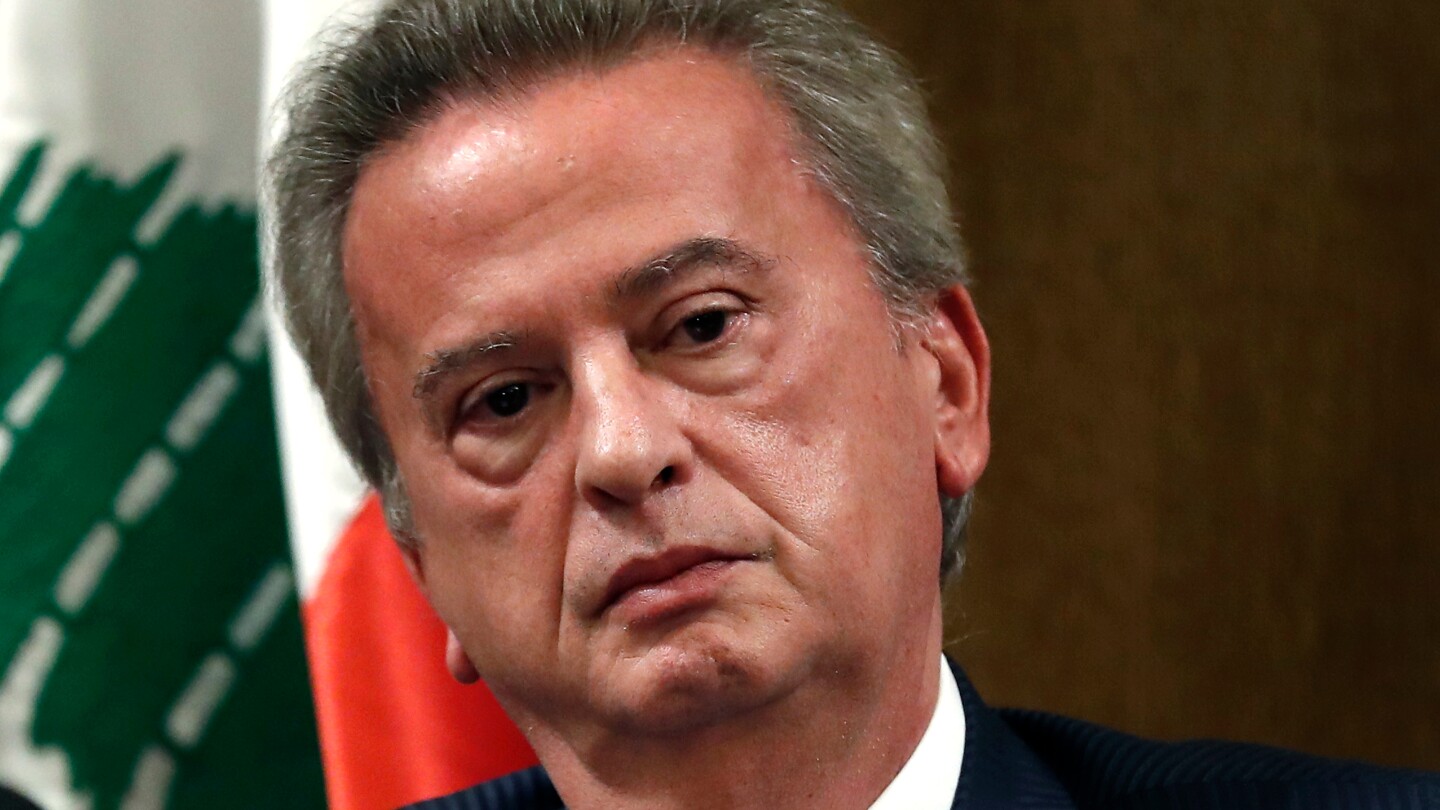
Lebanon’s judicial officials announced Tuesday that the corruption case against Riad Salameh, the country’s former central bank governor widely blamed for Lebanon’s economic collapse, has been transferred to the Court of Cassation, the nation’s highest judicial authority.
Salameh, 75, was released on $14 million bail in September following a year of pretrial detention on charges including embezzlement and illicit enrichment. The case will now proceed against Salameh and his two legal associates, Marwan Khoury and Michel Toueini, with arrest warrants to be issued if they fail to appear for trial. No date has yet been set for proceedings.
The transfer to Lebanon’s highest court is significant as the court’s ruling will be final and cannot be appealed, according to officials familiar with the case who spoke anonymously due to lack of authorization to discuss the matter with media.
Salameh faces serious accusations. In September 2024, he was charged with embezzling $42 million. Additional charges of illicit enrichment were later added regarding an apartment in France that Salameh allegedly rented from a former romantic partner for approximately $500,000 annually under the guise of securing an alternative location for the central bank.
The dramatic fall from grace marks a stark contrast to Salameh’s earlier reputation. For much of his three-decade tenure beginning in 1993, he was lauded for guiding Lebanon’s economic recovery following its devastating 15-year civil war. His monetary policies maintained stability during periods of political turbulence, earning him international recognition in financial circles.
However, public perception shifted dramatically when Lebanon plunged into a catastrophic financial crisis in late 2019. The economic collapse, one of the worst globally since the mid-19th century according to the World Bank, saw the Lebanese pound lose over 95% of its value. Millions of citizens lost access to their life savings as banks imposed strict capital controls, while inflation soared and poverty rates skyrocketed.
Many Lebanese citizens and economic experts now view Salameh’s policies as directly contributing to this disaster, particularly his management of a complex financial engineering scheme that some critics have likened to a state-sanctioned Ponzi scheme.
The legal troubles for the former central banker extend well beyond Lebanon’s borders. Several European countries, including France, Germany, and Luxembourg, have launched investigations into Salameh’s financial activities. In August 2023, the United States, United Kingdom, and Canada imposed sanctions against him, further damaging his international standing.
The current legal proceedings in Lebanon focus partly on Forry Associates, described by the U.S. Treasury as “a shell company owned by Raja [Salameh’s brother] in the British Virgin Islands.” According to U.S. authorities, this entity was allegedly used to divert approximately $330 million in transactions related to the central bank.
Last week, Karim Souaid, Lebanon’s current central bank governor, announced plans to file legal complaints against unnamed predecessors and banking officials who allegedly diverted central bank funds to four shell companies in the Cayman Islands. While Souaid did not explicitly name Salameh, he confirmed that the central bank would become a plaintiff in the country’s investigation into Forry Associates.
Throughout these investigations, Salameh has consistently maintained his innocence, denying all allegations of corruption, embezzlement, and illicit enrichment. He insists his personal wealth derives from inherited properties, investments, and his previous career as an investment banker at Merrill Lynch before assuming the central bank governorship.
Souaid has indicated his commitment to cooperating with international investigations, announcing plans to travel to Paris later this month to share “highly sensitive” information with French authorities as they continue their inquiries into Salameh’s activities.
The case represents a pivotal moment in Lebanon’s attempts to address corruption and accountability amid its ongoing economic crisis, which has pushed an estimated 80% of the population into poverty since 2019.
Fact Checker
Verify the accuracy of this article using The Disinformation Commission analysis and real-time sources.

13 Comments
The charges against the former central bank governor are quite serious, including embezzlement and illicit enrichment. I’m curious to see how the case unfolds and whether it can provide insights into the root causes of Lebanon’s economic collapse.
Transparency and accountability will be crucial in restoring public trust in Lebanon’s financial institutions. This case could set an important precedent if handled properly.
It’s encouraging to see the authorities in Lebanon taking decisive action on this case. Corruption at the central bank level can have far-reaching consequences, and it’s important that the public gets a clear picture of what happened.
I hope the court proceedings can provide some much-needed clarity and accountability on this issue. Lebanon’s financial stability and future depend on it.
This is a significant development in the long-running corruption case against Lebanon’s former central bank chief. The transfer to the nation’s highest court suggests the authorities are serious about pursuing this matter to its conclusion.
It will be interesting to see how Salameh and his associates respond to the charges and whether the court proceedings can shed more light on the alleged misdeeds.
The economic challenges facing Lebanon are immense, and rooting out corruption at the highest levels is crucial. This case against the former central bank governor is an important step, but there’s still a long way to go.
Corruption at the central bank level is a major concern for any country, and it’s good to see Lebanon taking steps to address this. The public will be watching closely to see how this case is handled.
I hope the court proceedings can shed light on the full extent of the alleged wrongdoing and provide a path forward for Lebanon to rebuild trust in its financial institutions.
This is a high-profile case that could have significant implications for Lebanon’s future. The transfer to the Court of Cassation suggests the authorities are treating it with the seriousness it deserves.
It’s good to see the authorities taking this case seriously and elevating it to the highest court. Corruption at the central bank level is a major concern and can have far-reaching consequences for a country’s financial stability.
The economic collapse in Lebanon has been devastating, and holding those responsible to account is crucial. This case against the former central bank governor is an important step, but there’s still a long way to go to restore trust and stability.
I hope the court can deliver a fair and thorough investigation that gets to the bottom of the allegations. The people of Lebanon deserve answers and accountability.