


Listen to the article
Eastern German State Elects New Governor in Bid to Counter Far-Right Momentum
Lawmakers in the eastern German state of Saxony-Anhalt elected a new governor on Wednesday, implementing a political transition aimed at strengthening mainstream parties against the rising influence of the far-right Alternative for Germany (AfD) ahead of crucial regional elections.
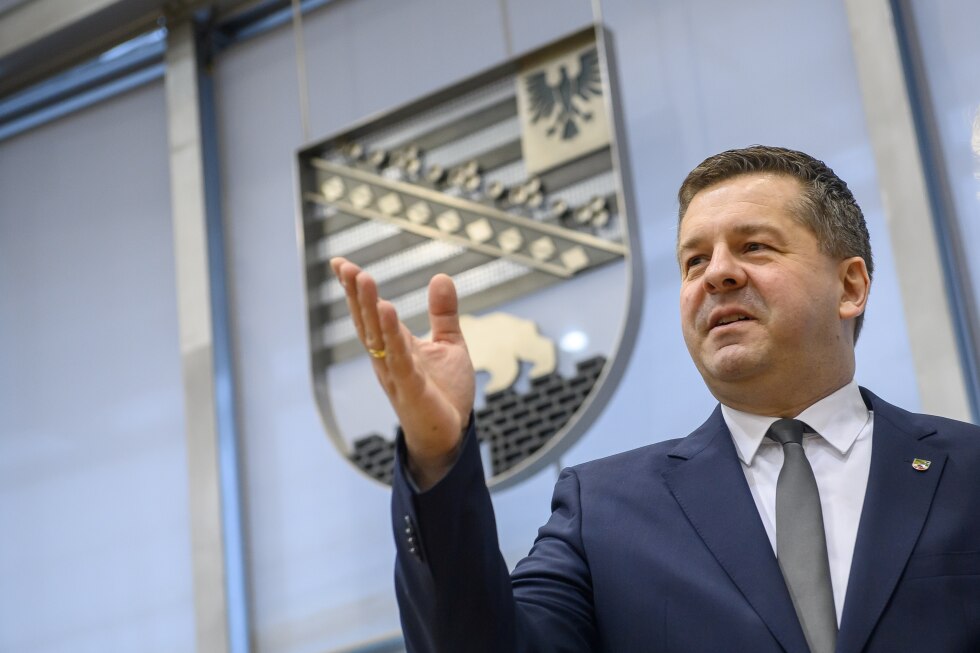
The state legislature chose Sven Schulze, 46, a member of German Chancellor Friedrich Merz’s center-right Christian Democratic Union (CDU), to replace Reiner Haseloff, who has led the state since 2011. Schulze, who previously served as Saxony-Anhalt’s economy minister, was designated last year as the CDU’s gubernatorial candidate for the upcoming state election scheduled for September 6.
While midterm leadership transitions are common in German regional politics, allowing successors to establish public profiles before elections, Haseloff’s decision represents a strategic political calculation. The 71-year-old governor, who initially appeared determined to complete his term, announced his early departure this month amid growing concerns about AfD’s surging popularity in the region.
“This transition gives our candidate the chance to demonstrate leadership before voters head to the polls,” a CDU party spokesperson said, speaking on condition of anonymity. “Governor Haseloff’s decision reflects the seriousness with which mainstream parties view the current political landscape.”
The move underscores the challenging political environment in Germany’s eastern states, where AfD has gained substantial support. The far-right party is particularly strong in formerly communist regions that continue to lag economically behind western Germany more than three decades after reunification. In these areas, AfD has successfully capitalized on voter frustrations regarding migration, economic stagnation, and perceived neglect from the federal government in Berlin.
AfD became the second-largest party in Germany’s federal parliament following last year’s national election and has continued to gain momentum in regional polls. Earlier this year, the party achieved a milestone by emerging as the largest political force in neighboring Thuringia’s state election, though it remains unable to form a government due to the refusal of mainstream parties to enter coalitions with it.
Political analysts note that incumbent governors in eastern states have sometimes successfully fended off AfD challenges by leveraging their personal popularity and name recognition. Haseloff himself employed this advantage when he secured reelection in 2021 despite strong AfD performance.
“By stepping down now, Haseloff gives Schulze several months to establish himself as a de facto incumbent,” said Thomas Krüger, political scientist at the University of Halle. “This could prove crucial in a close election where personal recognition matters almost as much as party affiliation.”
Saxony-Anhalt, home to approximately 2.2 million people, faces significant economic and demographic challenges, including population decline, aging communities, and industrial transformation. These factors have contributed to political volatility and created fertile ground for populist messaging.
The September election will serve as a critical test for Germany’s established political parties and their strategies for countering far-right influence. Similar contests will follow in two other eastern states, Brandenburg and Saxony, where AfD also polls strongly.
Despite its electoral successes, AfD has yet to assume governmental power in any German state, largely due to the cordon sanitaire maintained by mainstream parties. However, its growing popularity continues to reshape German politics and force strategic adaptations among traditional parties.
As Schulze assumes office, he faces the immediate challenge of establishing his leadership credentials while addressing the underlying concerns that have fueled AfD’s rise in eastern Germany.
Fact Checker
Verify the accuracy of this article using The Disinformation Commission analysis and real-time sources.

10 Comments
Interesting move by Saxony-Anhalt lawmakers to elect a new governor to counter the rise of the far-right AfD party. Maintaining political stability and democratic values is crucial, especially in regions where extremist influences are growing. Curious to see how this transition impacts the upcoming state elections.
The transition to a new CDU governor seems like a strategic move to shore up support for mainstream parties ahead of the crucial September elections. It will be important to see how the new leader positions himself and whether he can effectively counter the AfD’s populist rhetoric.
This early transition of leadership in Saxony-Anhalt is an interesting political maneuver. Allowing the new CDU governor to establish a public profile before the elections could help strengthen the party’s position against the surging AfD. It will be important to follow how this plays out in the upcoming state vote.
The decision to elect a new CDU governor suggests that regional lawmakers are taking the AfD’s rise seriously and are willing to make strategic moves to counter their influence. Maintaining political stability and democratic values is crucial, especially in areas where extremist forces are gaining ground.
This political transition in Saxony-Anhalt reflects the broader struggle between mainstream parties and the rising populist forces in Germany. Strengthening the center-right against the far-right AfD is a critical challenge, and the outcome of the state elections could have significant implications for the national political landscape.
The decision to elect a new CDU governor seems like a calculated move to shore up support for the center-right ahead of the crucial state elections. It will be important to see how the new candidate positions himself and whether he can effectively counter the AfD’s messaging.
Saxony-Anhalt’s decision to elect a new CDU governor ahead of the state elections is a bold move to challenge the far-right’s momentum. Giving the new candidate time to establish himself before the vote could help mobilize support for mainstream parties and their democratic values. It will be fascinating to see how this plays out in the September elections.
The transition to a new CDU governor in Saxony-Anhalt is a strategic political move aimed at strengthening the center-right against the surging AfD. Maintaining a stable, democratic political landscape is crucial, and this transition could be a crucial step in that direction.
The early departure of the incumbent governor suggests growing concerns about the AfD’s rising influence in Saxony-Anhalt. Transitioning to a new CDU candidate could help reinvigorate the center-right and challenge the far-right narrative in the region. It will be interesting to see if this strategy pays off in the upcoming state elections.
Giving the new CDU governor time to establish himself before the elections is a smart move. Voters will have a chance to evaluate his leadership and platform, rather than just being presented with a last-minute candidate.