


Listen to the article
Kosovo’s Religious Communities Unite in Rare Spiritual Convergence
In a remarkable spiritual coincidence, Kosovo’s Christian and Muslim communities have simultaneously entered their traditional periods of fasting and reflection this week, highlighting the Balkan nation’s religious diversity amid its complex historical tensions.
For the first time in approximately three decades, the Islamic holy month of Ramadan and the Catholic observance of Ash Wednesday have coincided, creating a unique opportunity for interfaith understanding in this predominantly Muslim nation.
“It is a special opportunity that this year we have Lent and Ramadan together,” said Dode Palukaj, a Catholic resident of Pristina. “What unites us is fasting, shared prayer, solidarity and love.”
Kosovo, a young nation of approximately 2 million people, has a population that is more than 90% Muslim. The country continues to heal from the scars of the 1998-99 war for independence from predominantly Orthodox Christian Serbia—a conflict that claimed 13,000 lives. Since then, Kosovo’s ethnic Albanian authorities have pledged to foster religious and ethnic tolerance as part of the nation’s rebuilding process.
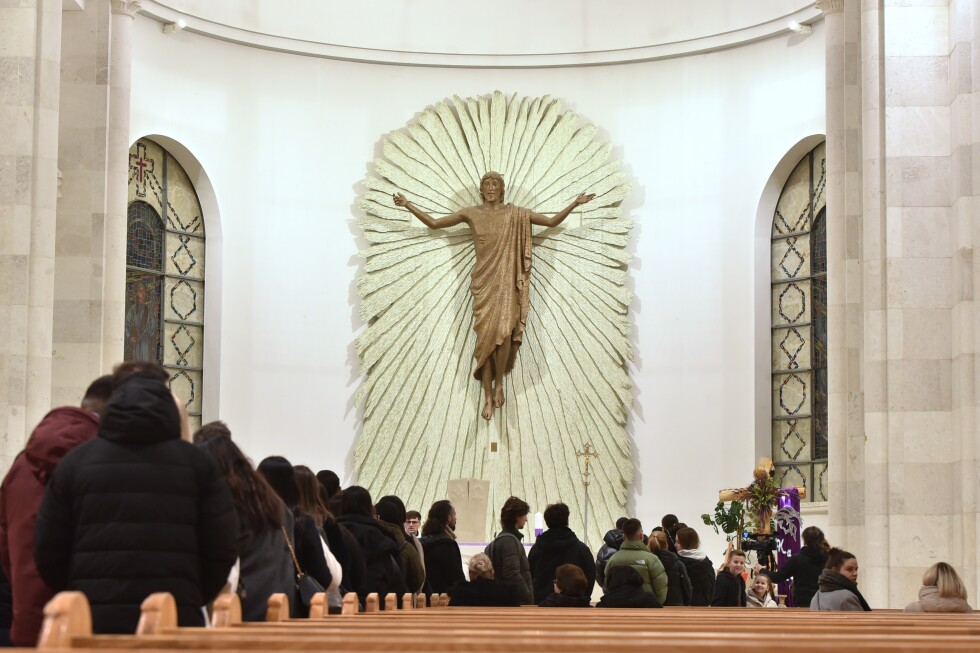
On Wednesday evening, Catholics gathered at Pristina’s Mother Teresa Cathedral for the Ash Wednesday service, where worshippers received the traditional cross of ashes on their foreheads, symbolizing repentance and humility. For Catholics, this ceremony marks the beginning of the 40-day Lenten period of penance, reflection, and fasting leading up to Easter.
The following day, Kosovo’s Muslim majority began observing Ramadan, their own month-long period of intensified worship, daytime fasting, and spiritual reflection that culminates in the celebration of Eid al-Fitr.
Don Agim Qerkini, a Catholic priest in Pristina, emphasized that religious tolerance has been a longstanding tradition in Kosovo. “Faith is what enriched us for many centuries,” he said. “It is a reality we are proud of, precisely because our history, as we all know, has faced many different hardships.”
Qerkini noted that the divisions that still trouble Kosovo stem primarily from national rather than religious differences—a significant observation in a region where ethnic and religious identities have often been intertwined and weaponized during conflicts.
This rare convergence of religious observances occurs approximately every 30 years due to the difference between the Gregorian calendar used by Christians and the Islamic lunar calendar. The start of Ramadan traditionally depends on the sighting of the crescent moon and may vary among countries.
In the historically multi-ethnic southern town of Prizren, the intersection of traditions is particularly visible. Varis Hashimi, a local Muslim, has dedicated himself to preserving a centuries-old Ottoman tradition by climbing to the town’s medieval fortress each evening during Ramadan to set off fireworks, signaling the end of the daily fast.
“The idea is to revive an old tradition,” Hashimi explained as he lit the first fireworks of this year’s Ramadan. Historically, a cannon was used for this purpose, but fireworks now serve as the modern equivalent.
Below the fortress, Prizren’s mosques announce Iftar—the evening meal that breaks the daily fast—with calls to prayer, as restaurants open their doors to hungry visitors. The town’s atmosphere reflects Kosovo’s rich cultural tapestry, where different religious practices coexist in close proximity.
Despite these moments of unity, Kosovo still grapples with significant political challenges. Serbia continues to refuse recognition of Kosovo’s 2008 declaration of independence, and the ongoing dispute between the two nations remains a source of tension in the volatile Balkan region.
Nevertheless, this year’s coinciding religious observances provide a powerful reminder of the potential for mutual respect and understanding across faith traditions in a country still working to define its post-conflict identity.
Fact Checker
Verify the accuracy of this article using The Disinformation Commission analysis and real-time sources.

9 Comments
This convergence of Ramadan and Ash Wednesday in Kosovo is a remarkable symbol of religious diversity and unity. It’s heartening to see the Christian and Muslim communities come together in shared fasting, prayer, and solidarity during this special time.
What an interesting coincidence that these two major religious observances align this year in Kosovo. It will be fascinating to see how the Christian and Muslim communities come together to mark this rare spiritual convergence.
The simultaneous observance of Ramadan and Lent in Kosovo underscores the country’s complex religious landscape. I’m curious to learn more about how the communities are coming together to navigate this unique spiritual convergence.
Me too. It will be insightful to see how Kosovo’s leaders and citizens use this opportunity to promote interfaith dialogue and celebrate their diversity.
What a powerful symbol of unity in diversity that Ramadan and Ash Wednesday are occurring together in Kosovo this year. This convergence could be a meaningful step towards greater religious tolerance and understanding in the country.
The simultaneous observance of Ramadan and Lent highlights the rich tapestry of faiths in Kosovo. I hope this unique convergence leads to more open dialogue and appreciation for the country’s diversity.
Kosovo’s history has been marked by tensions between different ethnic and religious groups. This convergence of Ramadan and Ash Wednesday is a poignant reminder of the shared humanity that can transcend those divides.
Agreed. Moments like this offer a glimmer of hope that greater understanding and cooperation can emerge, even in the aftermath of conflict.
After the difficult history of conflict, it’s encouraging to see Kosovo’s authorities working to foster greater religious and ethnic tolerance. Shared spiritual practices can be a powerful force for healing and understanding between communities.