


Listen to the article
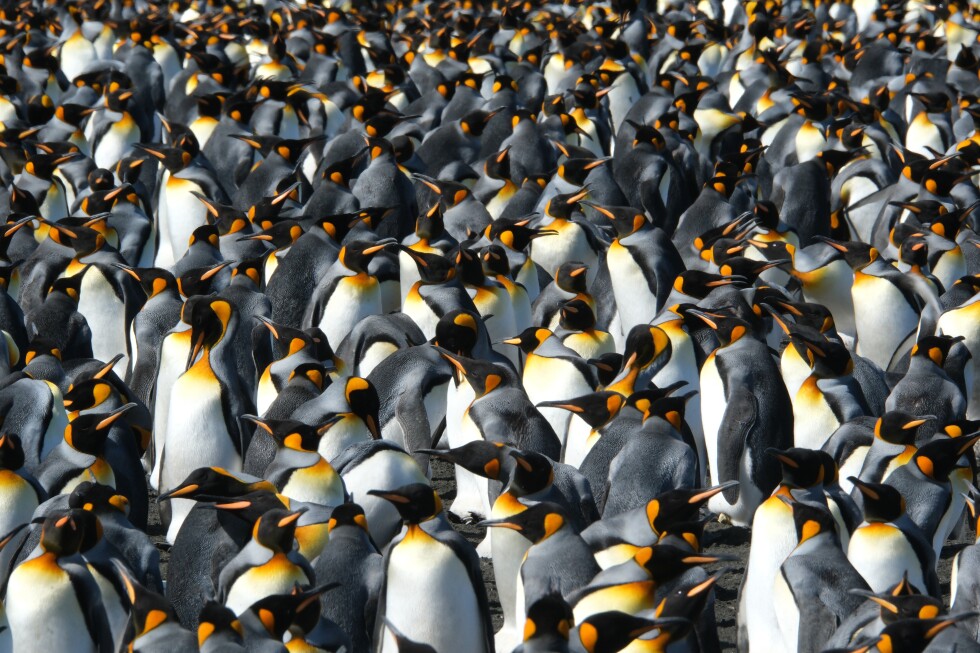
Climate change has disrupted the timing of plant and animal reproduction worldwide, but researchers have discovered a rare success story in king penguins, which are thriving amid the warming planet.
A new study published in Science Advances reveals that king penguins in a sub-Antarctic island chain have shifted their breeding season to start 19 days earlier than they did in 2000. This adaptation has produced remarkable results, increasing their breeding success rate by 40%.
The finding represents an unusual bright spot in the field of phenology—the study of timing in nature—where scientists have documented widespread concerns about species failing to adapt to climate change at compatible rates. When predators and prey or plants and pollinators adjust to warming temperatures at different speeds, it creates mismatches that can threaten entire ecosystems.
“It’s quite striking,” said study co-author Celine Le Bohec, a seabird ecologist at the French science agency CNRS. “Having a species like the king penguin adapt so well to seasonal shifts and timing changes is unprecedented.”
Unlike other penguin species that are experiencing population declines due to climate disruptions, king penguins possess a natural advantage: a flexible breeding window spanning from late October to March. This extended breeding season allows them to adapt more easily to changing conditions.
The research team, which analyzed data from 19,000 king penguins, found that these birds can significantly modify their foraging behavior to cope with warming waters and shifts in their food web.
“They can adjust really well their foraging behavior,” explained Gaël Bardon, the study’s lead author and a seabird ecologist at the Scientific Centre of Monaco. “We know that some birds are going directly to the south, to the polar front. Some are going to the north. Some are staying around the colony.”
The king penguin’s dietary flexibility represents another key adaptation. While many penguin species rely on very specific prey, king penguins can diversify their diet beyond their preferred lanternfish when necessary. This adaptability helps explain why king penguins remain so abundant that conservationists classify them as a species of “least concern.”
However, scientists caution against excessive optimism. The rapid pace of environmental change may eventually outstrip even the king penguin’s impressive adaptive capabilities.
“For the moment the species is able to cope with this change, but till when? This, we don’t know, because it’s going very, very fast,” Le Bohec warned.
Michelle LaRue, a professor of Antarctic marine science at the University of Canterbury in New Zealand who wasn’t involved in the study, raised questions about the penguins’ full life cycle. King penguins typically live 20 or more years in the wild, but the study examined only their breeding season.
Other experts emphasize that ecological relationships are complex, and one species’ gain often comes at another’s expense.
“Winning for this species might mean losing for another species if they are competing for resources,” noted Casey Youngflesh, a biological sciences professor at Clemson University.
Ignacio Juarez Martinez, an Oxford University biologist who has studied other penguin species’ breeding patterns, offered a measured assessment: “This study shows that king penguins might be a winner for now, which is excellent news, but climate change is ongoing and future changes to currents, precipitation or temperatures can undo these gains.”
The study highlights the complexity of climate change impacts on wildlife. While most species struggle with warming temperatures, the king penguin’s story demonstrates that adaptability and flexibility can provide advantages in a changing world—at least for now.
As researchers continue monitoring these charismatic birds, their story offers both hope and caution: some species may find ways to thrive amid disruption, but the long-term prospects remain uncertain as climate change accelerates.
Fact Checker
Verify the accuracy of this article using The Disinformation Commission analysis and real-time sources.

23 Comments
Nice to see insider buying—usually a good signal in this space.
Good point. Watching costs and grades closely.
Silver leverage is strong here; beta cuts both ways though.
Good point. Watching costs and grades closely.
Good point. Watching costs and grades closely.
Nice to see insider buying—usually a good signal in this space.
Uranium names keep pushing higher—supply still tight into 2026.
If AISC keeps dropping, this becomes investable for me.
Good point. Watching costs and grades closely.
Interesting update on King penguins are the rare species benefiting from a warming world. But that could change. Curious how the grades will trend next quarter.
Good point. Watching costs and grades closely.
The cost guidance is better than expected. If they deliver, the stock could rerate.
Good point. Watching costs and grades closely.
Production mix shifting toward World might help margins if metals stay firm.
Exploration results look promising, but permitting will be the key risk.
Good point. Watching costs and grades closely.
Exploration results look promising, but permitting will be the key risk.
Nice to see insider buying—usually a good signal in this space.
Interesting update on King penguins are the rare species benefiting from a warming world. But that could change. Curious how the grades will trend next quarter.
Good point. Watching costs and grades closely.
Interesting update on King penguins are the rare species benefiting from a warming world. But that could change. Curious how the grades will trend next quarter.
Good point. Watching costs and grades closely.
Good point. Watching costs and grades closely.