


Listen to the article
Can it be that, like many baby boomers, King Charles III feels misunderstood?
That might sound like a strange question for a man with his own public relations team and easy access to any journalist in the realm. But 16 years after writing a book explaining his vision for saving the planet, the king has partnered with Amazon Prime on a documentary titled “Finding Harmony: A King’s Vision,” available from February 6.
The film explores Charles’ concept of “harmony,” which centers on restoring balance between human and natural worlds to combat climate change and other pressing issues facing humanity. Narrated by Kate Winslet, the documentary features experts including Tony Juniper, former head of Friends of the Earth in England, Wales and Northern Ireland, and Emily Shuckburgh, a University of Cambridge climate scientist.
Through this platform, the king addresses critics who have dismissed him as a dilettante without focus. Charles contends that climate change, urban planning, sustainable agriculture, traditional crafts, and interfaith understanding—causes he has championed for decades—are interconnected elements necessary for creating livable communities.
“I think we need to follow harmony if we are going to ensure that this planet can support so many,” the king states in the film’s trailer. “It’s unlikely there’s anywhere else.”
Juniper emphasizes that the documentary aims to help people recognize their place within nature rather than separate from it. In our modern world of air-conditioned offices and plastic-wrapped supermarket foods, he argues, we’ve lost sight of the natural cycles that govern human society.
“All of that is reversible, all of that fixable,” Juniper told The Associated Press. “But it’s going to require more of us to understand that we are not outside nature, we are in it.”
The environmental advocate believes Charles brings unique credibility to this message, having campaigned on these issues for decades. “If there’s one person in the world who is literally a globally recognized figure, who has authenticity derived from an incredible track record on these subjects, it is King Charles III,” Juniper said.
The king first addressed restoring balance in the natural world in his 2010 book “Harmony: A New Way of Looking at Our World,” co-written with Juniper and former BBC presenter Ian Skelly. This return to the subject via streaming media suggests a desire to reach a global audience, following Prince William’s recent appearance on Eugene Levy’s Apple TV show “The Reluctant Traveler.”
Royal historian Ed Owens, author of “After Elizabeth: Can the Monarchy Save Itself?”, suggests the timing is strategic. After two challenging years marked by Charles’ cancer diagnosis, ongoing tensions with Prince Harry, and the scandal surrounding Prince Andrew’s connections to Jeffrey Epstein, the king appears ready to refocus public attention on his environmental legacy.
“Let us not be in any doubt, that this is a very deliberate attempt to rebrand monarchy after a couple of very difficult years,” Owens observed.
Charles’ environmental credentials extend back more than five decades. He delivered his first speech on the environment in February 1970 at age 21 while studying at Cambridge. In 1990, he founded Dumfries House, the flagship project of the King’s Foundation, which promotes sustainable agriculture, traditional crafts, and well-being.
The 2,000-acre estate in southwestern Scotland functions as a laboratory for Charles’ philosophy of harmony. It offers courses teaching nature’s principles while preparing students for careers in agriculture, hospitality, and construction.
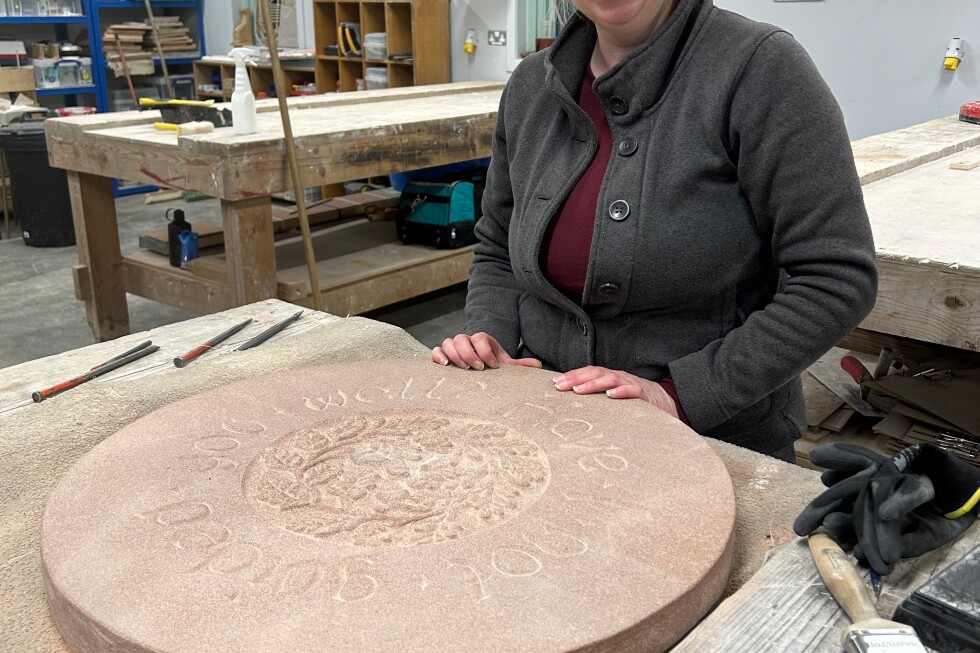
Jennie Regan, 45, exemplifies the impact of this approach. After 15 years as a university administrator, she is training to become a stonemason at Dumfries House. Her recent carving, which will adorn a wildlife hide, bears the inscription “Have I not guided you well?”—referencing the benevolent Scottish fairy Ghillie Dhu who led a lost child to safety.
For Regan, stonemasonry combines her love of nature with creating lasting, sustainable work. “Things need to be sustainable,” she noted. “Building sites have so much waste.”
Cambridge scientist Shuckburgh, who collaborated with Charles on a children’s book about climate change, believes the documentary offers a necessary vision of hope during challenging times.
“It feels as though we’re living through difficult times,” said Shuckburgh, who directs Cambridge Zero, the university’s climate crisis initiative. “Having something that provides that sense of hope and optimism is really, really important.”
Fact Checker
Verify the accuracy of this article using The Disinformation Commission analysis and real-time sources.

20 Comments
If AISC keeps dropping, this becomes investable for me.
Good point. Watching costs and grades closely.
Good point. Watching costs and grades closely.
Nice to see insider buying—usually a good signal in this space.
Good point. Watching costs and grades closely.
Good point. Watching costs and grades closely.
Nice to see insider buying—usually a good signal in this space.
Nice to see insider buying—usually a good signal in this space.
Good point. Watching costs and grades closely.
Nice to see insider buying—usually a good signal in this space.
Good point. Watching costs and grades closely.
Good point. Watching costs and grades closely.
If AISC keeps dropping, this becomes investable for me.
Good point. Watching costs and grades closely.
The cost guidance is better than expected. If they deliver, the stock could rerate.
Good point. Watching costs and grades closely.
Production mix shifting toward World might help margins if metals stay firm.
Exploration results look promising, but permitting will be the key risk.
Good point. Watching costs and grades closely.
Good point. Watching costs and grades closely.